
Your search for “edinburgh_illuminated_book” returned 140 images.
Clear Search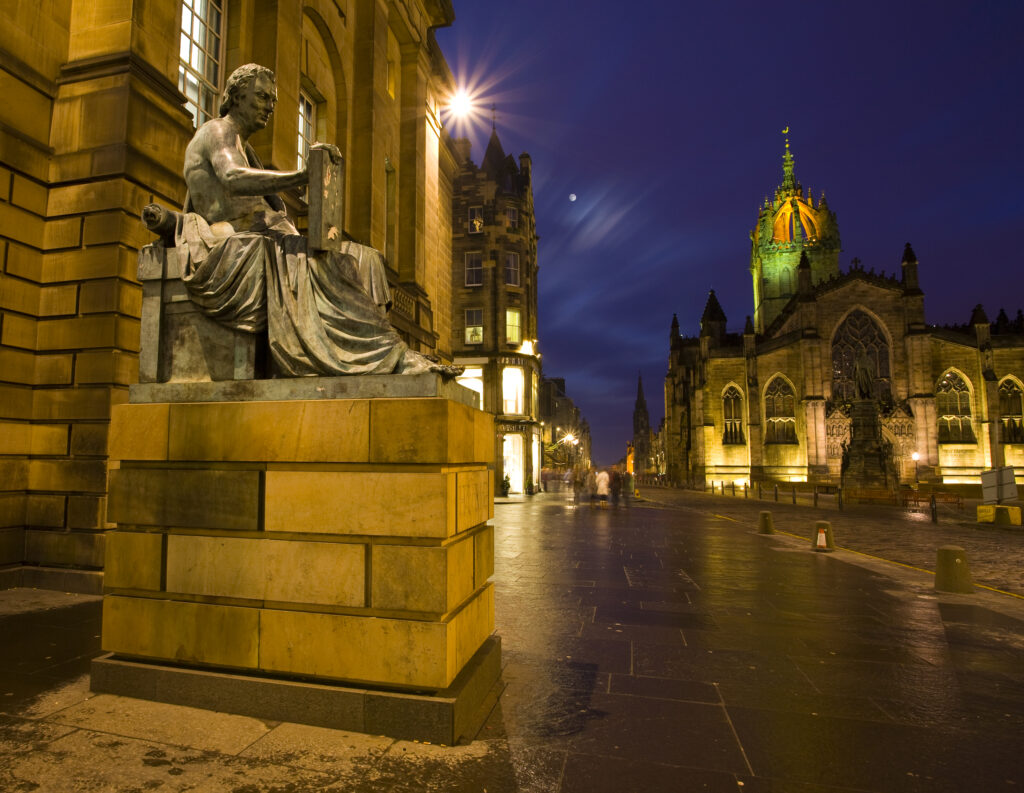
Scotland, Edinburgh, The Royal Mile. Hume statue with the St Giles Cathedral, situated along the Royal Mile.
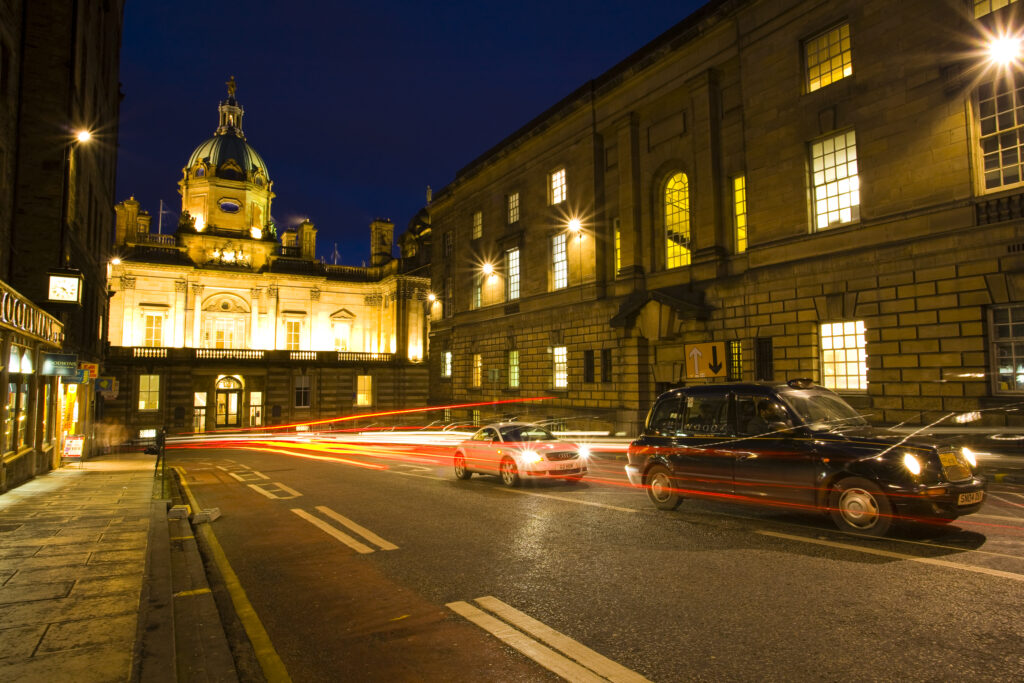
Scotland, Edinburgh, Old Town. A city taxi waiting in traffic on Bank Street. The building at the end of the street is the Bank of Scotland.
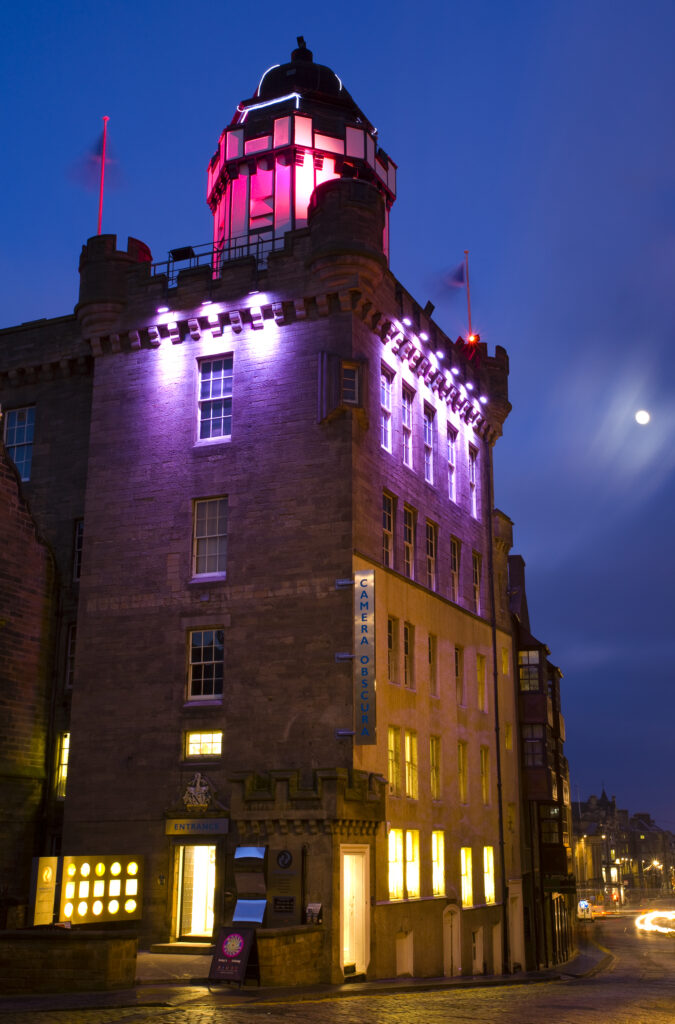
Scotland, Edinburgh, Camera Obscura. The Camera Obscura is located on a tower which had originally been the townhouse of the old Larid of Cockpen. This building was to become known as the Outlook Tower before its present title of the Camera Obscura.
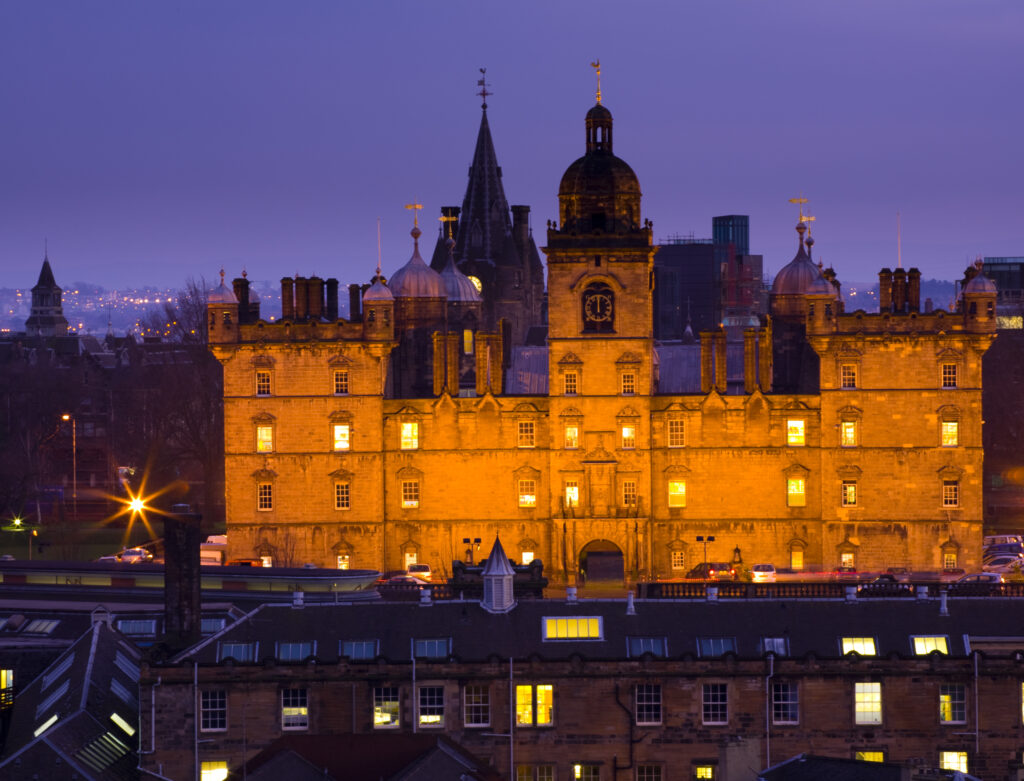
Scotland, Edinburgh, George Heriot's School. George Heriot's School on Lauriston Place in the Old Town, was established in 1628 as the George Heriot's Hospital with the aim of educating the poor children of the city.
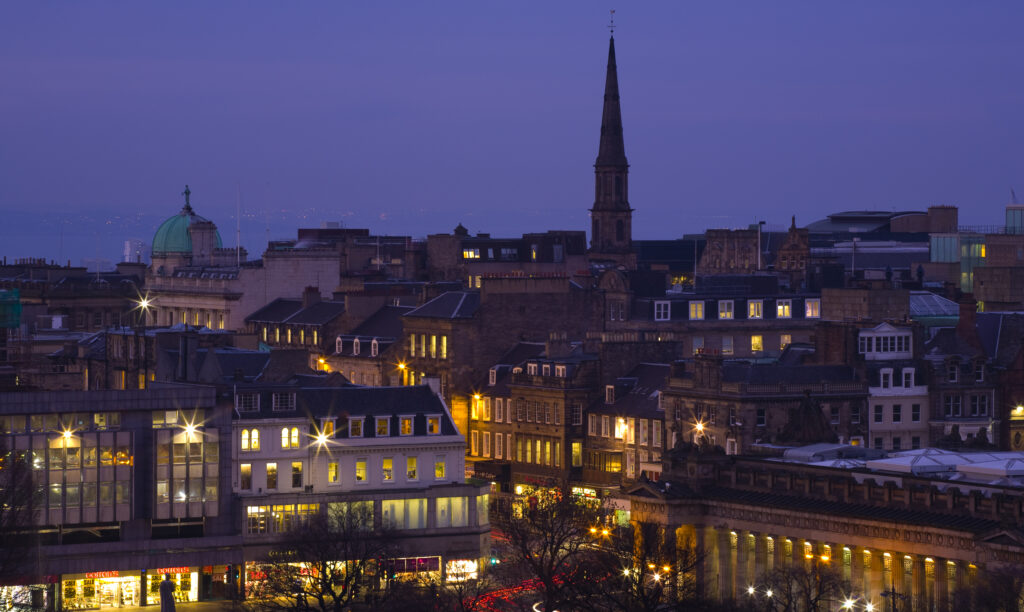
Scotland, Edinburgh, Princes Street. Looking towards Princes Street and the first phase of the New Town, built between 1766 and 1800, with the National Gallery complex in the foreground.
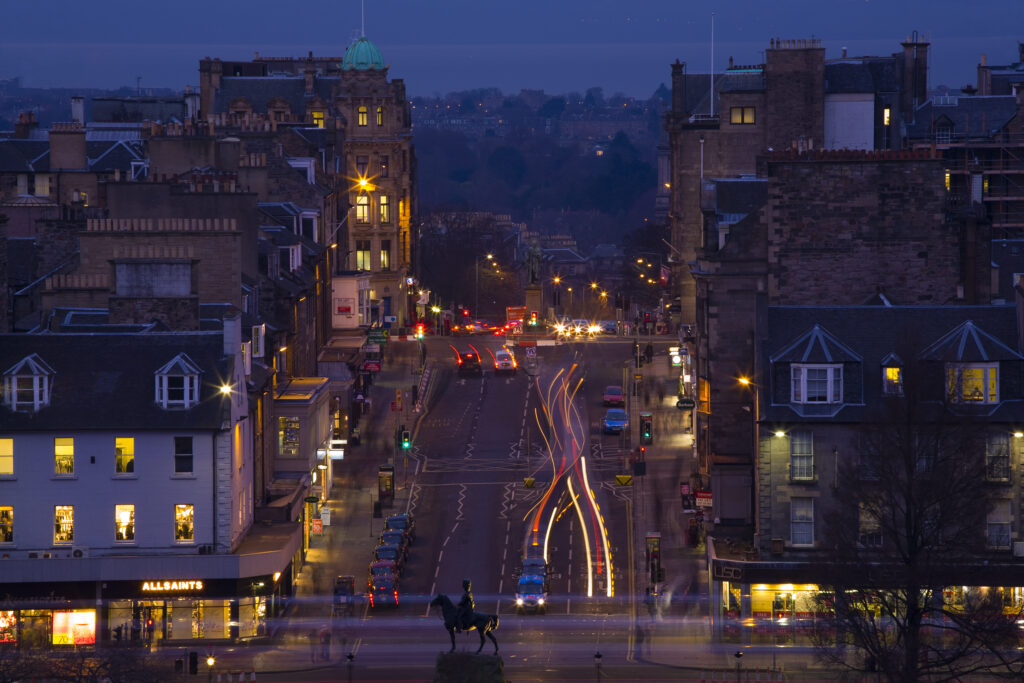
Scotland, Edinburgh, Princes Street. Royal Scots Greys monument located on the junction of Princes and Frederick Street.
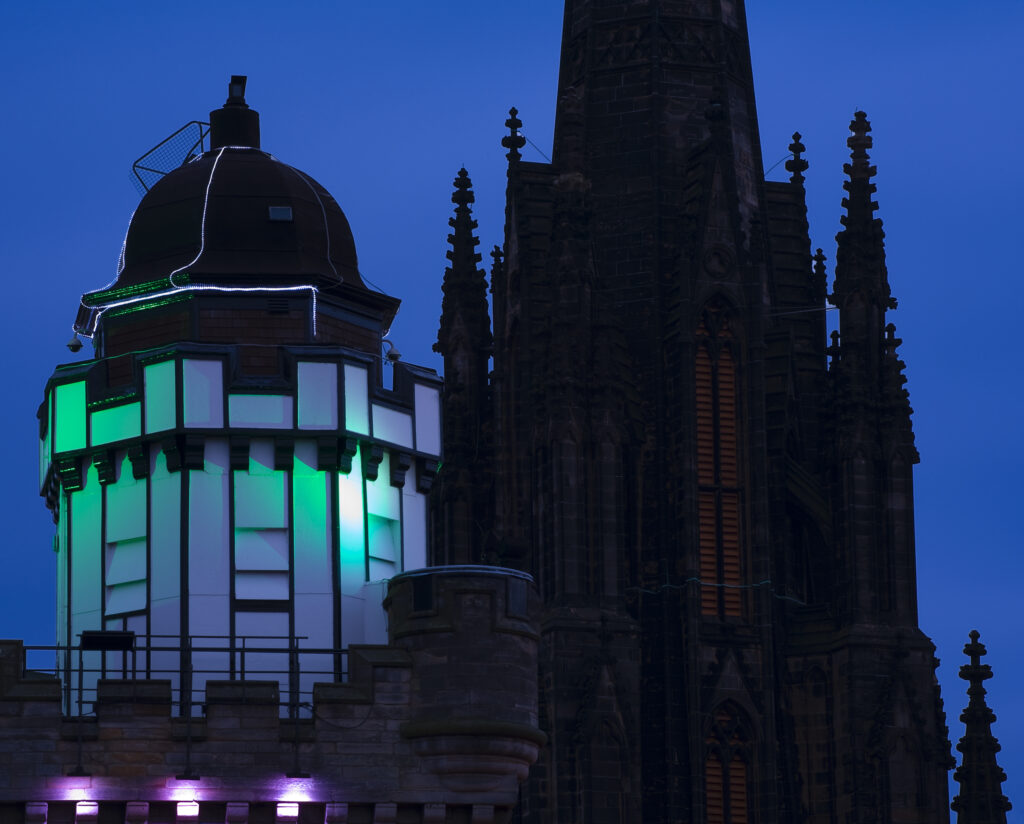
Scotland, Edinburgh, The Royal Mile. The Camera Obscura with The Hub in the background. Originally known as the Assembly Hall, this historic landmark of the Royal Mile is a grade A listed building constructed between 1842 and 1845.
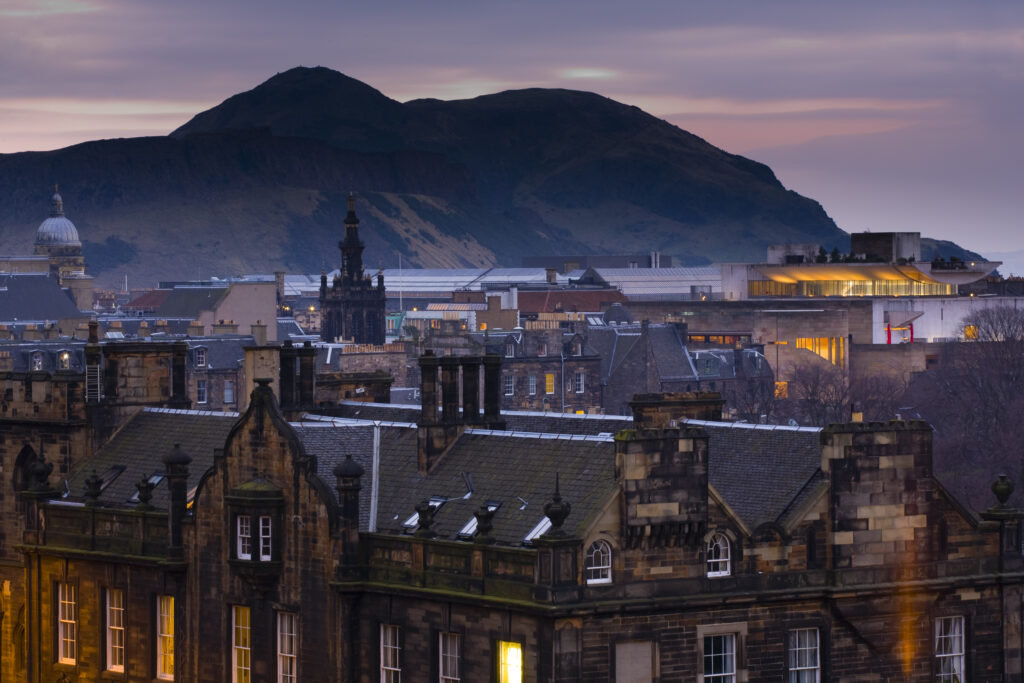
Scotland, Edinburgh, Old Town. View overlooking the Old Town towards the extinct volacano known as Arthur's Seat.
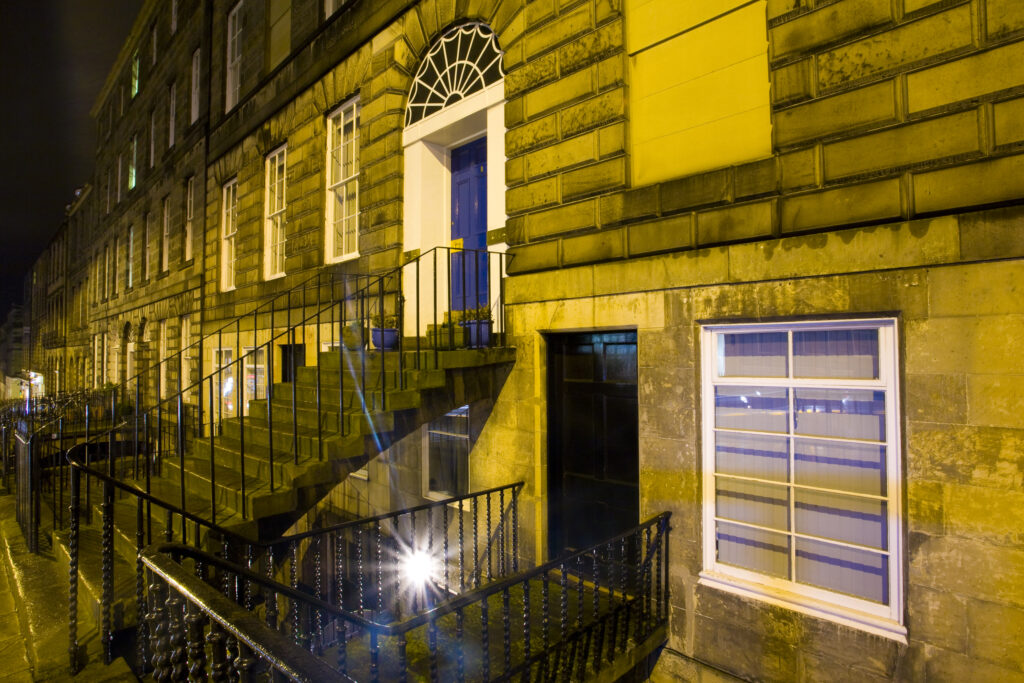
Scotland, Edinburgh, New Town. Private dwelling near the city center in the 'New Town'.
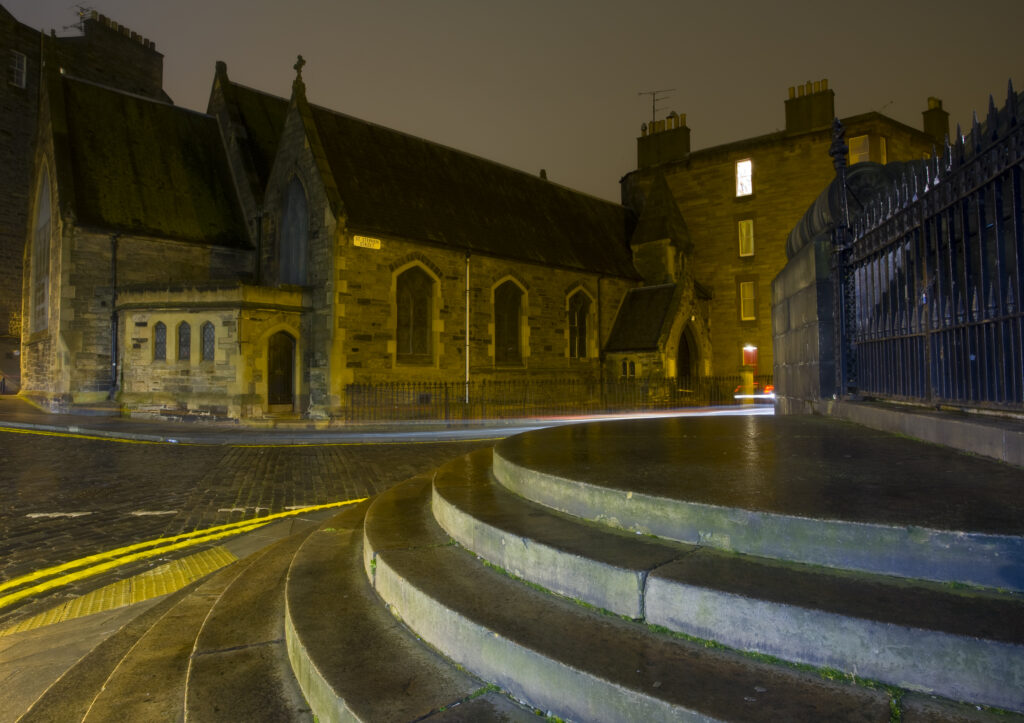
Scotland, Edinburgh, St Stephen's Church. Grand steps forming the entrance to St Stephen's Church.
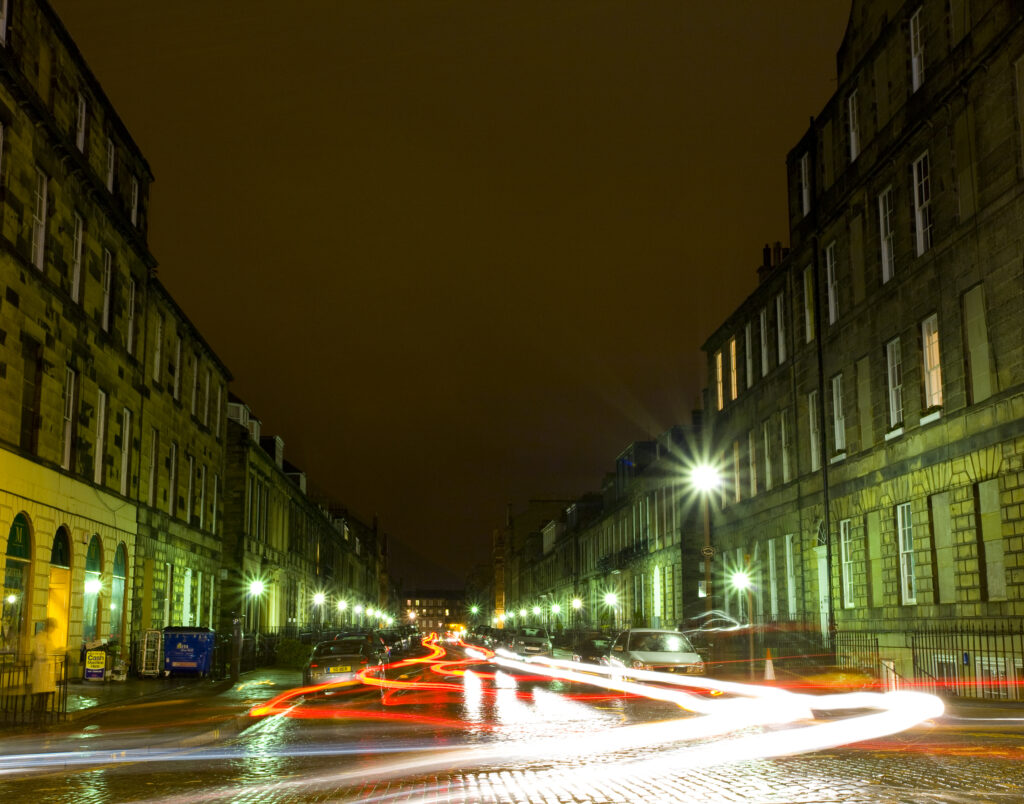
Scotland, Edinburgh, Northumberland Street. Traffic on Northumberland Street. Edinburgh was originally part of the Kingdom of Northumbria, an area that is now considered to consist of North-East England but historically also included parts of Southern Scotland.
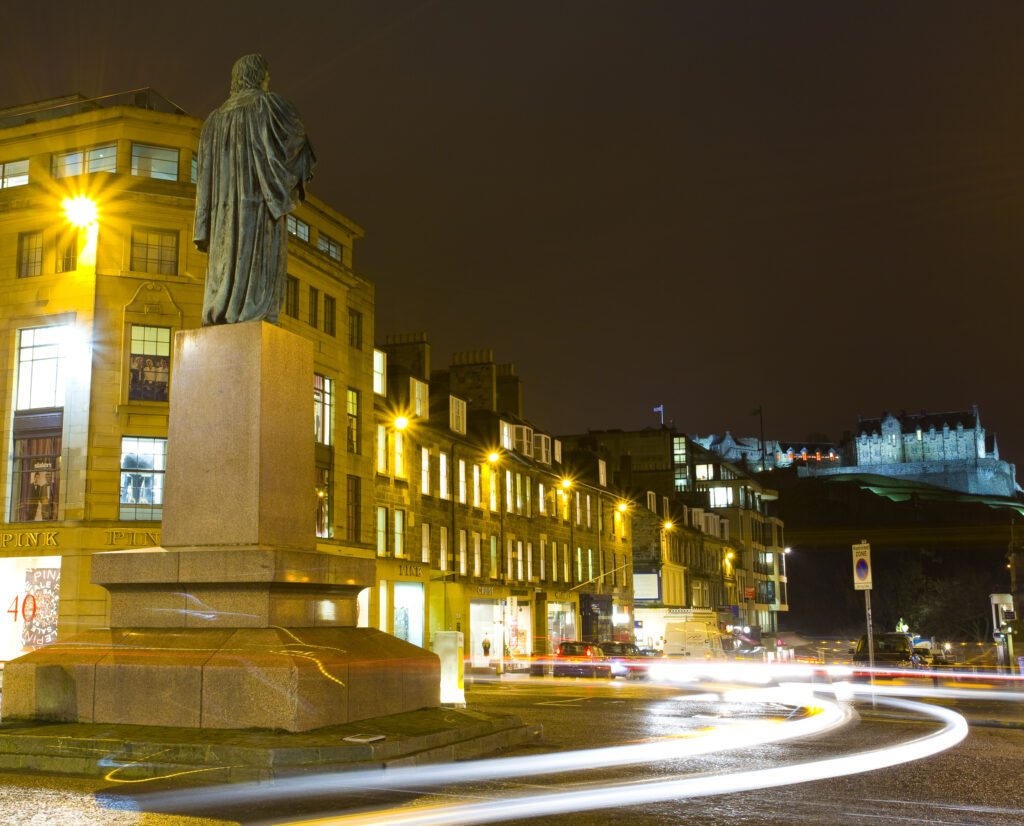
Scotland, Edinburgh, George Street. Statue of Dr Thomas Chalmers, a noted scholar and mathematician, looking down Castle Street towards Castle Hill.
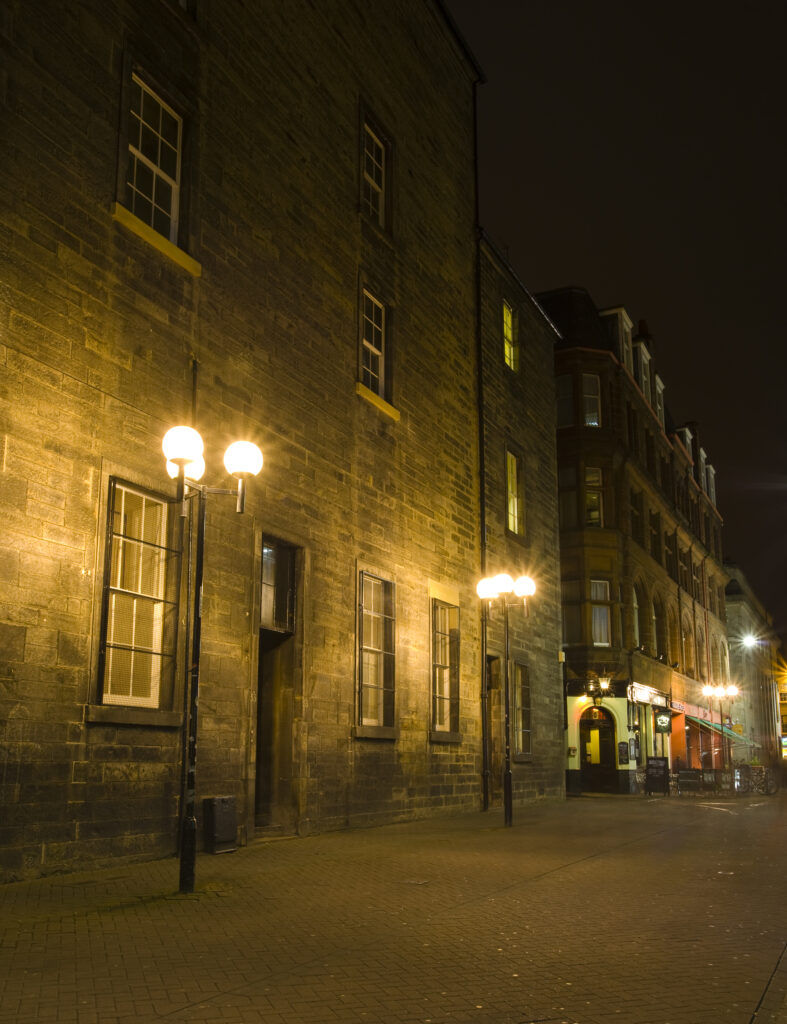
Scotland, Edinburgh, Rose Street. The narrow Rose Street was originally used as a service entrance to the houses on Princes Street and George Street which it runs parallel between.
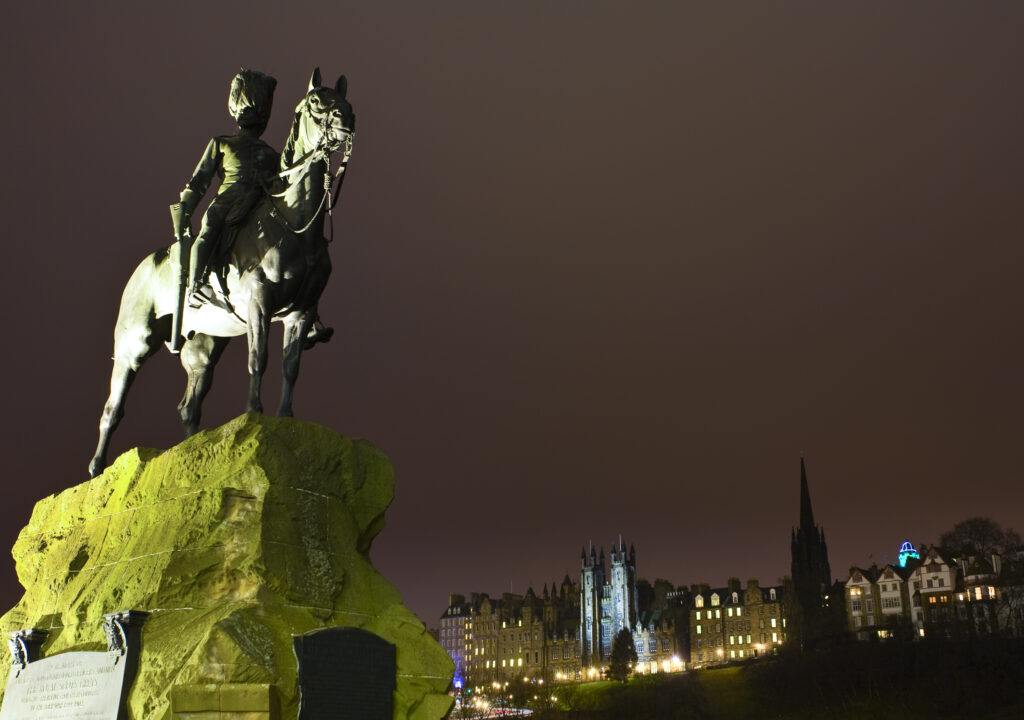
Scotland, Edinburgh, Princes Street. Monument on Princes Street erected in memory of the Royal Scots Greys who died for their country during the Boer War (1899 – 1902).
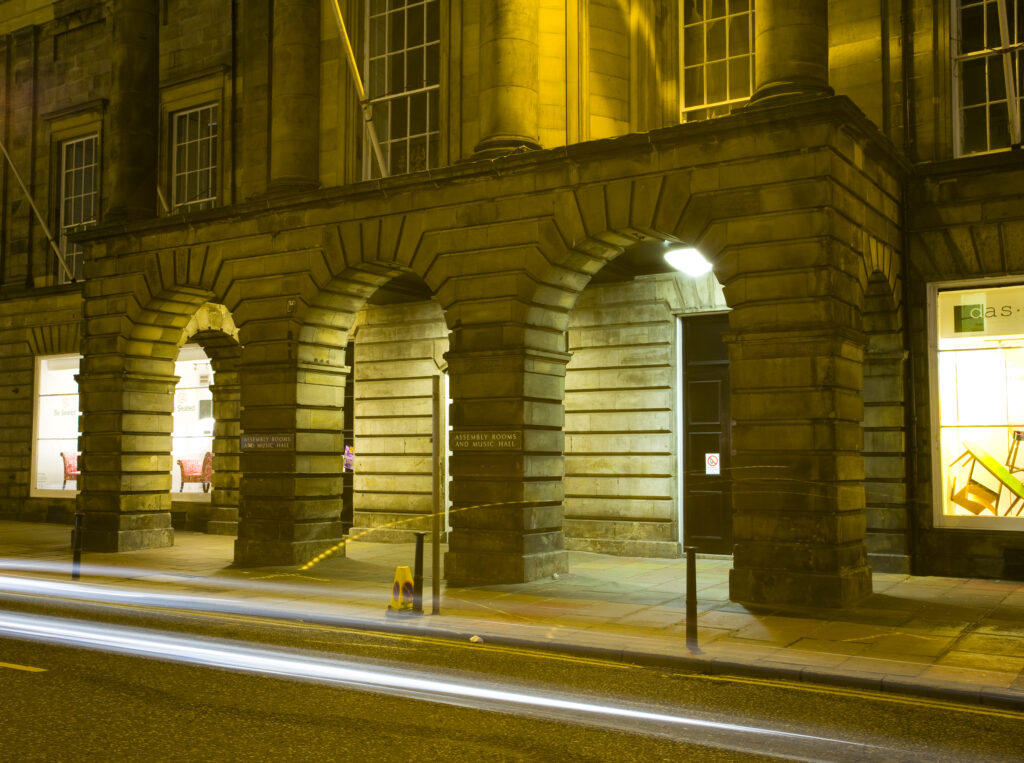
Scotland, Edinburgh, Assembly Rooms. The Assembly Rooms and Music Hall located on George Street. Assembly Rooms were traditionally gathering places open to members of all sexes from the higher social classes which between the 18th and 19th centuries was quite unusual with most venues only being open to upper class men.
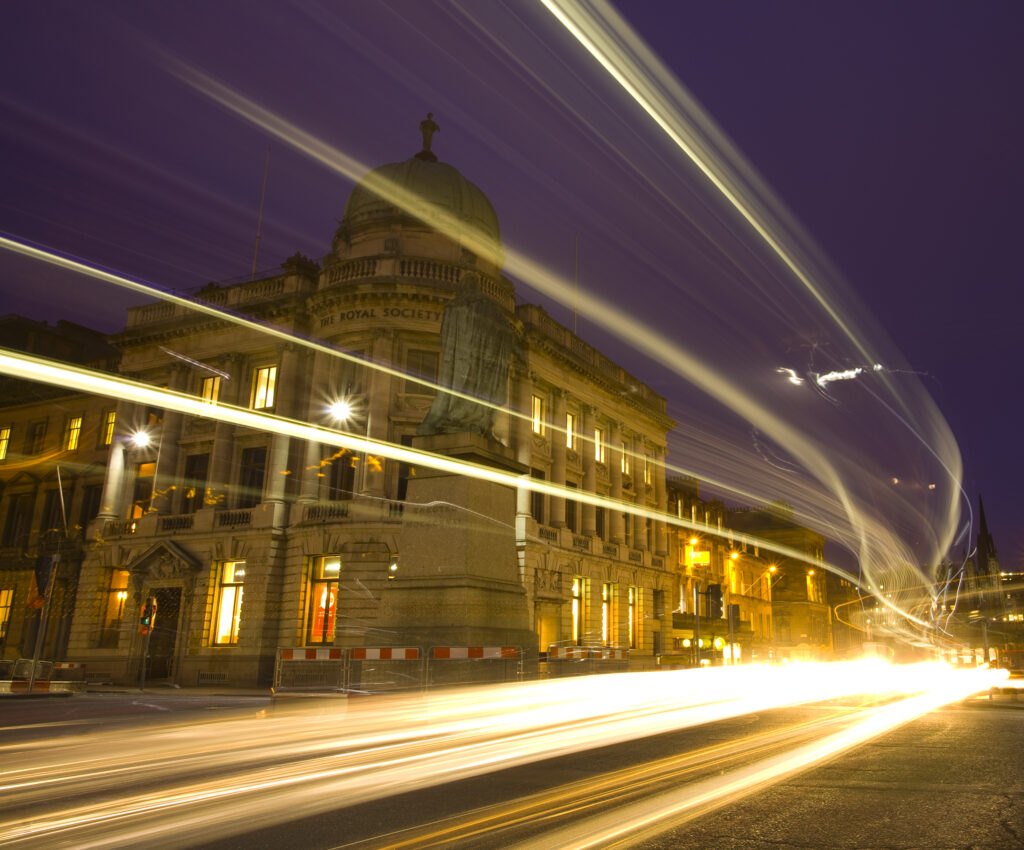
Scotland, Edinburgh, Edinburgh City. Rush-hour traffic on Hanover Street.
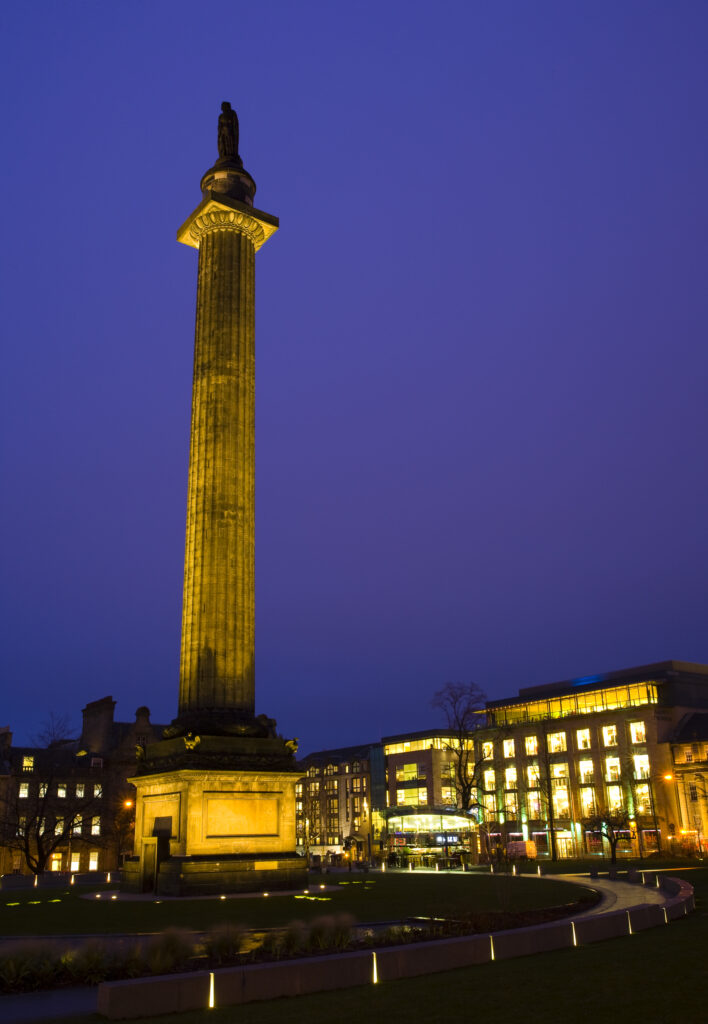
Scotland, Edinburgh, St Andrew's Square. Erected in 1823 in honour of Henry Dundas, the Melville Monument stands proud in St Andrew's Square. The statue depicts Dundas looking towards George Street.
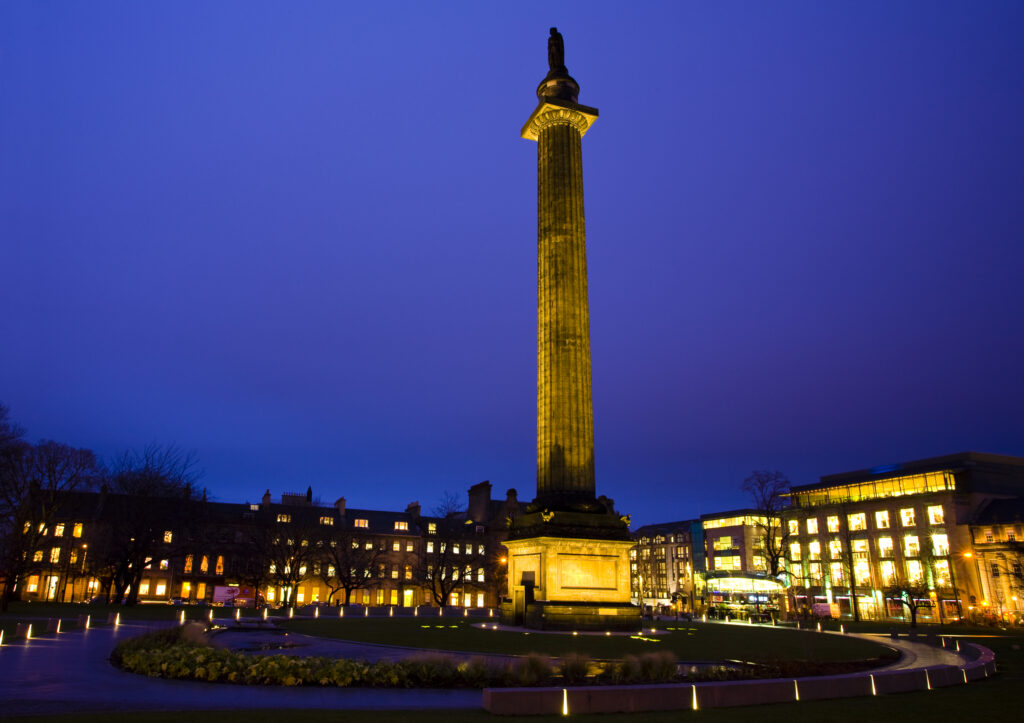
Scotland, Edinburgh, St Andrew's Square. Erected in 1823 in honour of Henry Dundas, the Melville Monument stands proud in St Andrew's Square. The statue depicts Dundas looking towards George Street.
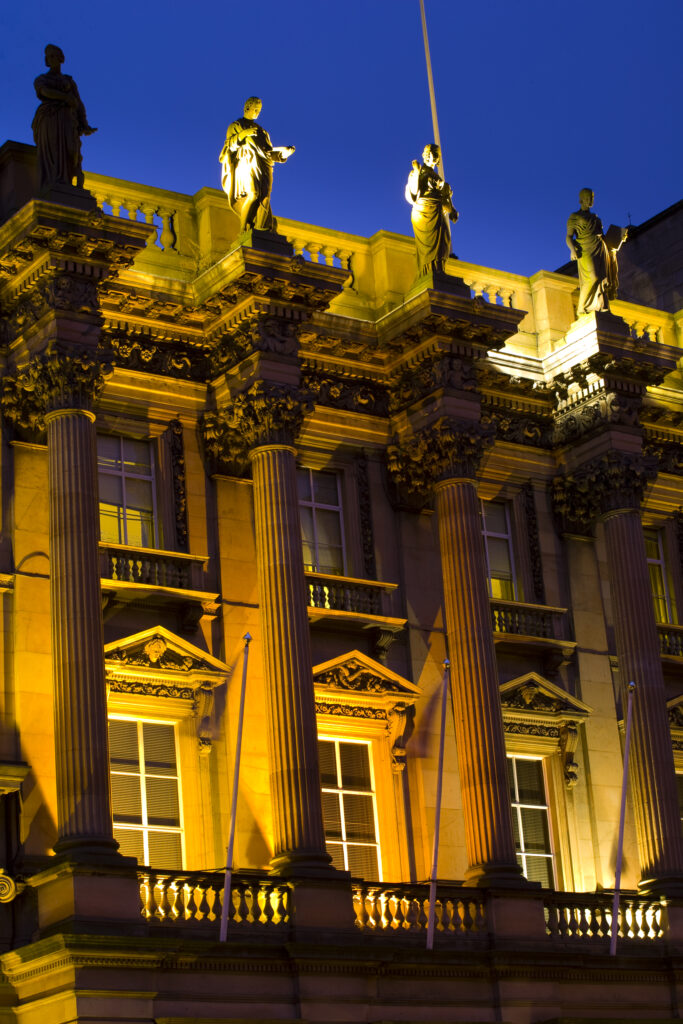
Scotland, Edinburgh, St Andrew's Square. Statutes situated on a flood lit building in St Andrew's Square.
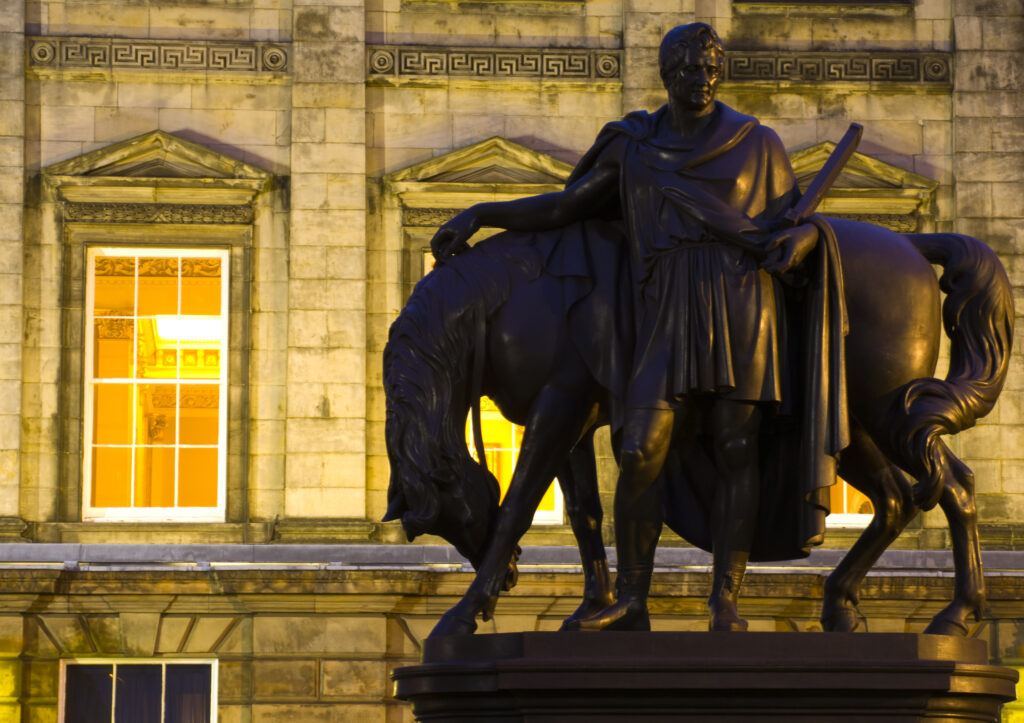
Scotland, Edinburgh, St Andrew's Square. Statue of Sir John Hope, the 4th Earl of Hopetoun, a noted soldier born at Hopetoun House in Edinburgh. The statue is located in front of Dundas House, the registered office of the Royal Bank of Scotland of whom Hope had been a governor.
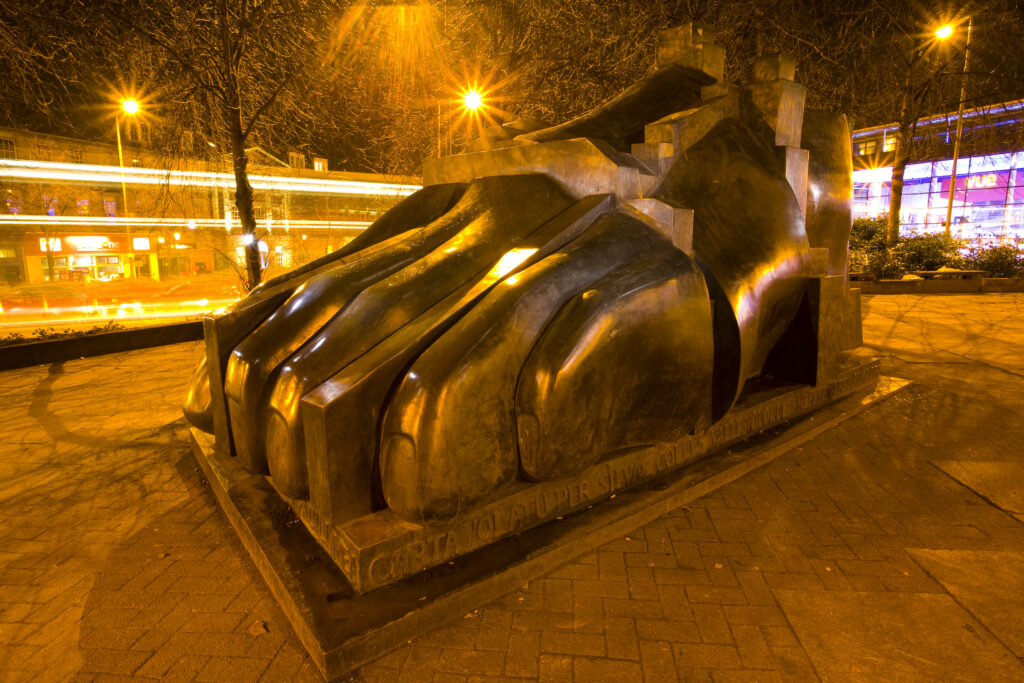
Scotland, Edinburgh, The Manuscript Of Monte Cassino. The Manuscript Of Monte Cassino, a three piece sculpture by Sir Eduardo Paolozzi located outside the St Mary's Roman Catholic Cathedral. Perhaps unsurprisingly, this sculpture is often referred to as the 'Big Foot'.
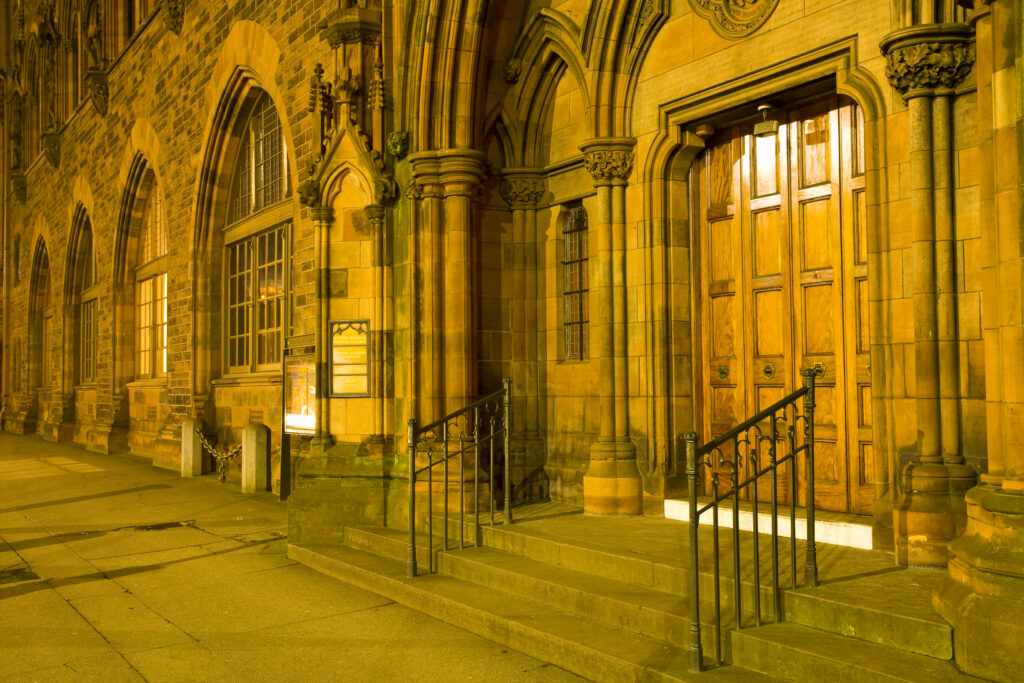
Scotland, Edinburgh, Scottish National Portrait Gallery. The Scottish National Portrait Gallery at the time of construction was the worlds first purpose-built portrait gallery.
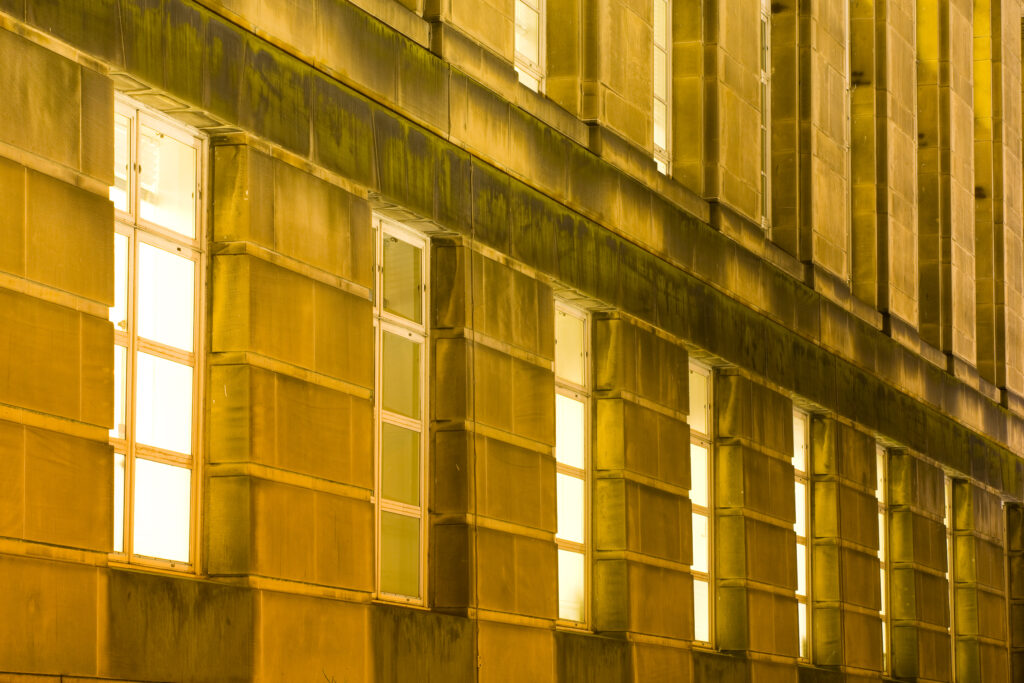
Scotland, Edinburgh, Edinburgh City. Detail view of the facade of Saint Andrews House, a category 'A' listed example of an art deco style building considered to be one of the finest in Scotland.
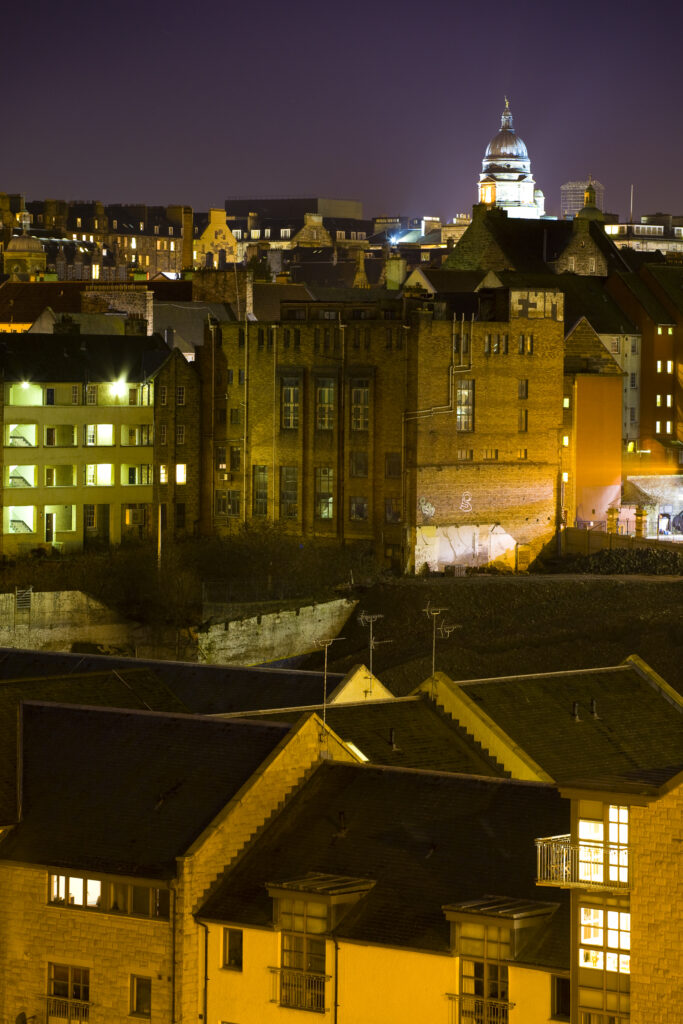
Scotland, Edinburgh, Edinburgh City. Looking across the city and the variety of new and old buildings.
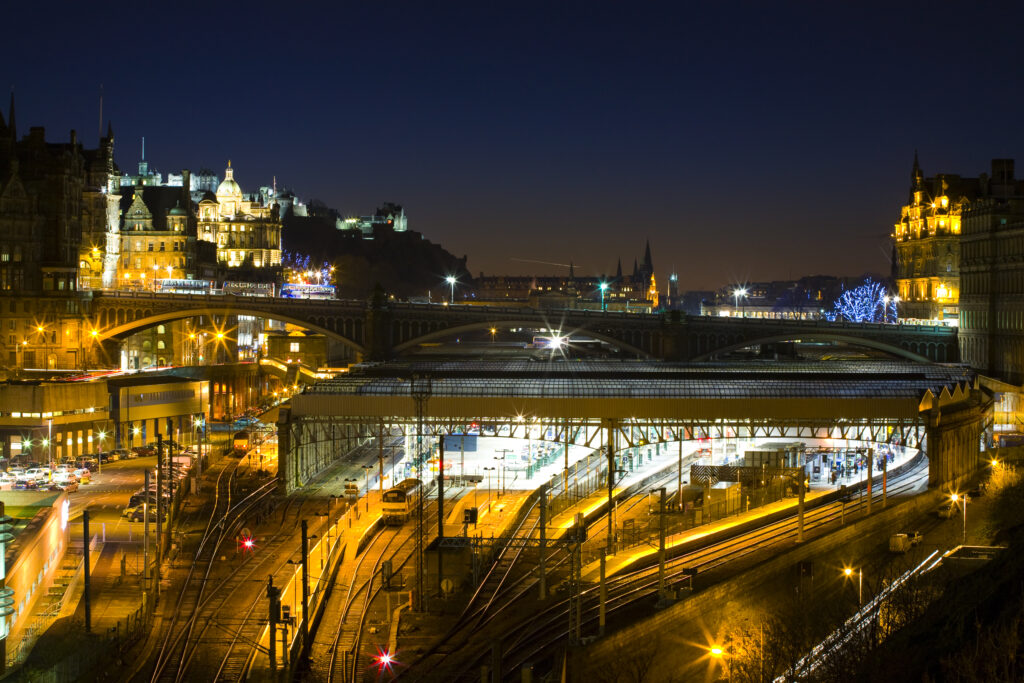
Scotland, Edinburgh, Waverley Station. Waverley station, the principal railway station in Edinburgh, situated beneath the North Bridge linking the two towns.
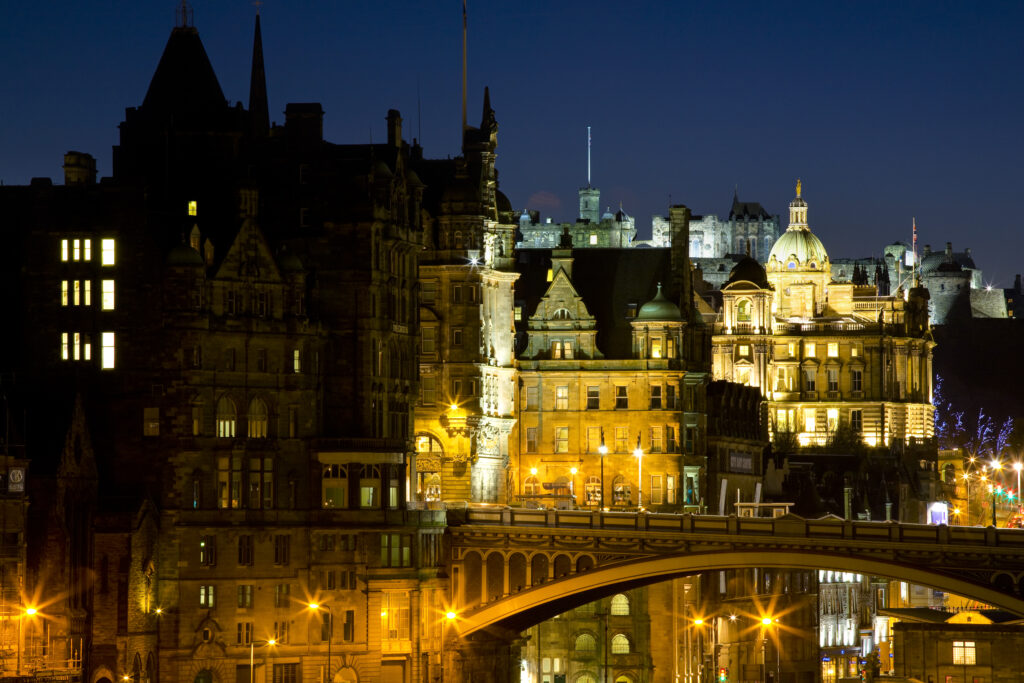
Scotland, Edinburgh, Old Town. Looking from the east of the North Bridge towards the Castle, Bank of Scotland and Scotsman building in the Old Town.
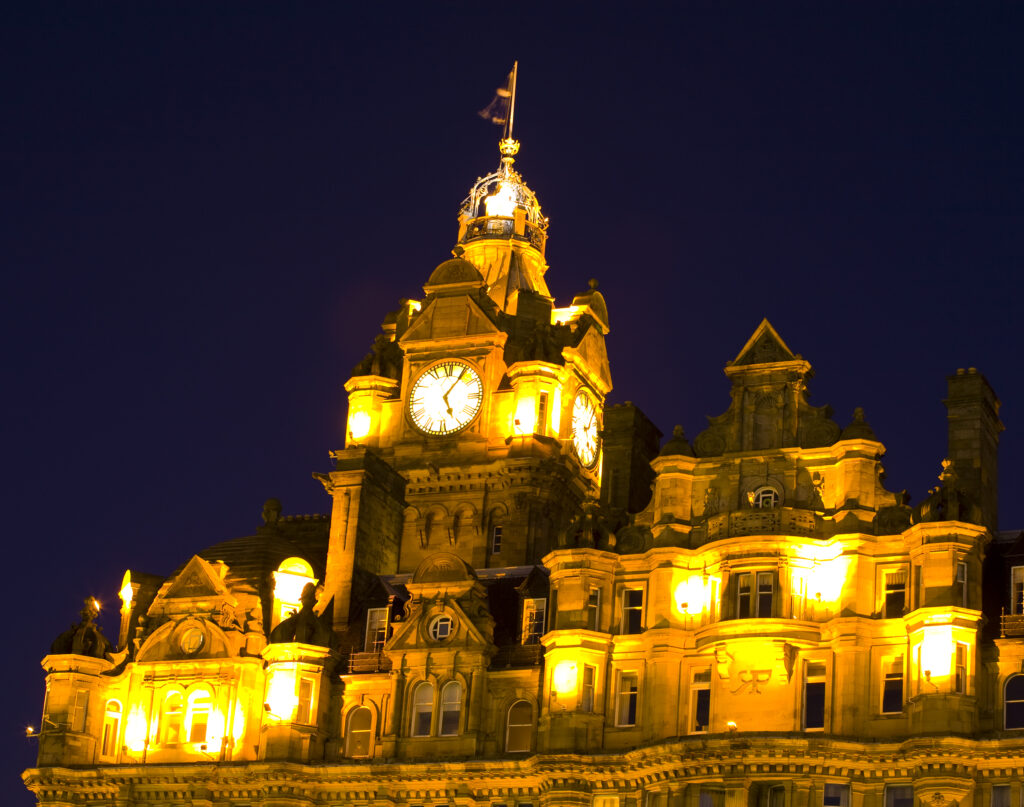
Scotland, Edinburgh, Balmoral Hotel. The Balmoral Hotel designed by architect W. Hamilton Beattie and originally opened in 1902 as the North British Hotel. The hotel was renamed as the Balmoral after refurbishment in the 1980s.
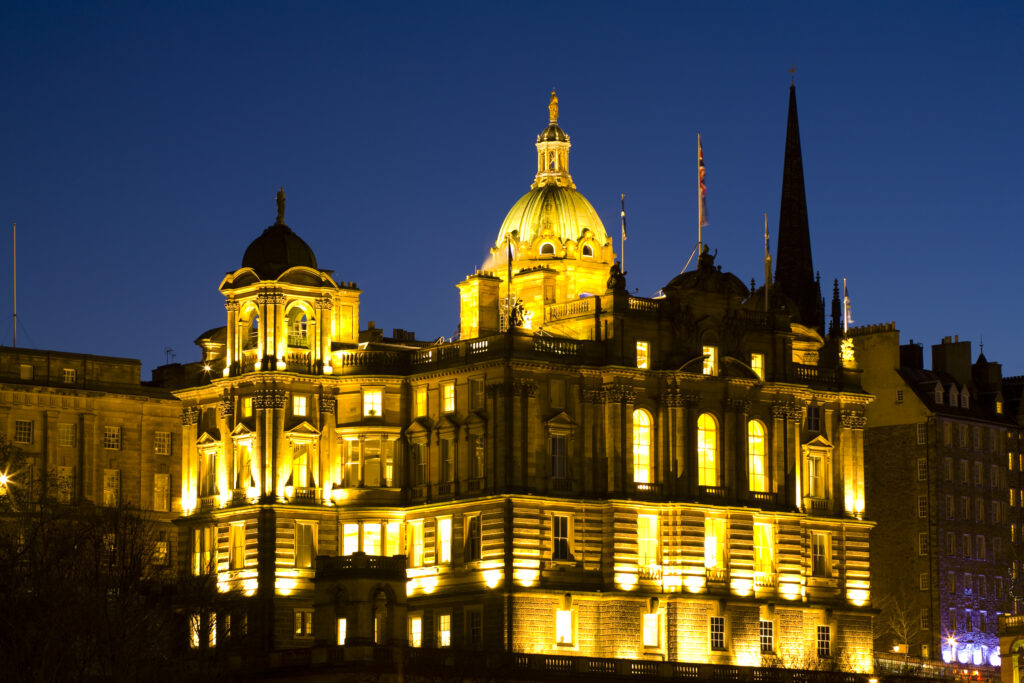
Scotland, Edinburgh, Bank of Scotland. A prominent feature of the Edinburgh skyline, the Bank of Scotland head office on The Mound. Construction of this impressive building was completed in 1806.
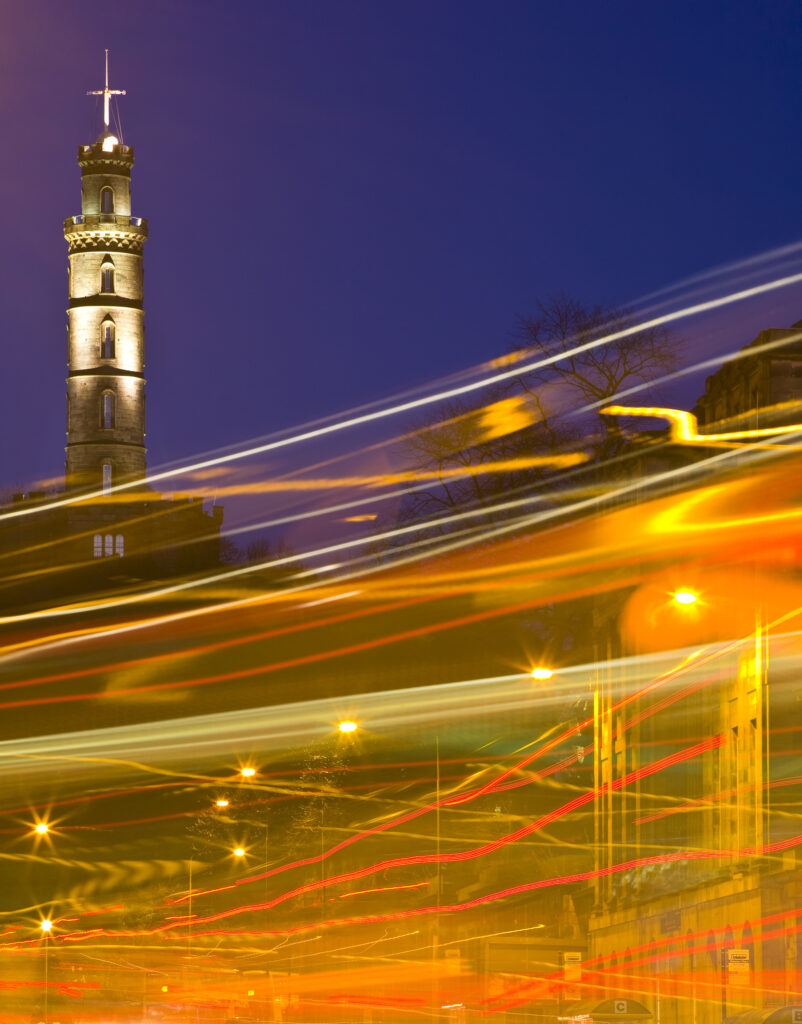
Scotland, Edinburgh, Waterloo Place. Busy traffic along Waterloo Place, overlooked by the Nelson Monument.
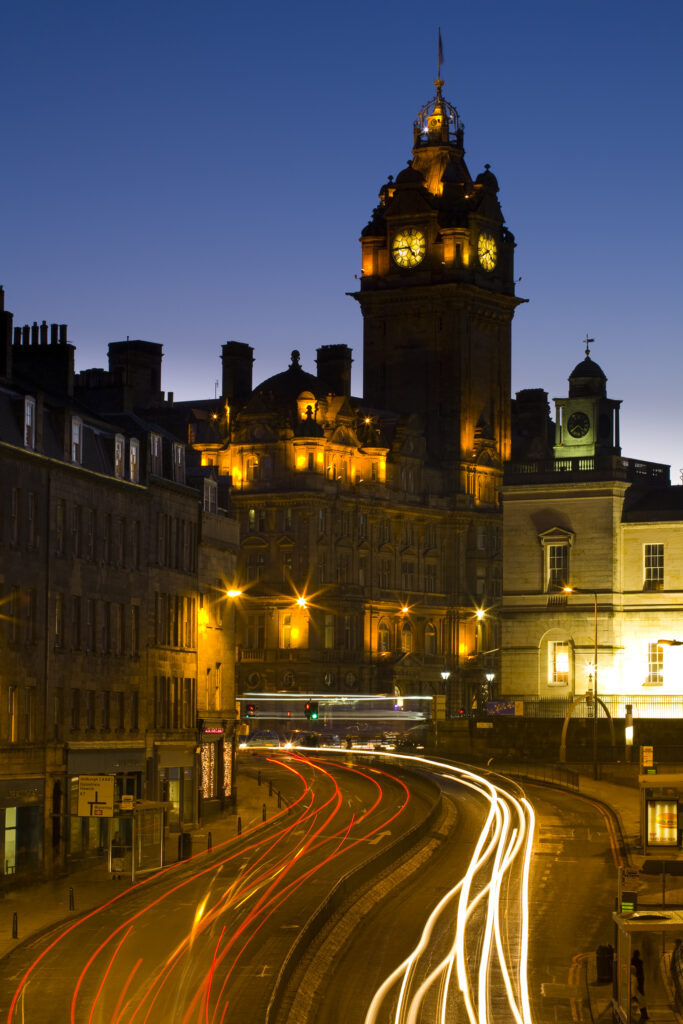
Scotland, Edinburgh, Leith Street. Rush hour traffic on Leith Street looking towards the Balmoral Hotel and the Register House.
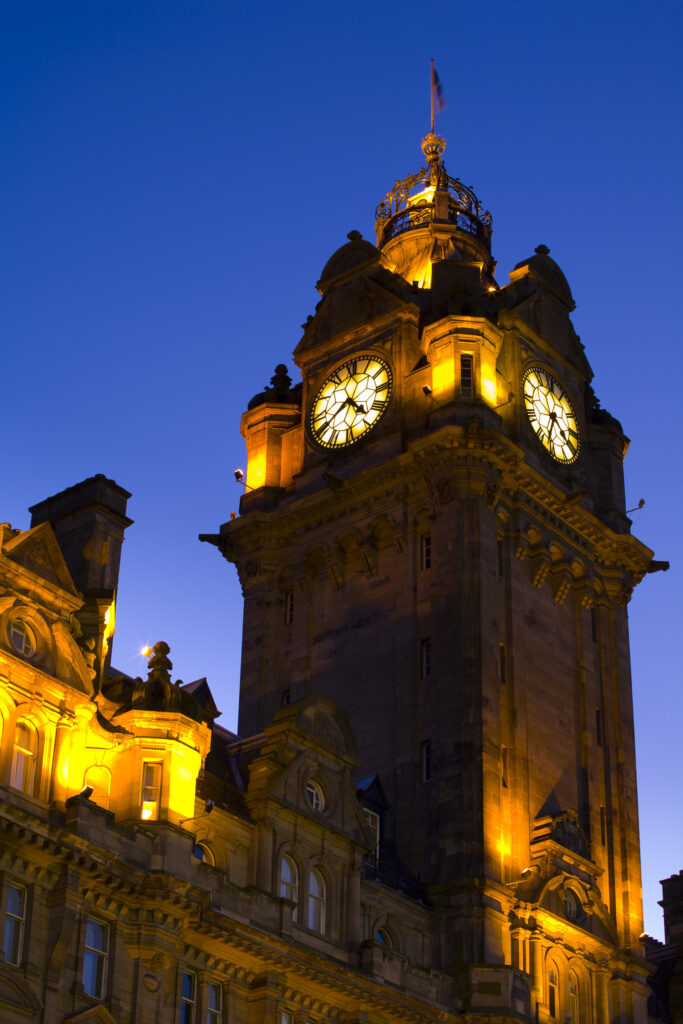
Scotland, Edinburgh, Balmoral Hotel. Often referred to as the most photographed clock tower in Scotland, the Balmoral Hotel is an impressive feature of the Edinburgh skyline.
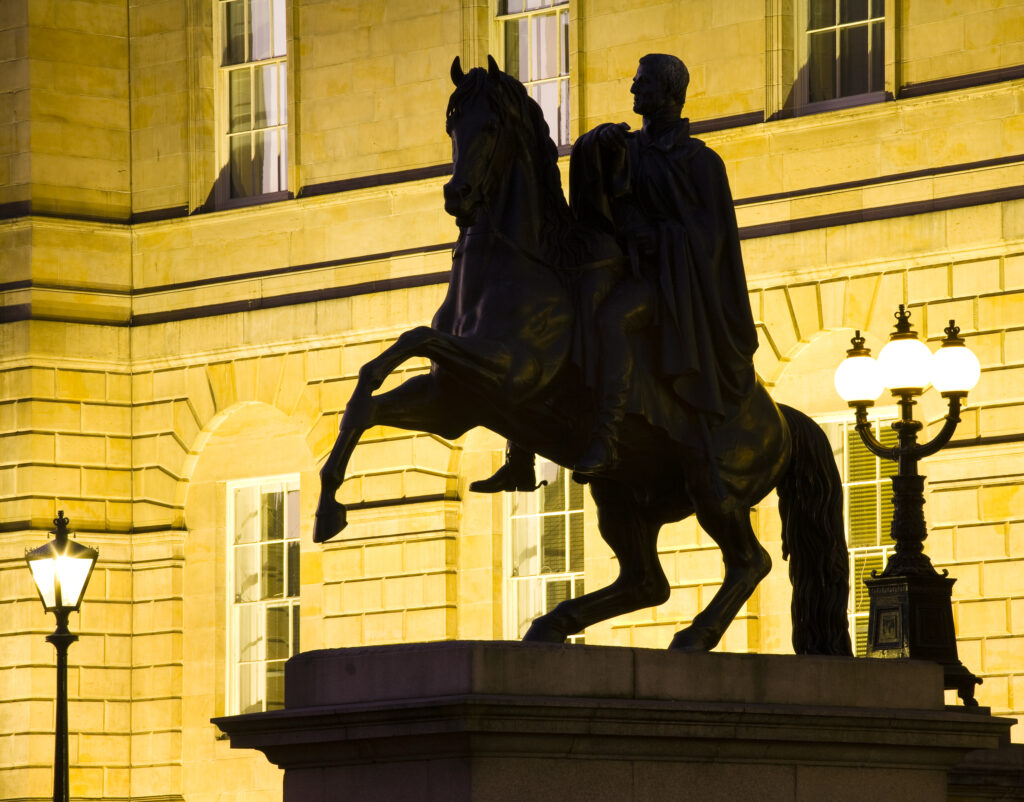
Scotland, Edinburgh, Register House. Statue of the Duke of Wellington on horseback situated in the front of the Register house.
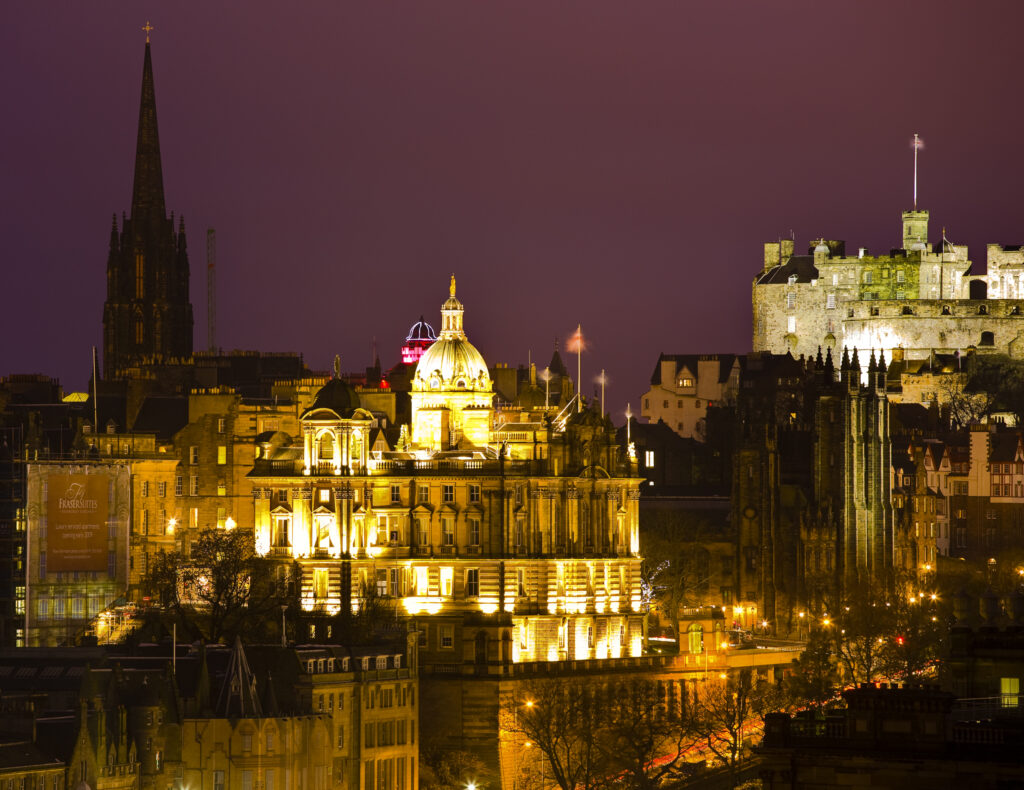
Scotland, Edinburgh, City Skyline. City skyline viewed from Calton Hill looking towards Castle Rock and the surrounding old town.
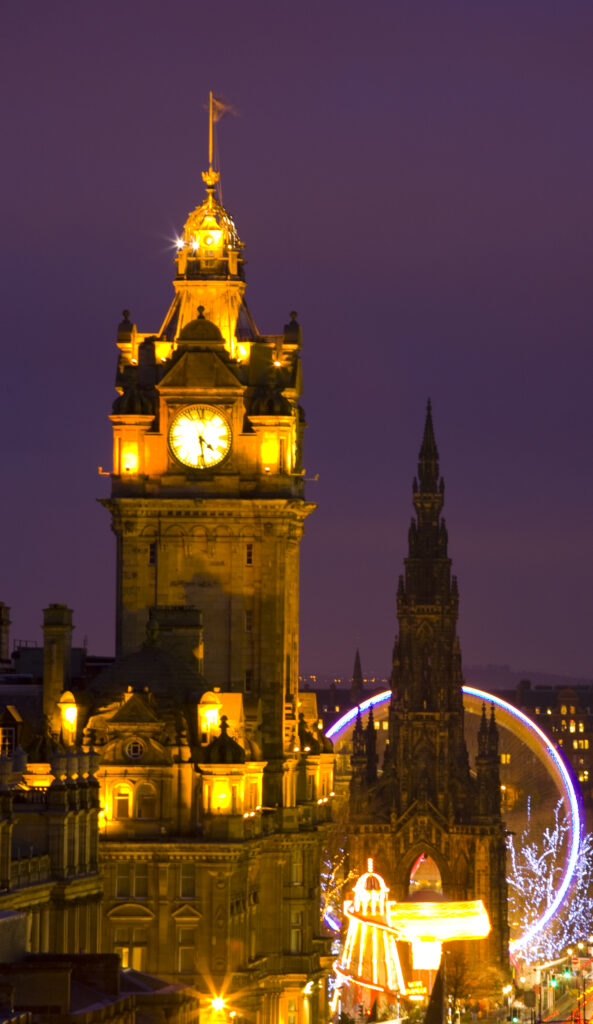
Scotland, Edinburgh, City Skyline. Impressive skyline of Edinburgh City viewed from Calton Hill looking towards Princes Street and the Walter Scott Monument.
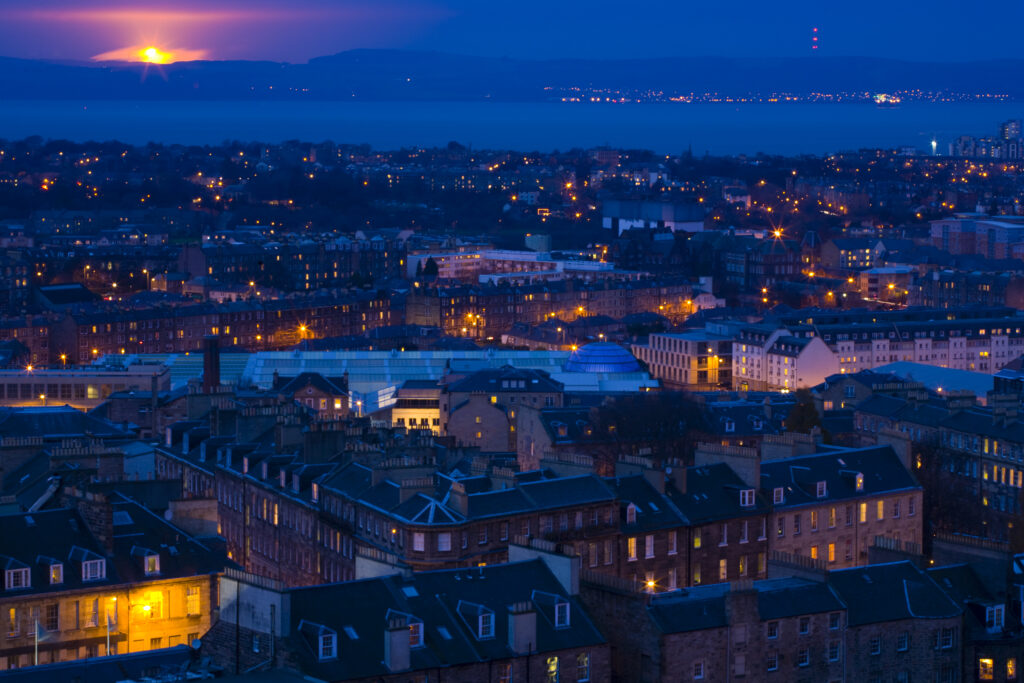
Scotland, Edinburgh, City Skyline. Edinburgh city viewed from Calton Hill looking towards the River Forth.
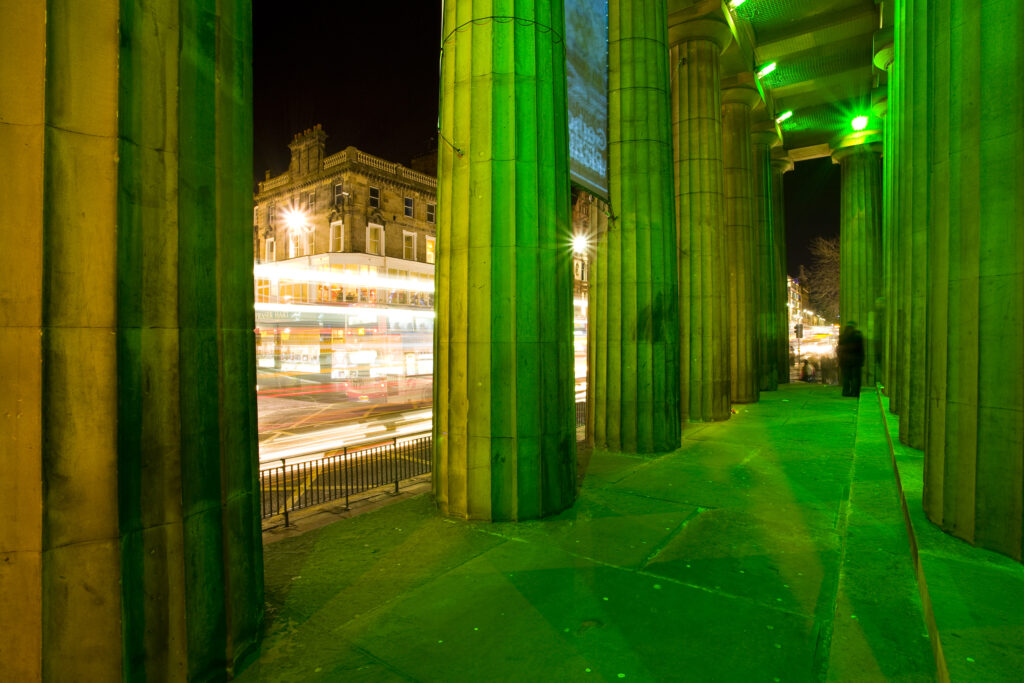
Scotland, Edinburgh, Royal Scottish Academy. Illuminated facade of the Royal Scottish Academy on the busy Princes Street.
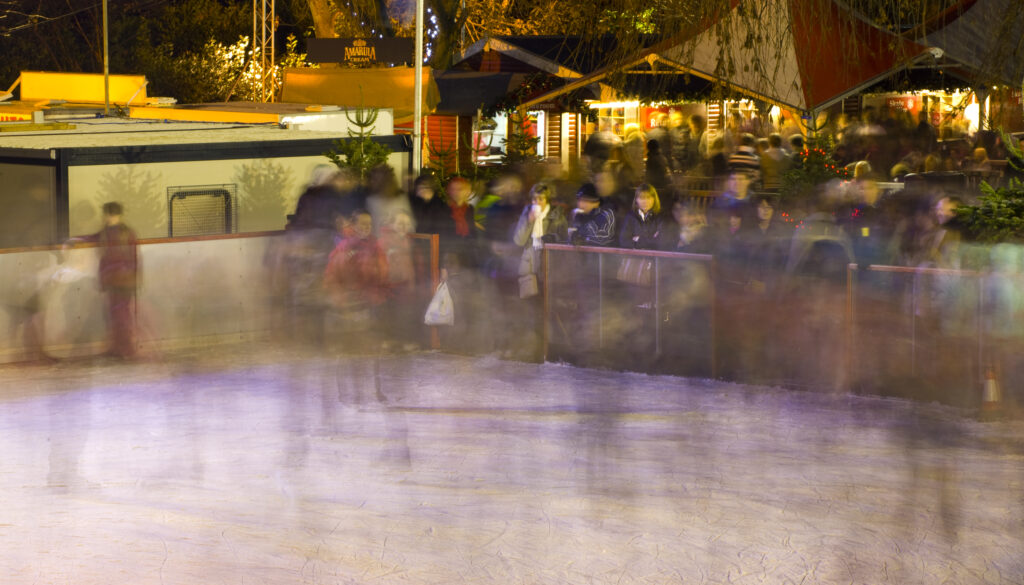
Scotland, Edinburgh, Christmas Fair. Ice rink in the East Princes Street Gardens.
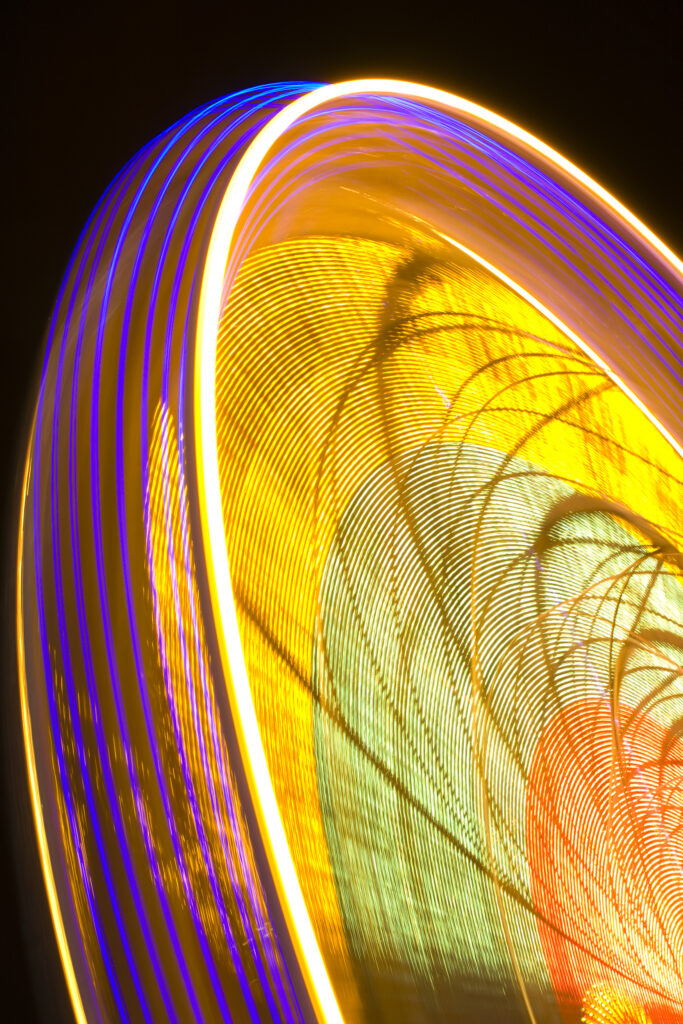
Scotland, Edinburgh, Christmas Fair. A Ferris wheel forming part of the city Christmas fair held near the Scott Monument in East Princes Street Gardens.
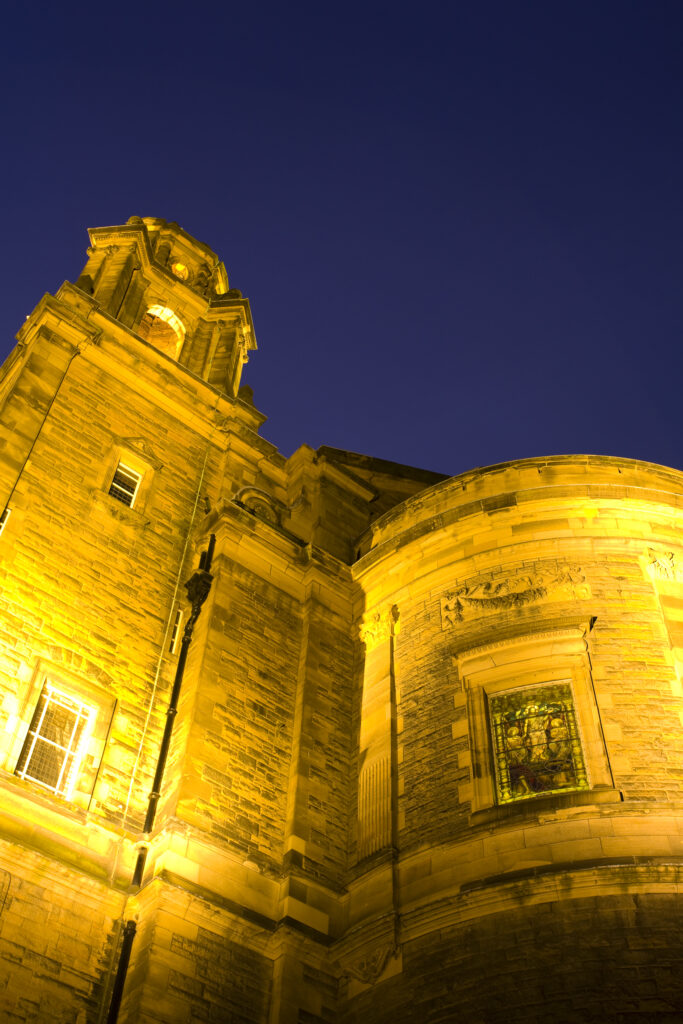
Scotland, Edinburgh, Saint Cuthberts. A church has stood on the hallowed land below Castle Rock since the 7th century when St Cuthbert, a famous Northumbrian Saint, built the first church with mud and wattle. Crossfire between the castle and opposing parties has led to the church being damaged or destroyed on numerous times, resulting in numerous rebuilds with the final church being constructed in 1894.
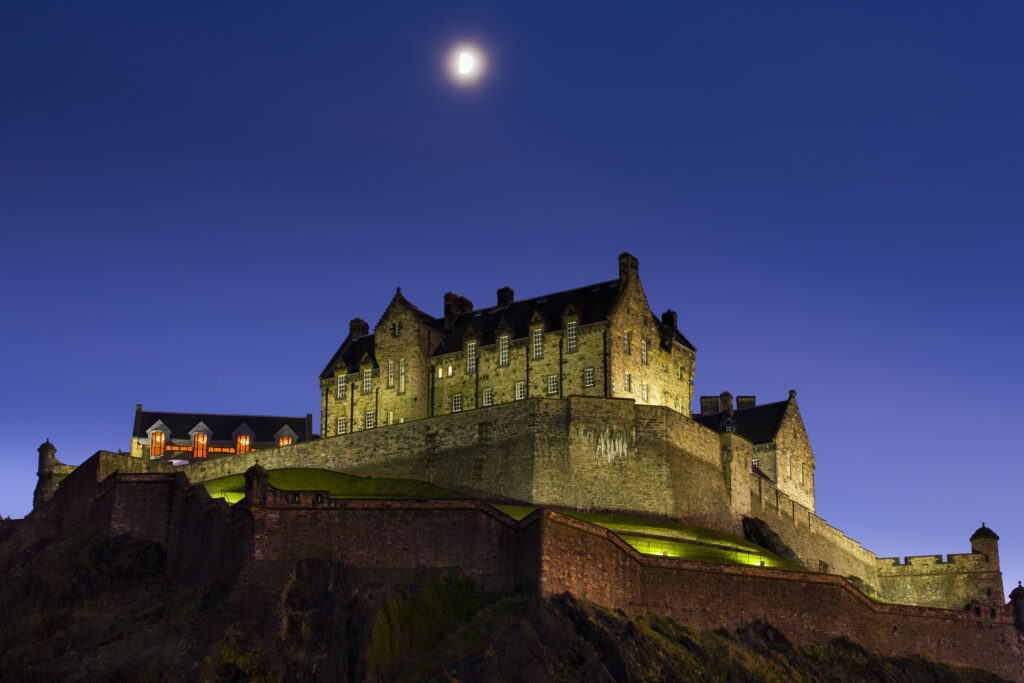
Scotland, Edinburgh, Edinburgh Castle. Edinburgh Castle is built upon the remains of an extinct volcano, originally known as Lookout Hill but now known as Castle Rock, which has been used as a stronghold for over 3000 years.
Favourites
Photofeed
