
Some landscape photography trips flow naturally. You arrive, find a composition and settle into the process. Others begin with a long walk and the increasingly uncomfortable feeling that you might go home without taking a photograph.
My autumn visit to Kielder Forest in Northumberland started firmly in the second category. After struggling to find a composition the previous evening, I woke to my first frost of the season, hoping the morning light would help me see things differently.
The day eventually produced woodland photographs, a long exposure and a waterfall image. However, the photograph that made the biggest difference was the first one—even though it was probably the weakest of the collection.
Why I Find Kielder Forest Difficult to Photograph
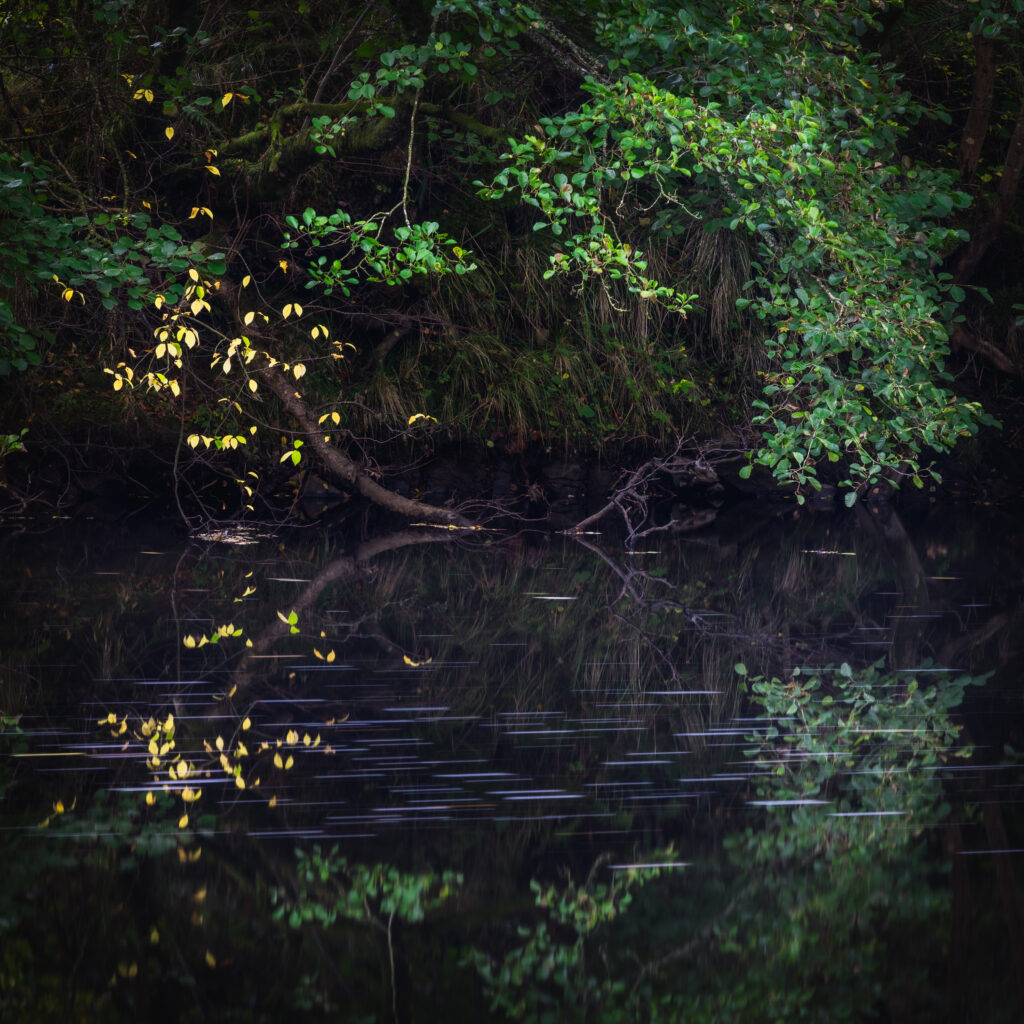
Kielder offers an enormous landscape to explore, but finding a clear composition among the trees can be challenging.
Much of the woodland is a working plantation. Dense trees, areas of felling and new planting can make a scene feel visually cluttered. There are attractive pockets, but finding them requires patience.

For me, woodland photography often comes down to simplifying what’s in front of the camera. I’m looking for a recognisable subject, some separation from its surroundings and a way to organise the competing branches, trunks and foliage.
That morning, I initially followed a path that I hoped would lead towards the water and possible mist. As I walked, I became less convinced it would give me the opportunities I wanted. Eventually, I turned around.
Changing direction was sensible, but I still needed to stop searching for the perfect scene and start making photographs.
Getting the First Photograph in the Bag
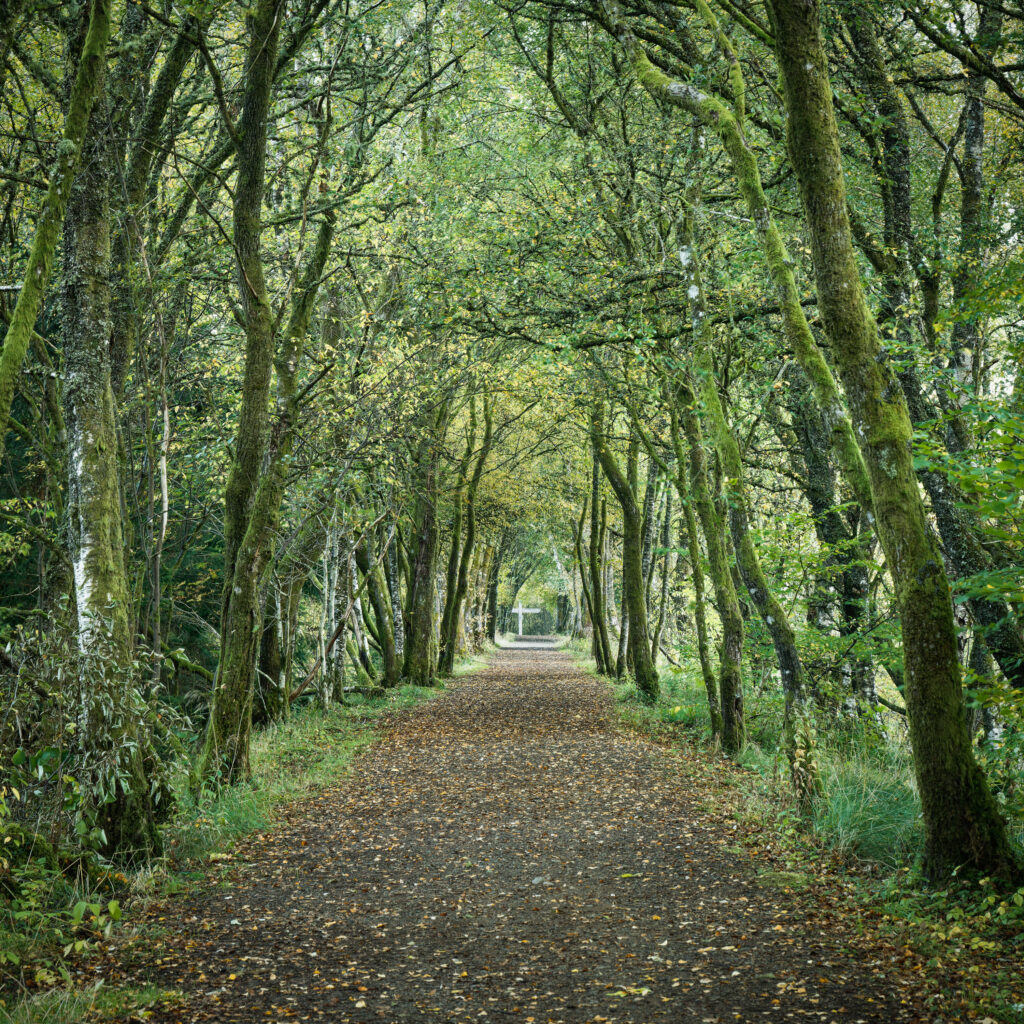
An avenue of trees caught my attention, with a path leading towards a signpost in the distance.
It wasn’t a portfolio-defining composition, and there were elements I would have preferred to exclude. However, the path gave the image a clear structure, and a square crop helped concentrate attention on the route through the trees.
I decided to take it.
That small decision changed the morning. Instead of worrying about leaving without a photograph, I could relax and look for the next opportunity.

I’m not suggesting you photograph anything simply to press the shutter. The first image still deserves care. But if you’ve found something promising, it can be more useful to work with it than keep walking in the hope that an exceptional composition is waiting around the corner.
Using Light to Simplify Woodland Compositions
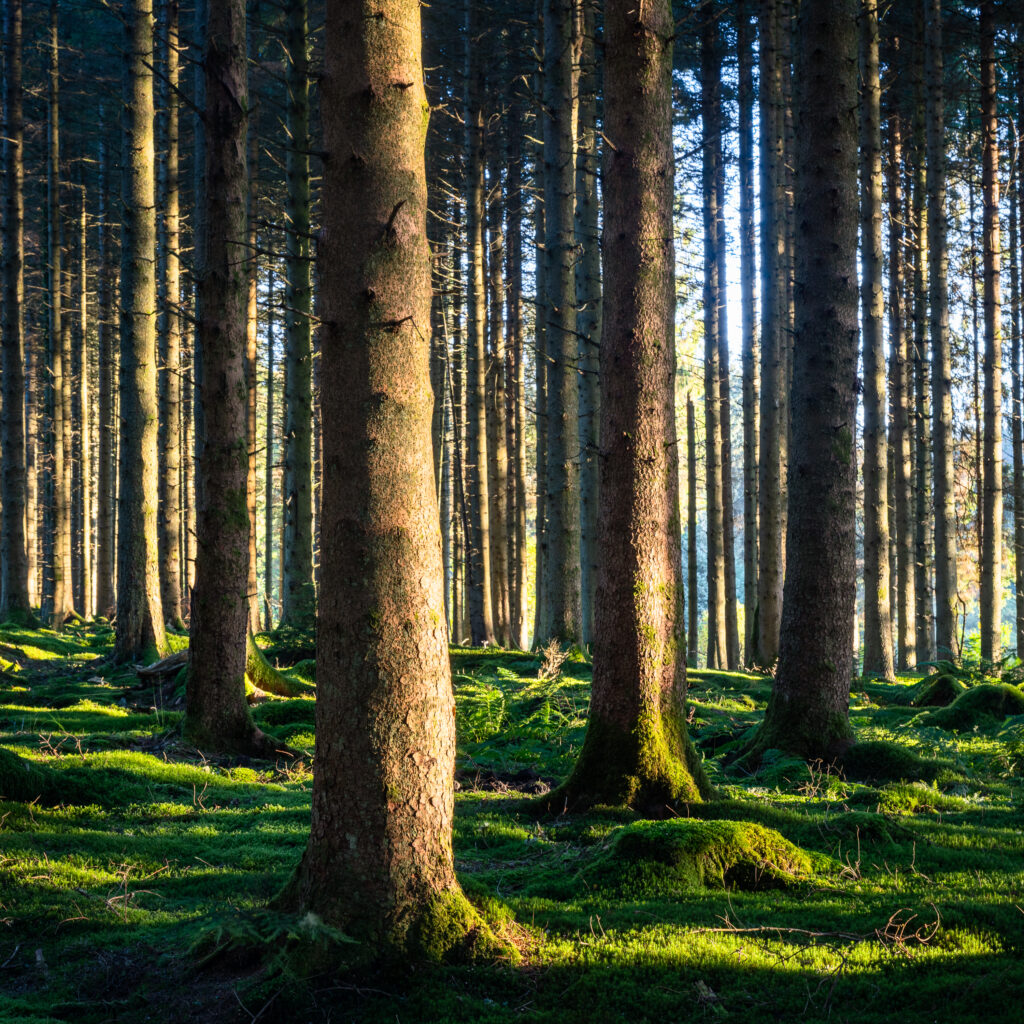
As the sun rose, light began filtering through the forest. One prominent tree caught the side lighting while the surrounding trunks remained darker.
That gave me the separation I had been looking for. The light identified the subject and helped it stand out within the woodland.
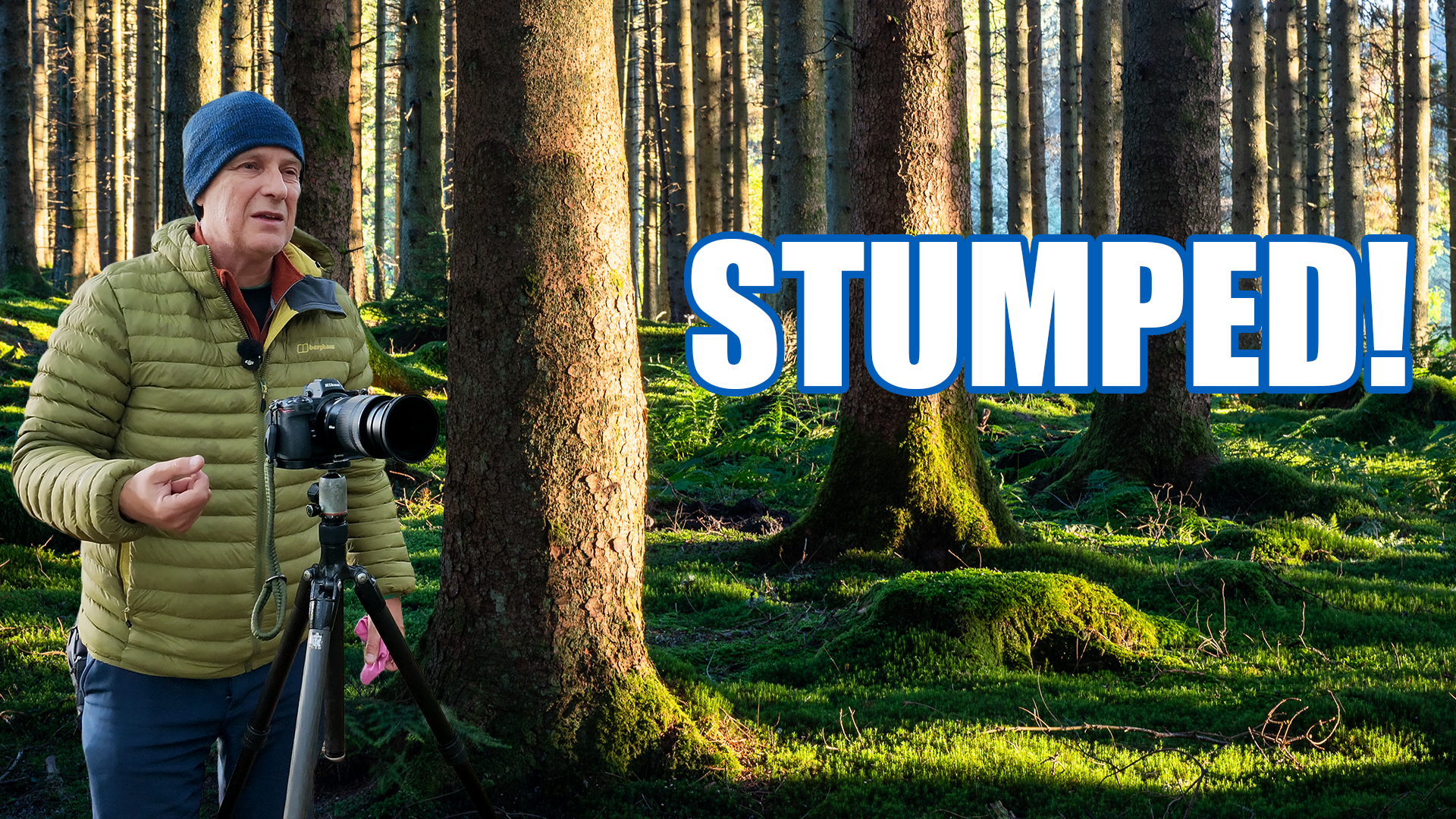
Working with the Nikon Z7, I needed to react quickly before the illumination disappeared. Familiarity with the camera mattered: this wasn’t the moment to search through menus or rethink my setup.
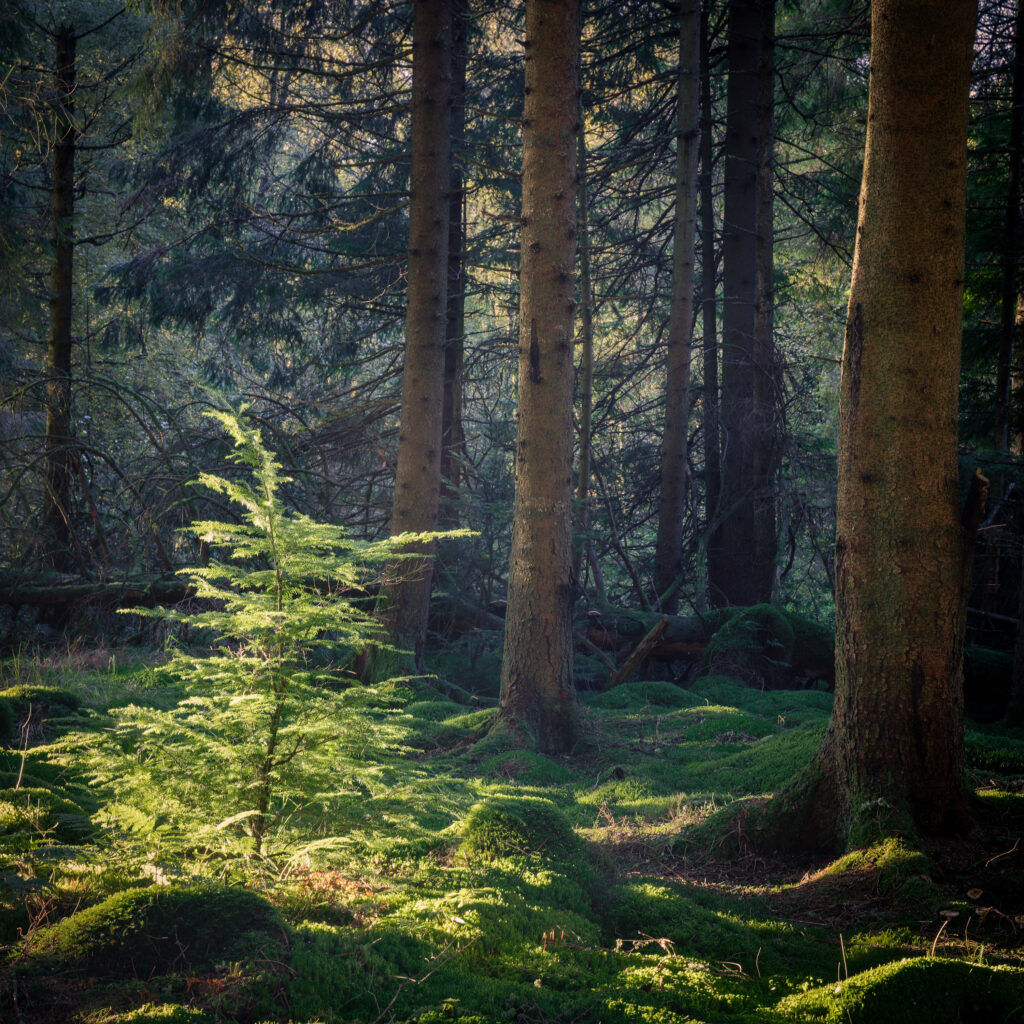
Another composition featured a small illuminated tree against larger trees in shadow. The contrast created the photograph, but it also raised an exposure question.
Should I bracket exposures to record more shadow detail, or let those areas remain dark?
I chose to retain the shadows. Their darkness supported the atmosphere and made the illuminated tree more prominent. Revealing every detail would have weakened the contrast that attracted me in the first place.
Changing the Plan Along the Forest Drive
Although I had found a few photographs, I still felt I was working hard for each composition. Rather than persist in the same area, I returned to the van and headed across the forest drive towards a waterfall.
Along the way, I stopped at Blakehope Nick, a location I had photographed before.
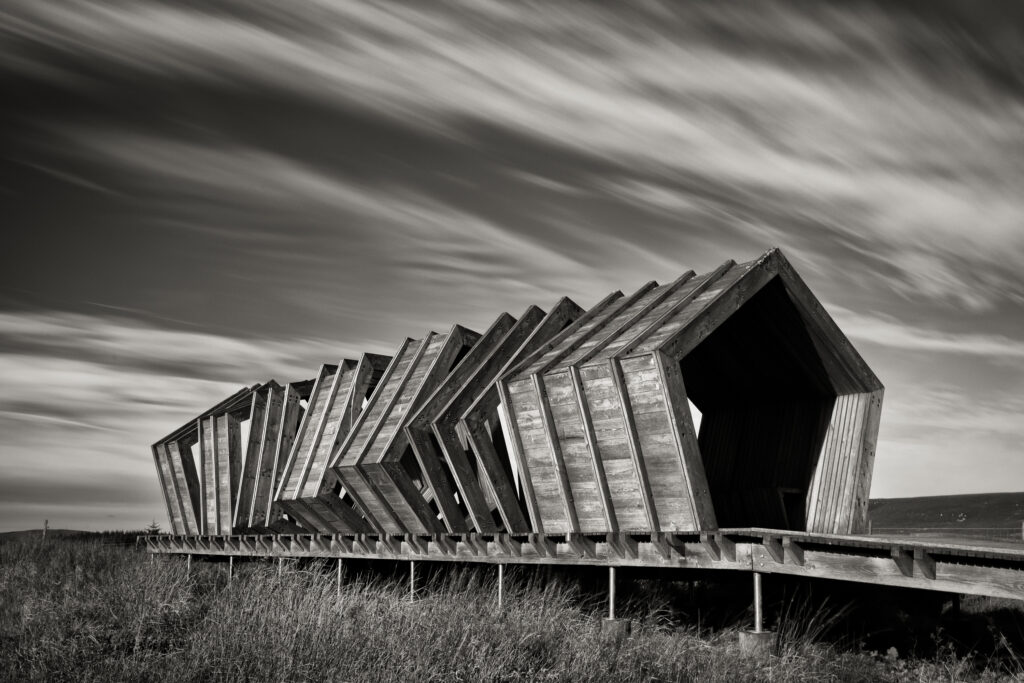
Initially, I wondered whether there was any reason to photograph it again. Then I noticed the clouds and began considering a long exposure.
The challenge was choosing an exposure time that conveyed movement without merging the clouds into an indistinct blur. I settled on around 30 seconds, using a neutral density filter, and framed wide enough to include their arching shape.
It was a useful reminder that revisiting a subject can still produce something different. The question is what the conditions offer on that particular day.
Finishing with a Waterfall Photograph
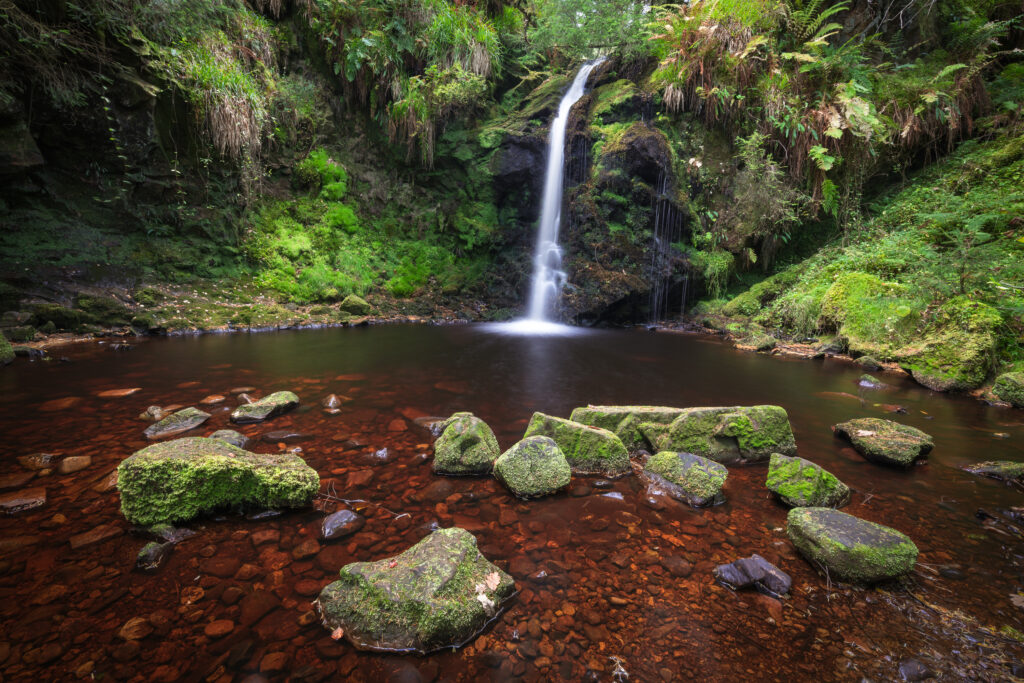
The final stop brought a welcome change of subject. A shaded waterfall, foreground rocks and rich greens offered a composition I could engage with immediately.
I fitted the 14–30mm lens and worked at 14mm to emphasise the rocks, with the waterfall behind them.
Keeping bright sky out of the frame helped avoid unnecessary contrast. I also liked the reddish colour of the water against the surrounding greens.
There were compromises. I would have preferred more water covering part of the foreground stream bed, but the scene still had plenty to offer. Working with those conditions was more productive than dwelling on what was missing.
Your First Photograph Can Unlock the Rest
Looking back, the first photograph mattered because it interrupted an unhelpful mindset.
Once I had made it, I felt less pressure. I could respond to the light, explore other compositions and change location when that seemed worthwhile.
Next time you’re struggling at the start of a landscape photography outing, give a promising composition your attention. It doesn’t have to become your favourite photograph of the day.
Sometimes, its most useful job is simply to get you started.


Leave a Reply