
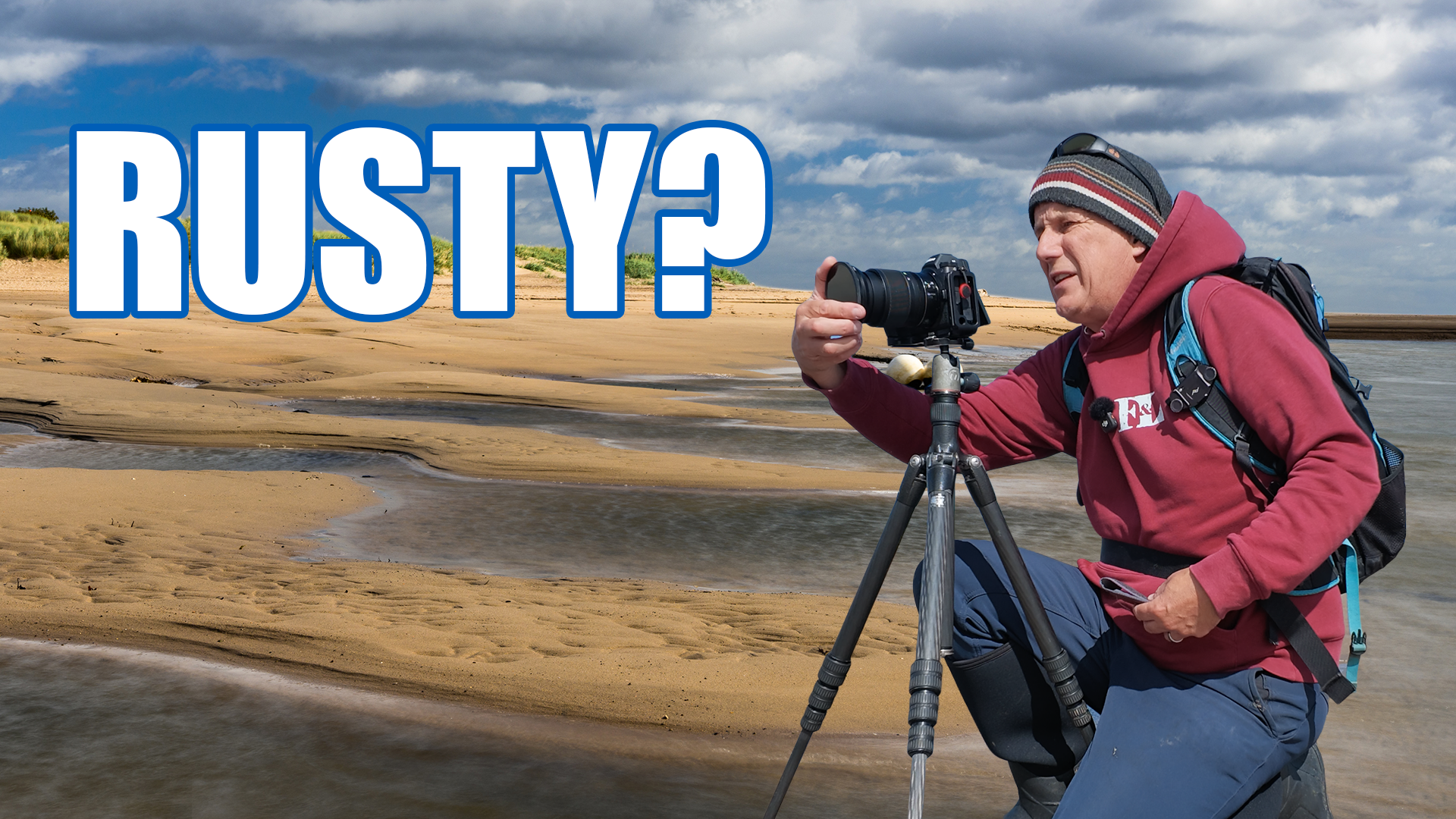
Sometimes the hardest part of photography is simply picking up the camera and getting started again.
After three or four weeks without doing any serious landscape photography, I could feel myself becoming creatively sluggish. Autumn was approaching, the landscape photography season was about to become busy again, and I needed something to get me moving.
My solution was a simple one: travel to Alnmouth on the Northumberland coast, set a timer for one hour and see how many worthwhile photographs I could make before it ran out.
There was no carefully planned route and no guarantee of dramatic light. I took one camera, a 24–70mm lens and a few filters, then gave myself permission to react to whatever I found.
Why set a one-hour photography challenge?
An open-ended photography trip can sometimes create too much pressure. You arrive expecting to produce something exceptional, spend far too long considering every possibility and end up taking very few photographs at all.

A time limit changes that.
With only one hour available, there is less room for overthinking. You have to walk, observe, make decisions and move on. The aim is not necessarily to create a portfolio masterpiece. It is to reconnect with the process of looking and photographing.
Alnmouth was ideal for the challenge. It offers boats, sand, tidal water, colourful details and wide coastal views, all within a relatively compact area beside the estuary and beach. The conditions, however, were less than ideal. It was extremely windy and the light was inconsistent, so I knew from the outset that I would need to work with what was there rather than wait for perfection.
Photograph one: simplifying a busy boat scene
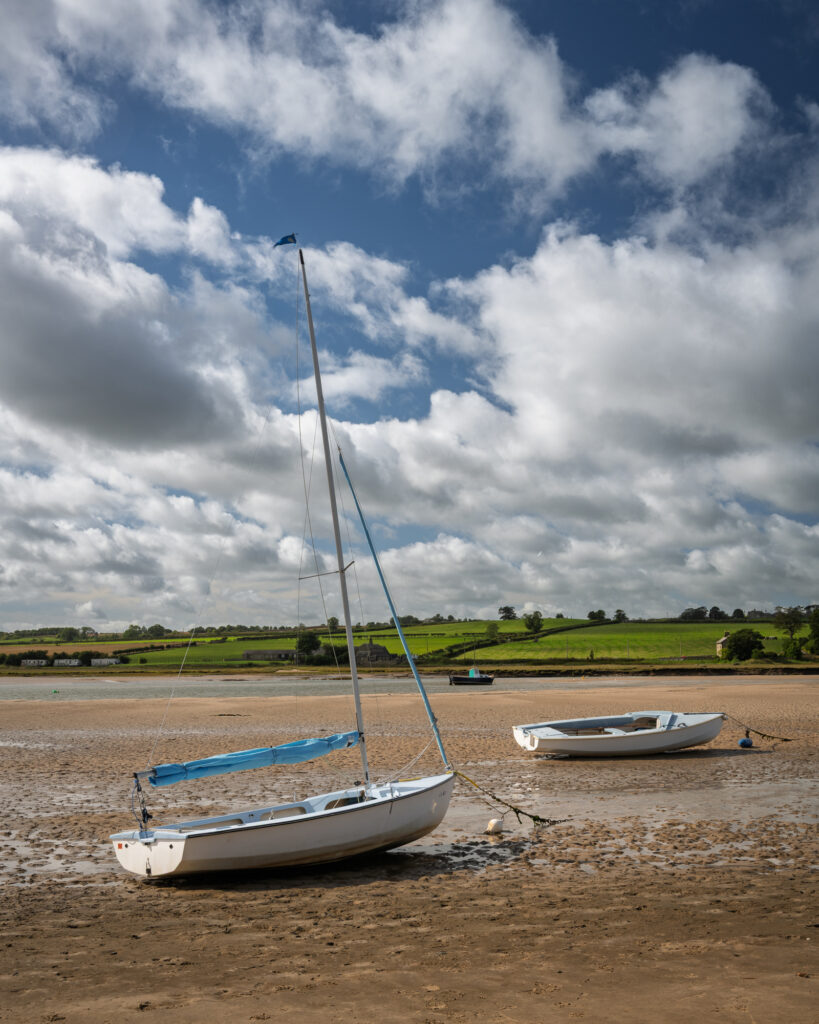
The first subject to catch my attention was a boat surrounded by ropes, a flag and other small details. I initially considered using a long exposure, but the strength of the wind made that impractical. The flag and ropes would have moved too much and become distracting.
Instead, I concentrated on creating a cleaner composition. I turned the camera into portrait orientation and framed the scene with a 5:4 crop in mind. That shape suited the subject and helped remove some of the clutter that would otherwise have weakened the photograph.
I used a polarising filter to control reflections and improve the colour, selected an aperture of f/10 and waited briefly for a brighter patch of light. The result was a fairly straightforward image, but it gave me the first photograph of the hour and, more importantly, got the creative process underway.
That first frame is often the most important one on a day like this. Once it has been made, the pressure begins to disappear.
Using a panoramic crop to improve the composition
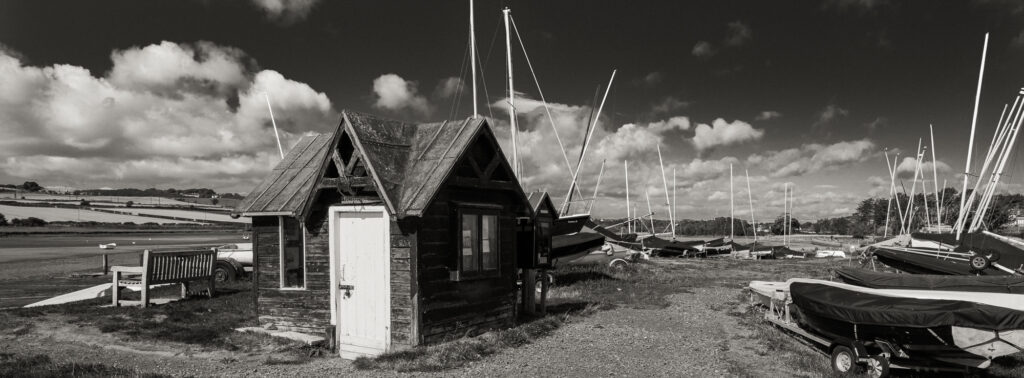
I continued towards Alnmouth harbour and stopped near the small hut beside the estuary. It is a characterful subject, but the wider scene included a large amount of fairly empty sky along with drain covers, steps and other foreground distractions.
This was a good opportunity to use a panoramic format.
My son had 3D-printed a small mask for the back of my Nikon that shows the proportions of the classic XPan-style frame. I set the camera display to 16:9 as an additional guide, knowing that I would apply a 65:24 crop later in Lightroom.
Thinking panoramically changed the photograph completely. The shallow frame removed much of the bland sky and untidy foreground while allowing me to retain the relationship between the hut, the surrounding boats and the estuary. It also introduced a more cinematic feel that suited the long, horizontal arrangement of the scene.
Crop ratios are not merely an editing decision. When you visualise the final shape while standing behind the camera, they can help you recognise compositions that might otherwise be overlooked.
A yellow buoy, a boat and the rule of odds
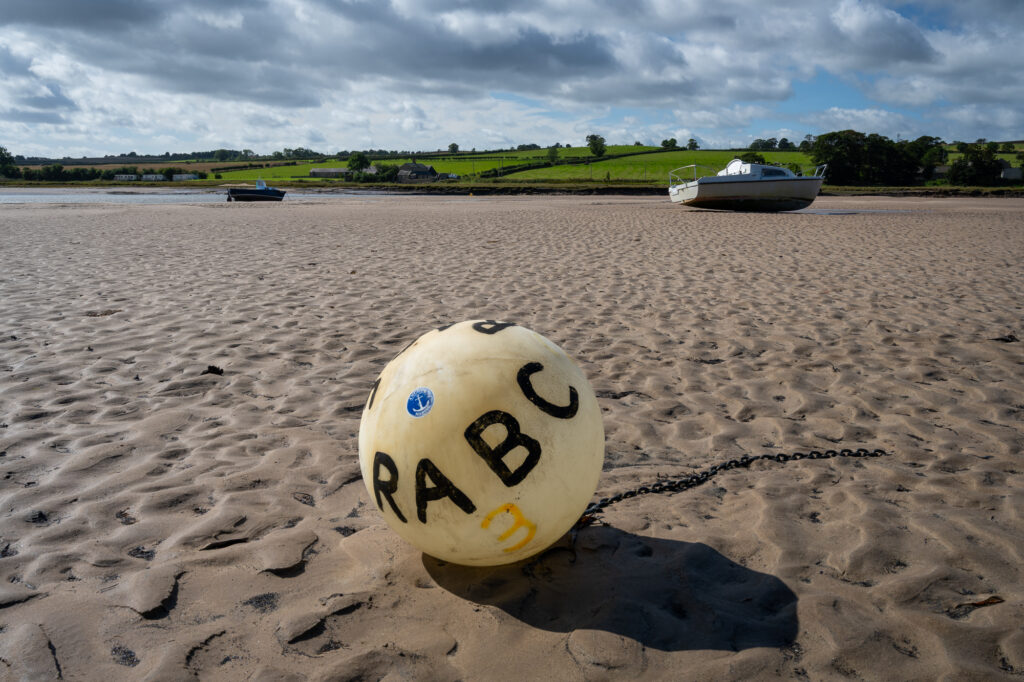
For the third photograph, I found a yellow buoy sitting on clean sand with a boat behind it. The simplicity of the setting immediately appealed to me.
I normally avoid placing the main subject directly in the centre of the frame, but rules are only useful when they help the photograph. Here, a central composition gave the image the balance it needed. The buoy and boat formed a loose triangular arrangement, while the three principal elements also made use of the rule of odds.
This was one of the cleaner compositions of the session. There were fewer distractions and the colour of the buoy provided a clear focal point against the more muted surroundings.
Limiting myself to the 24–70mm lens also helped. Rather than reaching for different equipment, I had to make the most of the available focal lengths and refine the framing from my position.
Experimenting with long exposures in strong wind
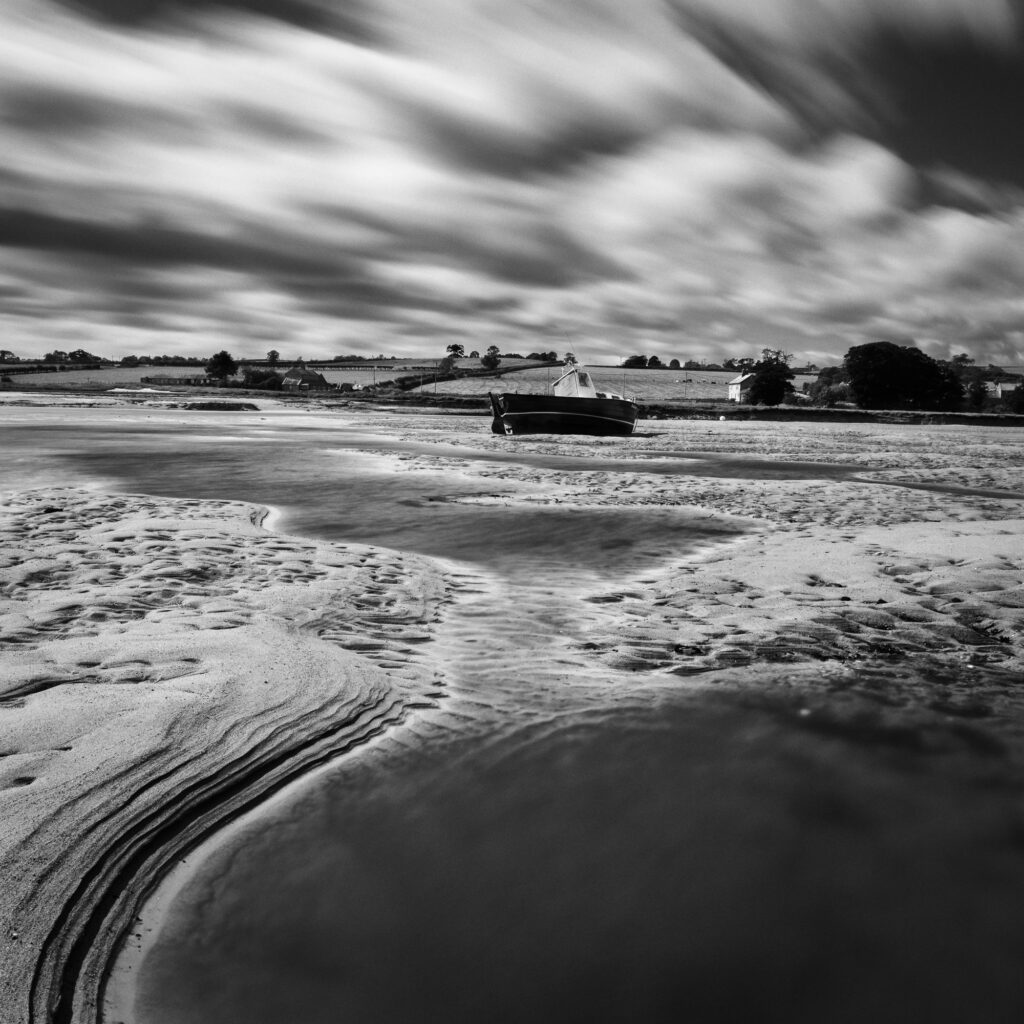
As the timer continued to count down, I found a series of tidal pools leading towards boats in the distance. The pools created a promising route through the picture, so I decided to try a long exposure despite the difficult wind.
My first attempt was around five seconds. I then adjusted the settings and tried approximately 13 seconds at f/13.
Long exposures can smooth moving water and simplify a scene, but they do not automatically make a stronger photograph. In this case, I was not entirely convinced by the result. The wind was making the whole process difficult and the composition did not feel as resolved as the earlier frames.
That is still a useful part of a timed challenge. Not every experiment has to succeed. Trying an idea, recognising its limitations and moving on is far more productive than standing in one place waiting indefinitely for it to work.
The final five minutes
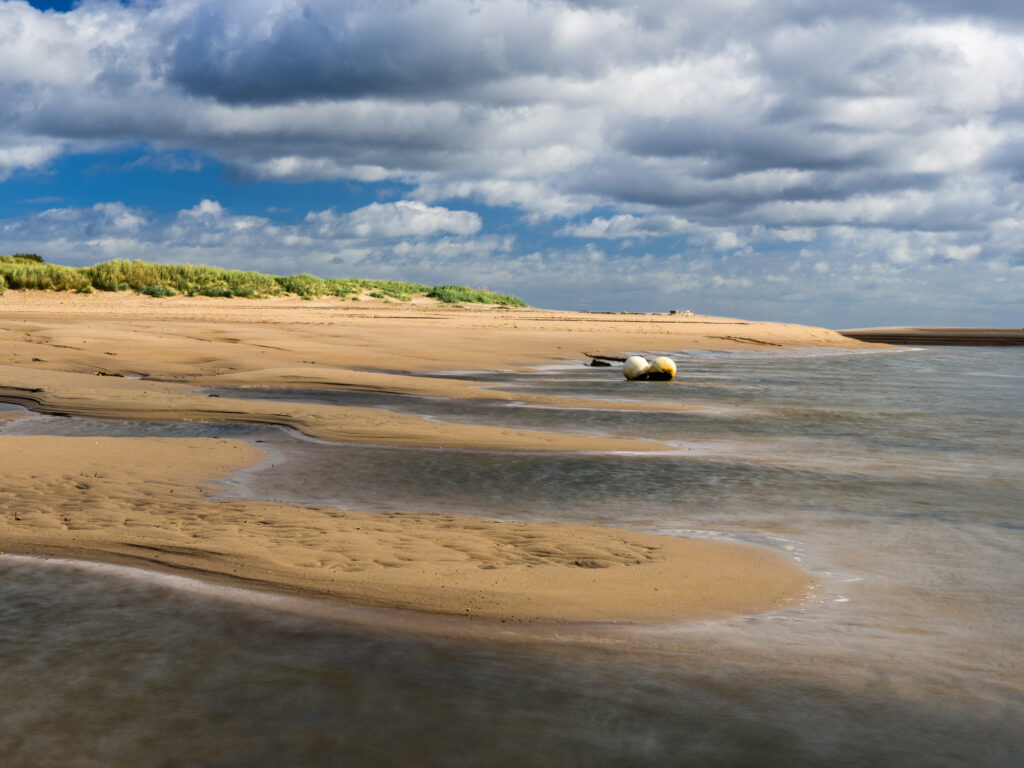
With roughly five minutes remaining, I found one last composition looking across the sandbars, water and boats. A large cloud was catching the brighter light and the scene had a surprisingly summery feel despite the strength of the wind.
I used the polariser along with a six-stop neutral-density filter to lengthen the exposure. The light improved at exactly the right moment, bringing colour and definition into the scene just as the timer approached zero.
I made the final exposure with only 28 seconds left.
It was a fitting end to the hour. The conditions had not suddenly become perfect, but a brief change in the light was enough to transform the photograph. Being in position and ready mattered more than trying to predict the exact moment in advance.
What I learned from an hour in Alnmouth
I did not arrive in Alnmouth feeling especially energetic. It had been a difficult few months, I was tired and I had lost some of the momentum that normally encourages me to head out with the camera.
An hour later, that had changed.
The challenge produced several very different images: a portrait-format boat study, an XPan-style panoramic, a minimal composition built around a yellow buoy, an experimental long exposure and a final wide coastal scene in better light. More importantly, it reminded me that motivation often follows action rather than preceding it.
You do not always need a spectacular forecast, a major expedition or an entire day. Sometimes an hour in a familiar location is enough.
Try the one-hour photography challenge yourself
If your photography has stalled or you are struggling for inspiration, try setting your own one-hour challenge:
- Choose a location with several subjects within walking distance.
- Take one camera and, if possible, restrict yourself to one lens.
- Set a genuine 60-minute timer.
- Look for four or five distinctly different compositions.
- Experiment with orientation, crop ratios and shutter speeds.
- Avoid judging the whole session while you are still shooting.
- Review the photographs properly when you get home.
The objective is not to force a prize-winning image into existence. It is to practise seeing, making decisions and responding to changing conditions. Even if only one photograph works, the session has still done its job if it makes you want to go out again.
Alnmouth offered exactly what I needed that day: a varied stretch of the Northumberland coast, difficult enough conditions to make me work and one final burst of light before the clock ran out.
If you feel stuck in a photographic rut, give yourself an hour. You may be surprised by how much it changes.



Leave a Reply