
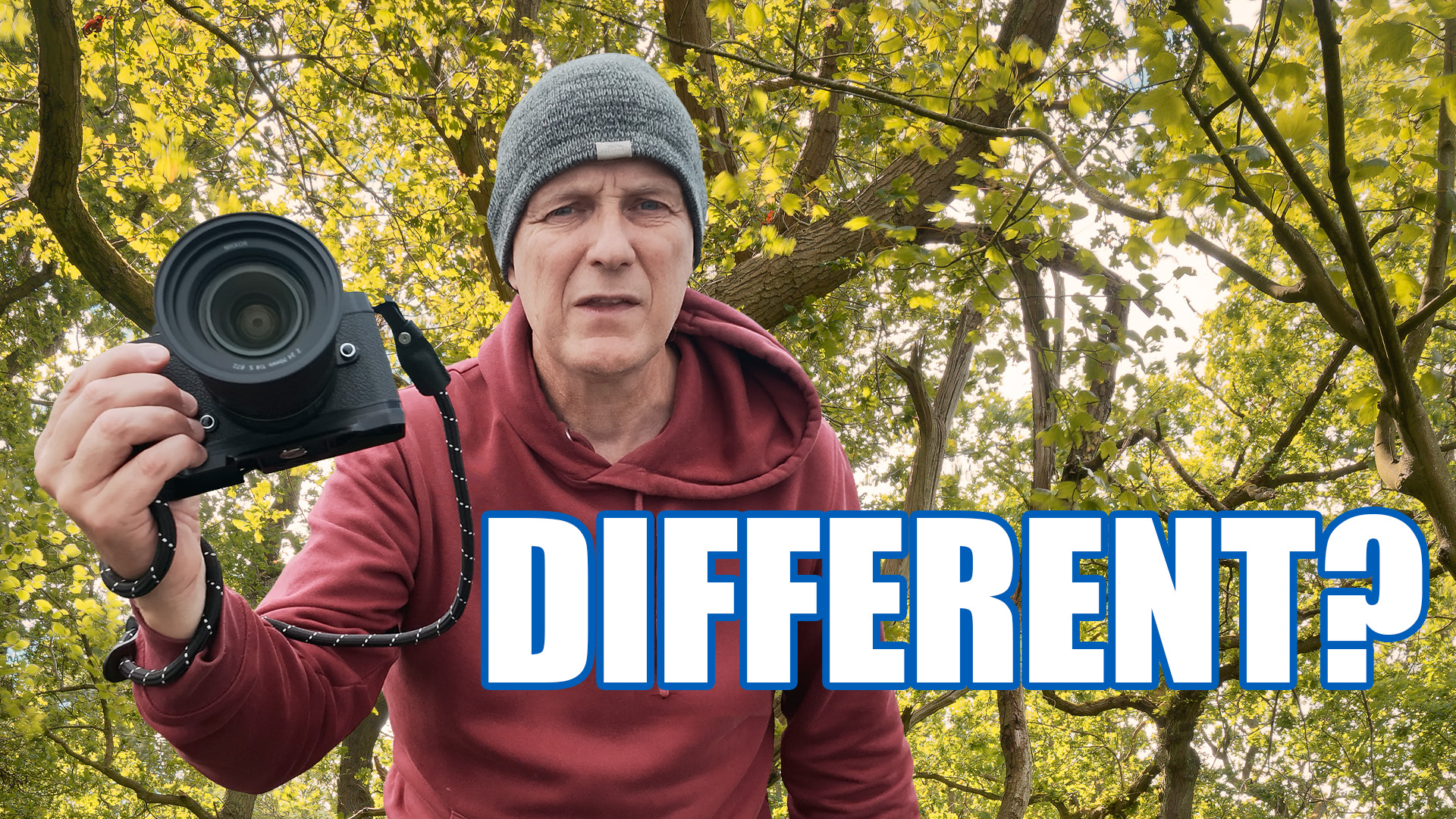
As someone who’s spent well over a decade photographing landscapes with Fujifilm cameras, picking up a Nikon Zf felt like stepping into unfamiliar territory.
The Zf has become something of an icon thanks to its retro styling, traditional controls and classic looks, but I wasn’t interested in buying it simply because it looked good. My main reason was far more practical.
I needed a camera that could potentially replace my Sony system for professional property photography while also being enjoyable to use for landscapes, travel and personal photography.
So, rather than producing a full review, I wanted to answer a much simpler question:
Is the Nikon Zf actually a good landscape photography camera?
After taking it out for its first proper landscape shoot, here are my initial thoughts.
Why I Bought the Nikon Zf
Although this was my first landscape outing with the camera, it wasn’t my first experience using it. I’d already completed a commercial property photography job with the Nikon Zf and had been impressed by both the files and the handling.
The camera wasn’t purchased to replace my beloved Fujifilm GFX100RF, which remains my favourite landscape camera. Instead, it was bought because Nikon’s excellent 14-30mm f/4 lens suited my property photography needs perfectly, and buying the Nikon body and lens actually worked out cheaper than purchasing the Sony ultra-wide lens I’d been considering.
That made the Nikon Zf an interesting proposition—a camera capable of earning its keep during the week while also coming along on landscape photography adventures.
Build Quality Is Outstanding
The very first thing that struck me was the build quality.
The Nikon Zf feels incredibly solid. It’s heavy, reassuringly so, and built almost like an old mechanical camera. Compared to many modern mirrorless cameras, there’s a real sense of quality every time you pick it up.
That said, it’s not exactly lightweight.
I quickly found myself fitting a SmallRig grip to improve handling, particularly when shooting handheld. For tripod-based landscape photography this isn’t a major issue, but if you’re planning long days carrying the camera around your neck, it’s something worth considering.
A 24-Megapixel Sensor Is More Than Enough
One specification that often surprises photographers is the Zf’s relatively modest 24-megapixel sensor.
In an era where 45, 60 and even 100-megapixel cameras are becoming increasingly common, 24 megapixels can sound underwhelming.
In reality, I found it refreshing.
The files are manageable, the dynamic range is excellent and, for the overwhelming majority of photographs, 24 megapixels is more than sufficient. Even though I regularly use a 100-megapixel Fujifilm GFX100RF, most of those files are eventually reduced in size anyway.
Sometimes, enough really is enough.
Does the Nikon Zf Feel Like a Fujifilm Camera?
Not quite.
At first glance the cameras appear remarkably similar. Both feature retro styling, dedicated dials and a classic photographic aesthetic.
However, once you start using them, the experience is quite different.
The Fujifilm approach genuinely recreates much of the traditional film-camera shooting experience, with shutter speed, ISO and aperture all working together in a very intuitive way.
The Nikon Zf, on the other hand, still relies heavily on the familiar PASM shooting modes. The dials are there, but they don’t function quite as independently as Fujifilm users may expect.
It’s not a criticism—it simply feels more like a modern digital camera wearing vintage clothes.
Things I Really Liked
Despite coming from Fujifilm, there was plenty to admire.
The black and white preview switch is genuinely useful, particularly when composing monochrome landscapes or long exposures.
The in-body image stabilisation is excellent, making handheld shooting far more enjoyable than I expected.
I also found the fully articulated screen much less controversial than some photographers make out. In fact, the ability to fold it away completely allows the camera to feel remarkably traditional whenever you want it to.
The only control I genuinely missed was a joystick for moving the autofocus point, although after a short while the directional pad became perfectly usable.
Photographing Landscapes with the Nikon Zf
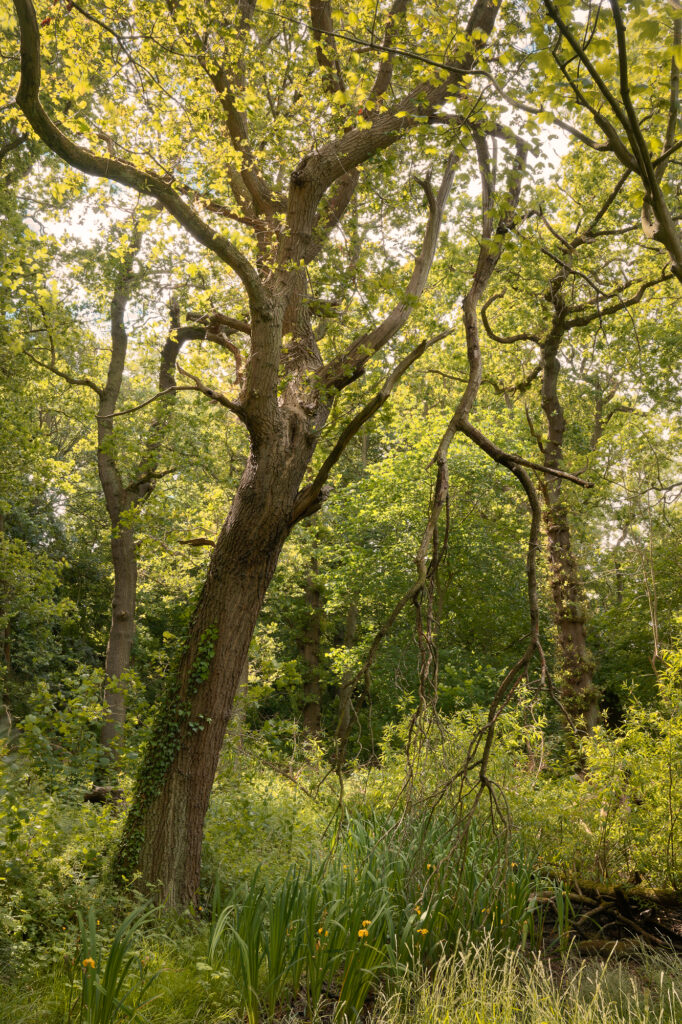
The camera’s first outing took me from woodland scenes to the North East coastline.
One of the first photographs featured a large tree framed against softer woodland behind it, and I deliberately waited for changing light before deciding whether the sunlit or diffused version worked best. In the end, the camera handled the contrast beautifully, and I actually preferred the version with sunlight breaking through the trees.
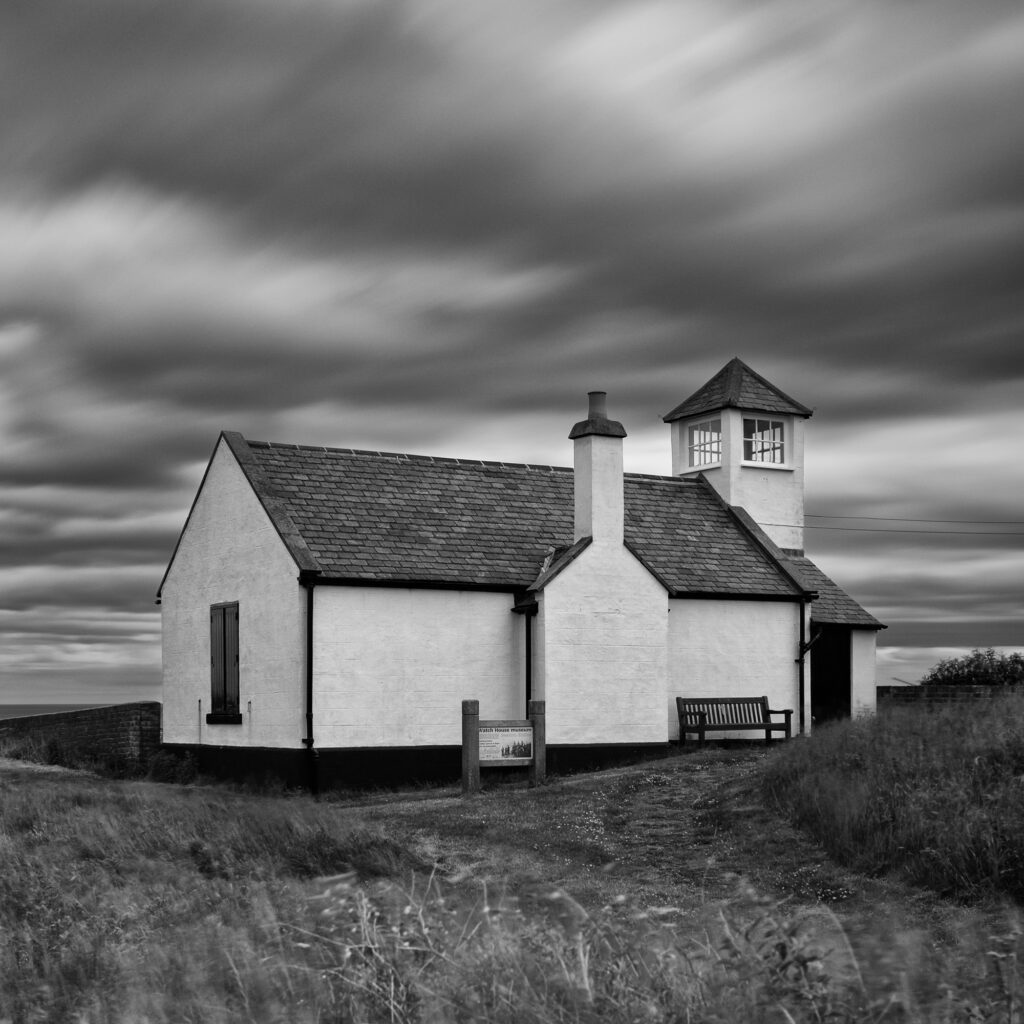
Later, I moved to the coast to photograph the Watch House Museum using long exposures and a rather questionable amount of stacked ND filters!
Although the conditions weren’t spectacular, the session confirmed something I’d already suspected.
The Nikon Zf is an enjoyable camera to slow down with.
It’s well suited to careful compositions, tripod work and thoughtful landscape photography.
So… Is It Replacing My Fujifilm?
No.
At least not for landscape photography.
The Fujifilm GFX100RF remains my favourite camera, and I still prefer the overall Fujifilm shooting experience.
However, that’s not really what I bought the Nikon for.
The Zf fills a different role. It has the potential to become my main workhorse for property photography while still being a camera I genuinely enjoy taking out into the landscape.
That’s actually quite a difficult balance to achieve.
Final Thoughts
After my first proper landscape shoot, I came away genuinely impressed by the Nikon Zf.
It isn’t trying to be a Fujifilm camera, and I don’t think photographers should expect it to be. The controls behave differently, the shooting experience has its own personality, and it ultimately feels like a modern mirrorless camera wrapped in beautifully retro styling.
What it does offer is excellent image quality, superb build quality, effective image stabilisation and a camera that’s simply enjoyable to spend time using.
For me, that’s perhaps the biggest compliment I can give it.
Will it replace my Fujifilm GFX100RF?
No.
Could it replace my Sony system for professional work while also becoming a capable landscape camera?
Quite possibly.
And that’s exactly why I bought it.
If you’d like to see the Nikon Zf in action, along with the photographs I captured during its first landscape outing, be sure to watch the accompanying YouTube video where I share my thoughts in the field.



Leave a Reply