
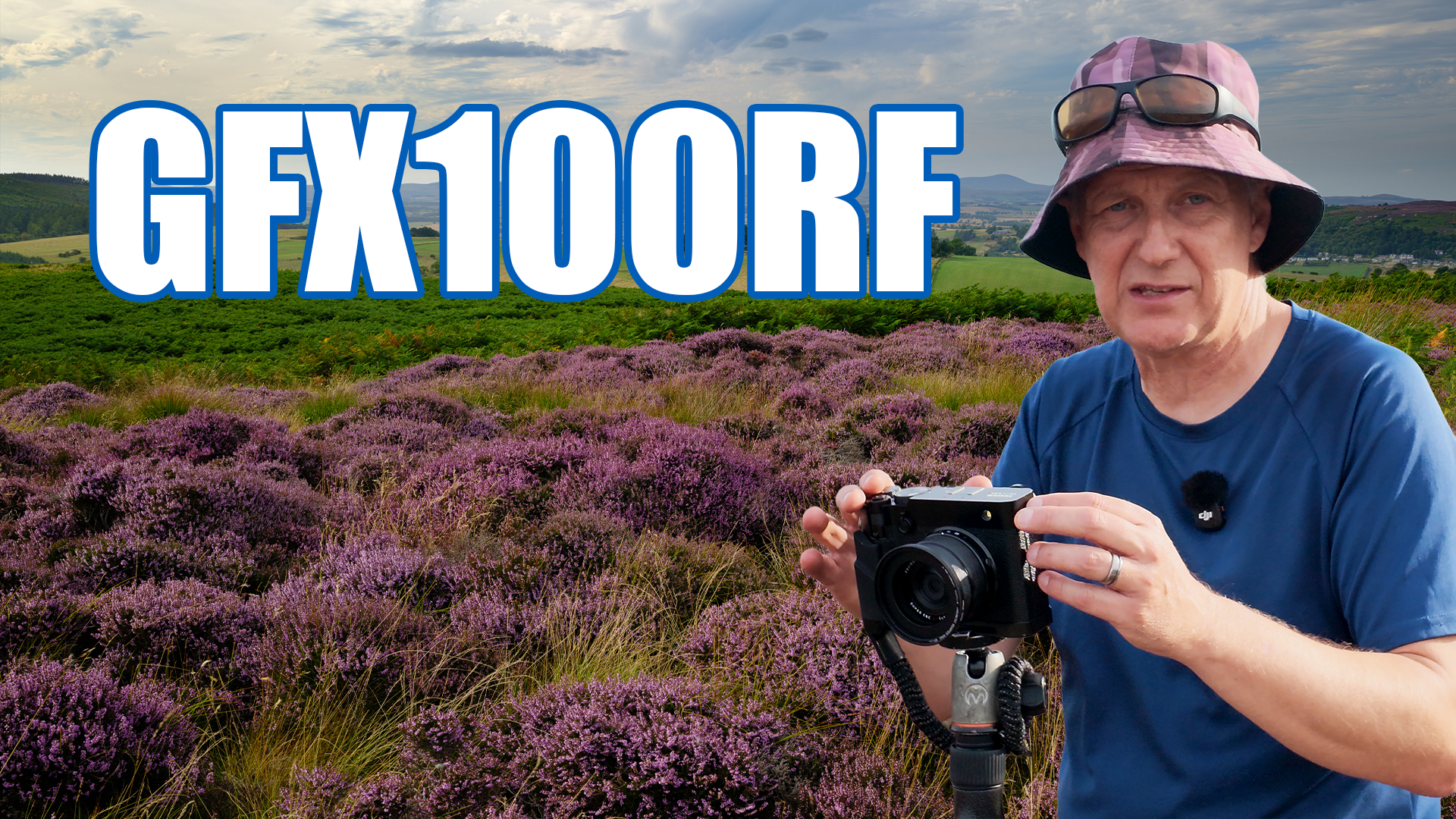
This is not a review of the Fujifilm GFX100RF.
There are already plenty of reviews listing specifications, comparing files at 200% and debating whether a fixed f/4 lens belongs on a camera at this price. Instead, these are my observations after using the GFX100RF for landscape photography for an entire year.
The fact that I have owned it for 12 months is noteworthy in itself. Anyone who has followed my photography for a while will know that cameras do not always remain in my bag for that long. Yet there is something about the GFX100RF that has kept it there—even during the periods when I genuinely wondered whether I should sell it.
After a year of using it in real landscapes, I think I finally understand why.
Learning to stop worrying about “wasted” megapixels
The GFX100RF combines a 100-megapixel medium-format sensor with a fixed 35mm f/4 lens, giving a field of view roughly equivalent to 28mm on full frame. It also offers several digital crop modes that allow you to frame more tightly without changing lenses.
In the past, I struggled with the idea of cropping away all those pixels. If I had paid for a 100-megapixel camera, why would I deliberately throw some of that resolution away?
Over the last year, my thinking has changed. I no longer see the crop modes simply as lost megapixels. I see them as one of the compromises that allows this camera to provide excellent image quality in a genuinely compact body. A conventional medium-format camera with a selection of zooms or prime lenses would be much larger and heavier—and I would be far less likely to carry it on a long walk.
Even when using a substantial crop, the remaining file still offers more than enough quality for many purposes. More importantly, the files retain the colour, tonal character and overall look that attracted me to the larger sensor in the first place.
You can also reconsider the crop later. The camera may show a tighter composition while you are shooting, but the original raw file gives you the freedom to recompose during editing. That makes the crop modes useful creative guides rather than permanent, irreversible decisions.
Once I began treating them that way, the camera made considerably more sense.
Is an f/4 lens really a problem?
One of the most common criticisms of the GFX100RF is its fixed f/4 lens. The lack of in-body image stabilisation is usually mentioned immediately afterwards.
Those are legitimate considerations, but whether they matter depends entirely on how you photograph.
I am primarily a landscape photographer. The camera is mounted on a tripod for perhaps 90% of my work, and I commonly shoot between f/8 and f/11. If I need greater depth of field, I am perfectly happy using f/16 when the composition calls for it.
In that context, an f/4 maximum aperture has never been a serious limitation. The absence of IBIS has not caused me problems either, because stabilisation is largely irrelevant when the camera is sitting on a solid tripod.
Would I feel differently if I wanted a handheld camera for low-light street photography? Possibly. Someone looking for shallow depth of field, a fast lens and stabilised handheld shooting may find the GFX100RF difficult to justify.
That does not make it a bad camera. It simply makes it the wrong camera for that particular photographer.
The GFX100RF seems to attract unusually polarised opinions, including plenty from people who have never used one. But cameras do not need to excel at every photographic genre. For my tripod-based landscape work, the fixed f/4 lens and lack of IBIS are not deal-breakers. They are part of the trade-off that keeps the camera relatively small and simple.
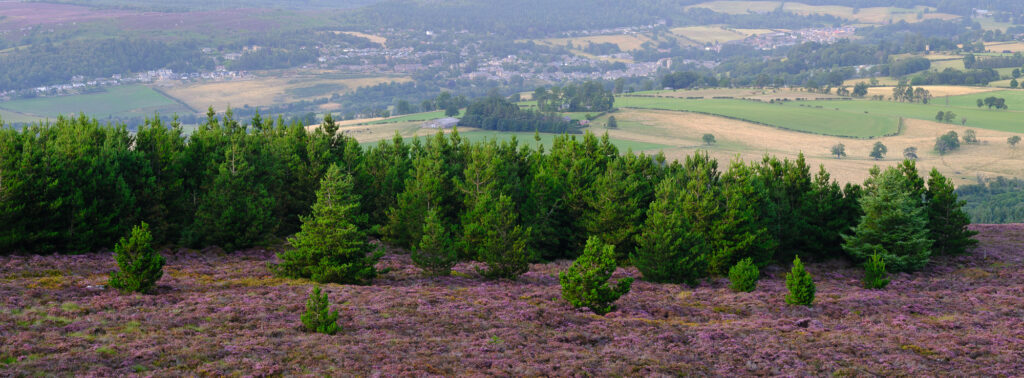
The XPan crop is the feature that keeps it in my bag
If I had to identify the single feature most responsible for the GFX100RF remaining in my kit, it would be the aspect-ratio dial—particularly its panoramic XPan crop.
Panoramic framing changes the way I look at a landscape. Rather than shooting a conventional frame and hoping to discover a panoramic composition later, I can see and refine that shape while I am standing in front of the scene.
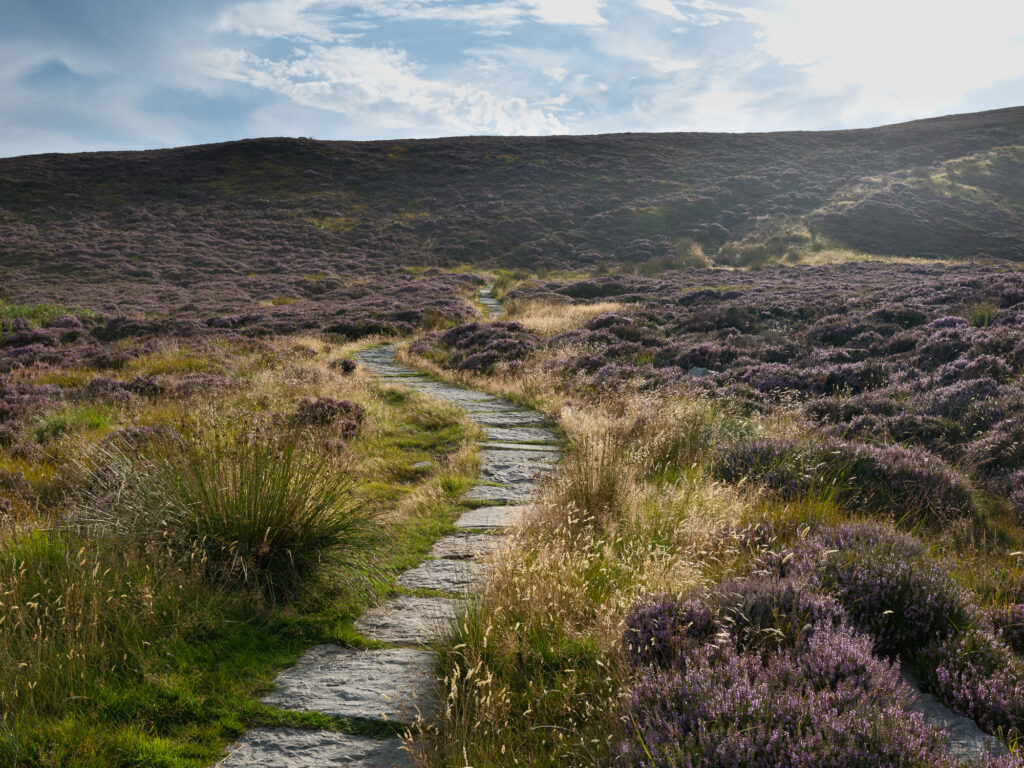
During this particular outing near Rothbury, I found a view across flowering heather towards woodland and the village in the distance. The sky was comparatively bland, so including large amounts of it added very little. The wide XPan format allowed me to concentrate on the layers of colour spreading across the landscape.
I combined the panoramic aspect ratio with one of the tighter crop modes. Technically, that meant discarding a considerable number of pixels. Creatively, it gave me precisely the composition I wanted.
That distinction matters. A photograph is not automatically improved because it contains the maximum possible resolution. If a crop creates a stronger image and still leaves a file large enough for its intended use, those “lost” pixels have served a purpose.
The sharpness of the lens and the resolution of the sensor give me the confidence to work this way. The panoramic preview then helps me make compositional decisions in the field rather than treating the format as an afterthought.
For my photography, that is far more valuable than a specification on a comparison chart.
A screen that suits landscape photography
Another feature I have come to appreciate is the tilting rear screen.
For still photography, I generally prefer a screen that flips upwards to one that swings out to the side. I do not need it facing forward because I am not filming myself with the camera. Instead, I can look down at it in a way that feels a little like using a waist-level finder.
That position is comfortable when the camera is mounted low on a tripod, and it keeps me facing the scene rather than turning towards a screen positioned beside the body. It is a relatively small design choice, but one that makes the experience of composing landscapes noticeably more enjoyable.
Dynamic range, backlighting and trusting the file
The 100-megapixel sensor also provides the dynamic range required for difficult light.
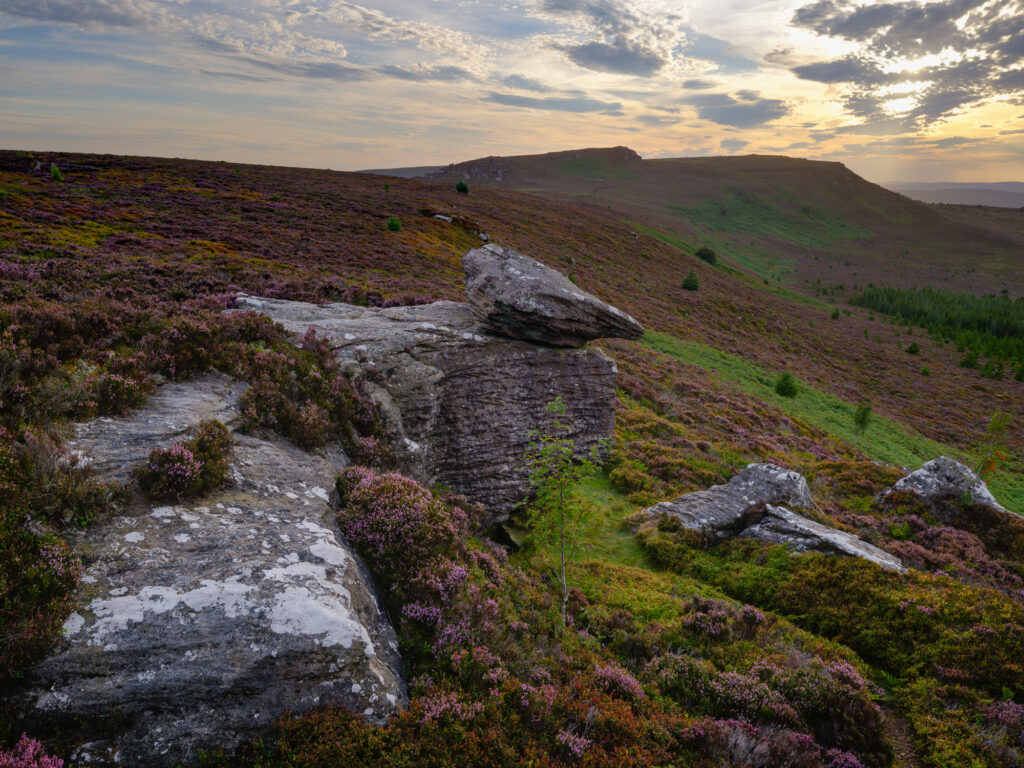
One composition on this shoot placed foreground rocks against a strongly backlit landscape. I knew the contrast would be challenging and considered bracketing the exposure. Scenes like this are a reminder that image quality is not only about detail. The ability to hold information across bright highlights and deep shadows can be just as important.
For that photograph, I used the full sensor and the complete field of view of the fixed lens. The foreground rocks created a loose U-shaped structure that led towards the distant hill, while the success of the image depended on waiting for the light to bring the composition together.
I photographed it at f/16 to retain sharpness from foreground to background. Yes, diffraction exists, especially with high-resolution sensors. But in real photographs, the practical effect is often less dramatic than internet discussions suggest. I would rather accept a small theoretical loss of sharpness than produce an image whose important foreground is visibly out of focus.
Photography remains a series of compromises. The correct choice is the one that serves the picture.
A good camera cannot guarantee a good photograph
I was not completely convinced that the backlit composition worked. Perhaps the finished file proved me wrong; perhaps it did not. Either way, if the image failed, it was not the camera’s fault.
Modern cameras are extraordinarily capable. In most situations, the camera is no longer the main obstacle between a photographer and a successful photograph. Conditions, composition, timing and our own decisions matter far more.
That is why choosing a camera should not be about finding the model that is objectively “best.” It should be about finding one that makes you enjoy the process of taking photographs.
The GFX100RF has clear limitations. I have to recognise them and work within them. In return, it gives me exceptional files from a compact medium-format body, an aspect-ratio system that genuinely influences how I see, and the freedom to travel with one camera without thinking about which lenses to carry.
When I am hiking and want to keep my equipment simple, it may be the best camera for the job—for me.
Those final two words are important.
Is the Fujifilm GFX100RF right for you?
I would never claim that the GFX100RF is the best camera in the world, and I would not recommend it indiscriminately. Its fixed focal length, f/4 aperture and lack of IBIS will be genuine limitations for some photographers.
If you are considering buying one, try it first if possible. Hire one, handle it in a shop or spend time looking at photographs made by people who use it in ways similar to you. Make sure you understand both what it offers and what it asks you to give up.
After 12 months, I no longer feel the need to defend or justify my decision. The GFX100RF has earned its place in my landscape photography kit. I will be keeping it for another year—not because it is perfect, but because its particular combination of strengths and compromises suits the way I want to photograph.
And ultimately, that is what choosing a camera should be about.


Leave a Reply