
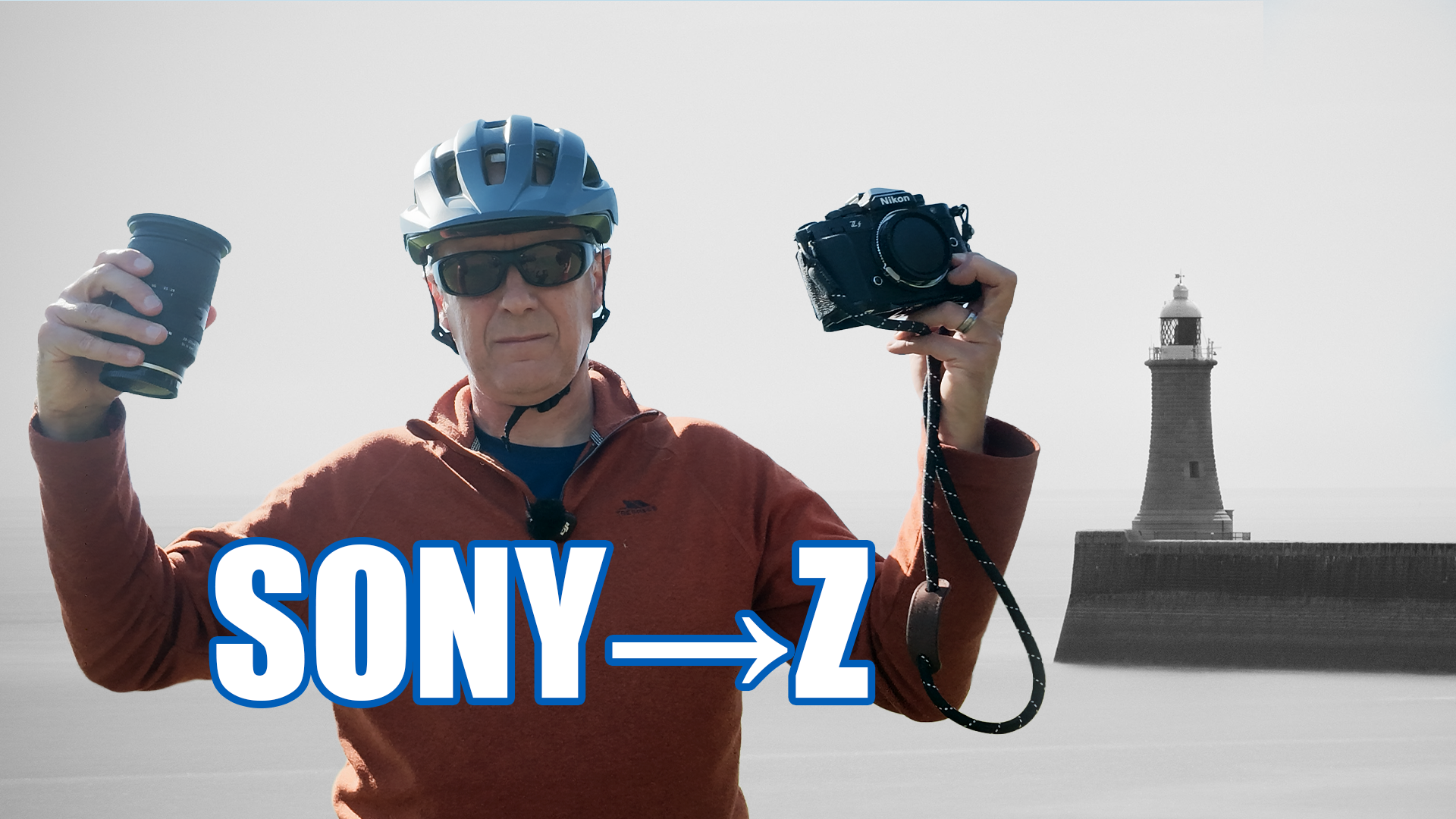
Changing camera systems is one of the most expensive decisions a photographer can make. Buying a new camera body is often just the beginning—the real cost usually comes from replacing an entire collection of lenses.
After recently picking up a Nikon Zf for both my property photography work and personal landscape photography, I found myself in exactly that situation. While I’d already invested in Nikon’s excellent 14-30mm f/4 for my professional work, I also had a cupboard full of Sony E-mount lenses that still had plenty of life left in them.
So naturally, one question came to mind…
Can you actually use Sony lenses on a Nikon Zf?
The answer is yes—but, as with most things in photography, there are a few compromises.
Why the Nikon Z Mount Makes This Possible
One of the biggest advantages of Nikon’s Z mount is its incredibly short flange distance—the distance between the lens mount and the camera’s sensor. This creates enough physical room to fit an electronic adapter between the camera and many other lens mounts without compromising image quality.
This isn’t unique to Nikon—mirrorless cameras in general are much easier to adapt than DSLRs—but the Z mount is particularly flexible thanks to its dimensions.
That means it’s possible to mount Sony E-mount lenses onto a Nikon Z camera using a relatively thin electronic adapter, while still retaining autofocus, aperture control, image stabilisation and lens communication.
On paper, it sounds almost too good to be true.
The Adapter
For this test I used an inexpensive Viltrox Sony E to Nikon Z electronic adapter.
Unlike a simple mechanical adapter for vintage lenses, this one passes electronic information between the lens and camera. That means the Nikon Zf still recognises the lens, autofocus works, EXIF information is recorded correctly and in-body image stabilisation (IBIS) continues to function.
Considering adapters like this can be found for surprisingly little money, it’s an appealing option for anyone moving systems gradually.

The big question, however, is whether it actually performs well enough to rely on.
First Impressions
For the test I mounted my Tamron 28-200mm, a lens I’ve used extensively on Sony cameras over the last few years.
Physically, the combination felt surprisingly natural. The adapter itself is very slim, so it doesn’t dramatically alter the balance of the camera. In fact, once attached, it’s easy to forget the adapter is even there.
The lens mounted without drama, the camera immediately recognised it, and autofocus worked straight away.
That’s already more than many photographers might expect.
How Good Is the Autofocus?
This is where things become a little more nuanced.
The autofocus definitely works—but it doesn’t feel like a native Nikon lens.
When photographing static subjects, landscapes and general scenery, it performed perfectly well. Focus was accurate, reliable and completely usable.
It was, however, noticeably slower than Nikon’s own Z lenses.
When shooting subjects with strong contrast the adapter behaved reasonably well, but when pointing the camera at more challenging scenes—such as shaded white buildings—it occasionally hunted before eventually locking focus.
For landscape photography this isn’t really a deal-breaker.
For sports, wildlife or weddings?
That’s a different conversation.

Landscape Photography Is Probably Its Sweet Spot
As someone who spends much of his time photographing landscapes from a tripod, I actually found the adapter more capable than I expected.
Long exposures, careful compositions and slower-paced photography don’t place huge demands on autofocus speed.
Throughout the day I photographed a variety of coastal scenes, experimented with handheld images using IBIS, and even created several long exposure photographs using ND filters.
Optically, I couldn’t see any obvious degradation in image quality.
The photographs still looked exactly as I’d expect from the Tamron lens.
That’s perhaps the biggest compliment I can give the adapter—it doesn’t appear to get in the way of the image itself.
One Thing Did Concern Me
Unfortunately, not everything inspired confidence.
During the day I noticed a slight amount of movement between the adapter and the camera body. It wasn’t enough to stop shooting, but it was enough to make me change how I handled the camera.
Rather than carrying it by the lens, I found myself always lifting it by the camera body instead.
The movement wasn’t dramatic, but it was noticeable enough to remind me that this wasn’t a native lens mount.
For lightweight zooms and occasional use, I’d happily live with it.
Would I trust it with a large 200-500mm telephoto hanging from it?
Personally, probably not.
It’s also worth mentioning that this particular adapter doesn’t claim any meaningful weather sealing, so that’s another consideration if you regularly shoot in poor conditions.

Is It Worth Buying?
Surprisingly…
Yes.
For roughly the price of a decent filter, it opens the door to an entire collection of lenses you may already own.
If you’re slowly moving from Sony to Nikon, or perhaps own two camera systems, it can save thousands of pounds by delaying the need to replace every lens immediately.
Of course, there are more expensive adapters available that receive stronger reviews, and if adapting lenses becomes a major part of your workflow, they may well be worth considering.
But as an affordable solution?
This little adapter exceeded my expectations.
Who Is It Best Suited To?
After spending a day photographing with it, I’d happily recommend this type of adapter to:
- Landscape photographers
- Travel photographers
- Hobbyists with existing Sony lenses
- Anyone gradually changing from Sony to Nikon
- Photographers who mainly shoot slower-paced subjects
Where I’d hesitate is fast-paced professional work.
Wedding photographers, sports photographers and anyone relying on instant autofocus performance may find the experience just a little too sluggish compared to native Nikon glass.

Final Thought
So… does using Sony lenses on a Nikon Zf actually work?
Yes—it genuinely does.
The autofocus isn’t as quick as a native Nikon lens, and the overall experience isn’t quite as polished, but the important thing is that it works. Image quality remains excellent, autofocus is perfectly usable for slower subjects, and it gives photographers far more flexibility than many people realise.
Will I continue using adapted Sony lenses?
Absolutely.
I still have several specialist Sony lenses that I don’t want to replace just yet, and this adapter gives them a new lease of life on the Nikon Zf.
Would I replace every Nikon lens with adapted Sony glass?
Definitely not.
Native lenses are still the better experience.
But if you’ve already invested heavily in Sony lenses and are thinking about moving to Nikon, an adapter like this could save you a significant amount of money while making the transition far easier.
If you’d like to see the adapter in action, be sure to watch the accompanying YouTube video where I put everything to the test in the field.


Leave a Reply