
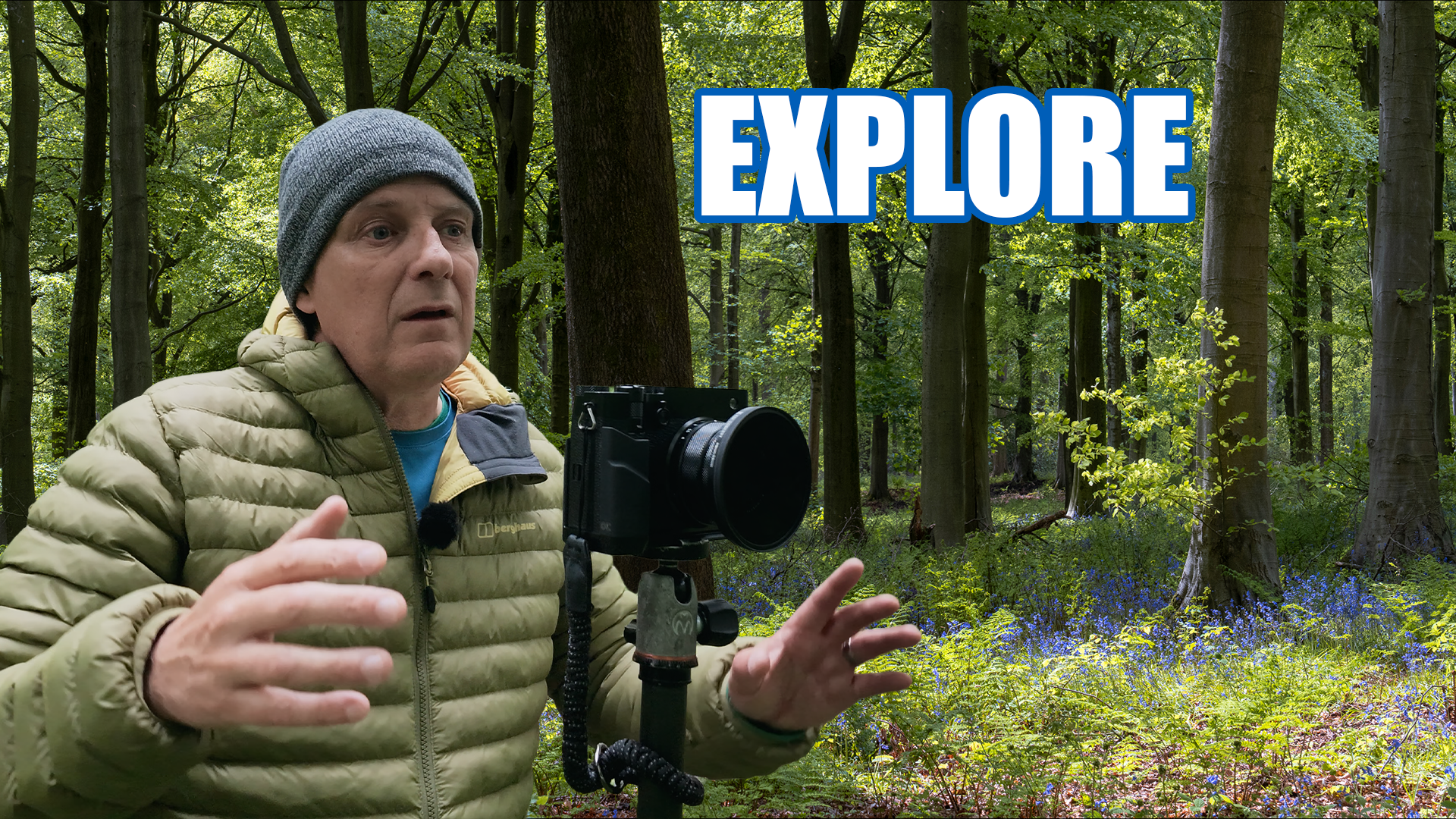
Sometimes the best photography outings are the ones with no real plan.
That was certainly the case on a recent visit to a small woodland near Staindrop in County Durham. Rather than heading out with a specific image in mind, I simply wanted to spend an afternoon exploring, seeing what caught my eye and responding to whatever the woodland offered.
The last time I visited this location was in autumn whilst photographing with a Mamiya 645 film camera. Returning in spring felt like visiting a completely different woodland. The fresh greens, emerging foliage and carpets of bluebells had transformed the scene.
What struck me most, however, was just how good the conditions were.
Not because they were dramatic.
Quite the opposite.
Why Overcast Days Are Perfect for Woodland Photography
Many photographers wait for mist, golden light or dramatic weather before heading into woodland.
The truth is that an overcast day is often ideal.
Cloud acts like a giant softbox, creating even light throughout the woodland. Harsh shadows disappear, contrast is reduced and colours become richer and easier to manage.
The conditions on this particular afternoon were exactly that. Soft, uniform light with no distractions.
Perfect for slowing down and looking more carefully.
Starting With Familiar Subjects
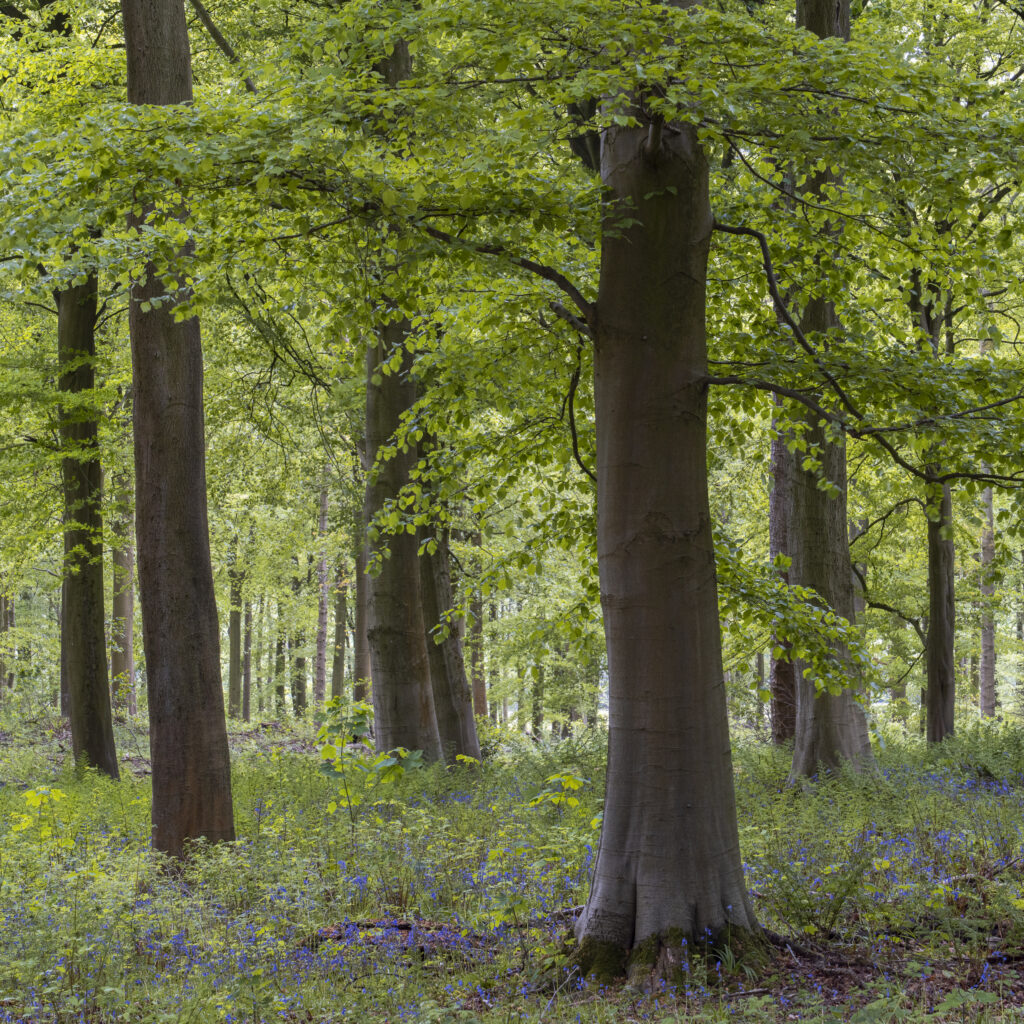
One of the first photographs I made was of a tree I had photographed during my previous visit.

There was something reassuring about returning to a familiar subject and seeing it differently.
This time the woodland was full of fresh spring growth, and the addition of a polarising filter helped remove reflections from the leaves and enhance the greens throughout the scene.
It was a reminder that the same subject can produce completely different photographs depending on the season, conditions and your own creative mindset.
Using Telephoto Lenses in Woodland
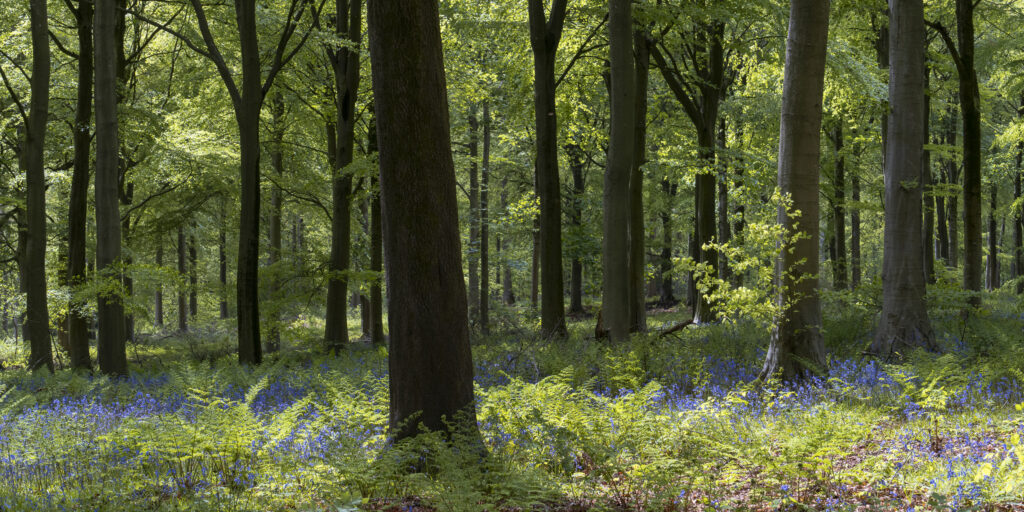
Woodland photography often benefits from a telephoto lens.
By stepping back and zooming in, it becomes possible to compress the scene and simplify the relationships between trees, branches and foliage.
For much of the afternoon I used a Tamron 28-200mm lens on the Sony A7CR. The ability to zoom allowed me to isolate individual subjects and reduce some of the visual chaos that woodland scenes can often contain.
Woodlands are rarely tidy places, and a longer focal length can help bring a sense of order to the frame.
Learning to See Intimate Landscapes
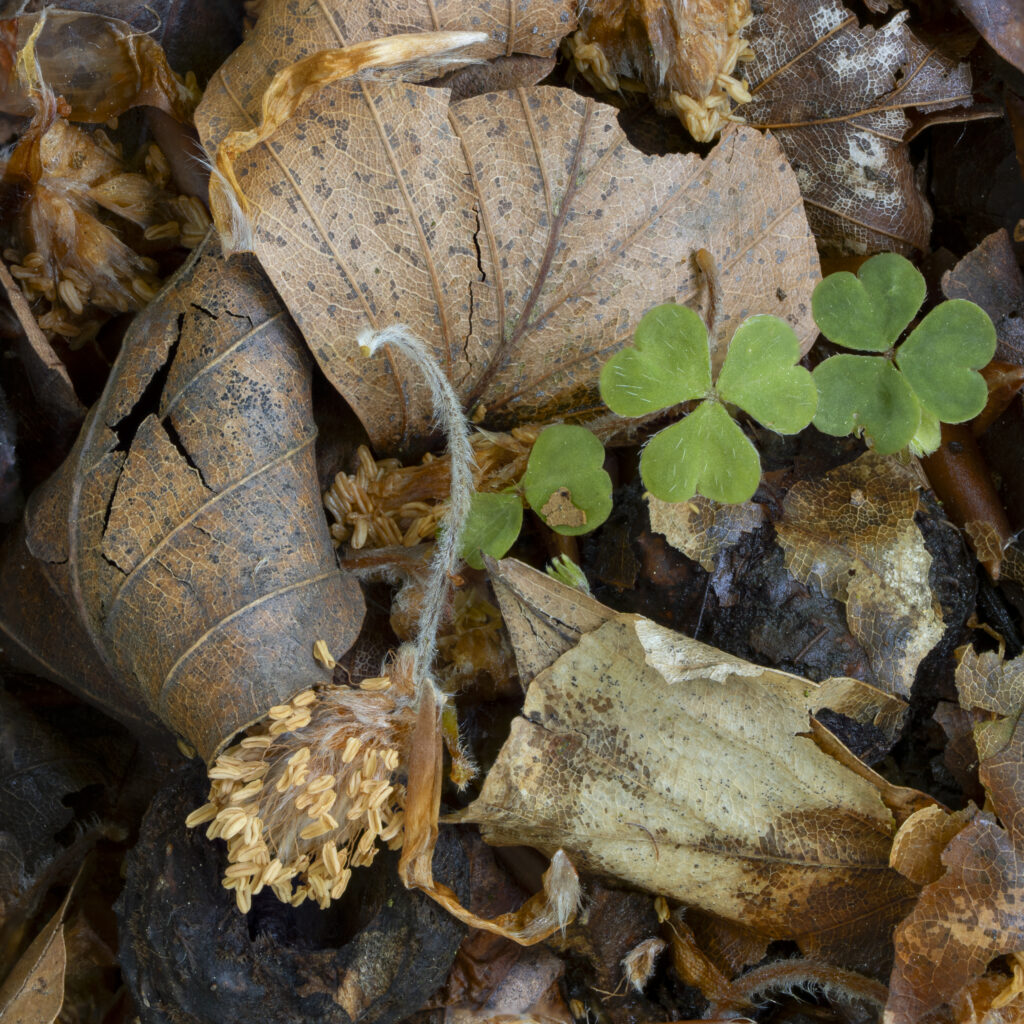
One of my goals for the afternoon was to spend more time looking for smaller, more intimate compositions.
This is an area of photography I admire enormously, particularly the work of photographer and YouTuber Simon Booth, whose ability to find strong photographs in seemingly ordinary scenes is something I find genuinely inspiring.
Unlike wider landscape photography, intimate landscapes rely less on dramatic light and more on observation.
The challenge is learning to notice shapes, textures, colours and relationships between objects.
I found a small composition consisting of fresh green shoots emerging amongst dead leaves on the woodland floor. It wasn’t an obvious photograph, and it certainly took me longer to find than I would have liked, but that was part of the learning process.
The image eventually became an exercise in focus stacking, allowing me to maintain sharpness throughout the scene while preserving the composition I had discovered.
Experimenting With Movement
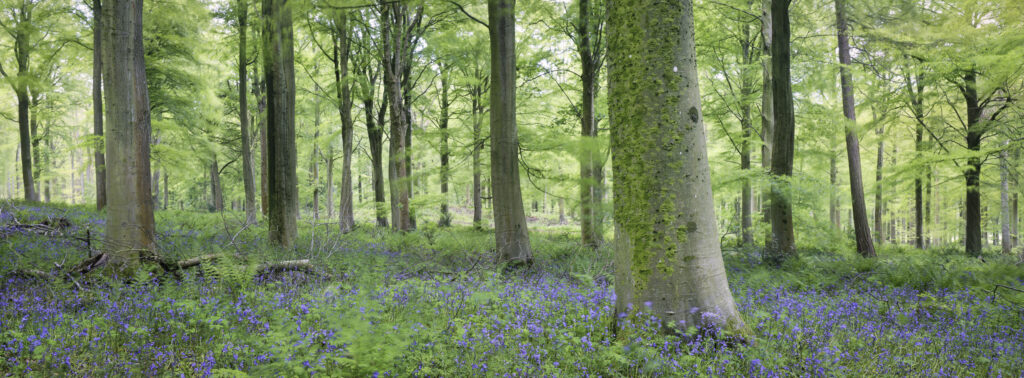
For the final image of the day, I switched back to the Fujifilm GFX100RF and focused on a stand of trees surrounded by bluebells.
Rather than trying to freeze the movement of the flowers, I decided to embrace it.
Using the built-in ND filter, I created a longer exposure that allowed the breeze to blur the bluebells and surrounding foliage while keeping the trees sharp.
The result wasn’t quite an intentional camera movement image, but it wasn’t a conventional landscape photograph either.
Instead, it sat somewhere between the two, creating a sense of movement and atmosphere that reflected how the woodland actually felt at that moment.
Photography Doesn’t Have to Be Far Away
Perhaps the biggest takeaway from the afternoon was how little distance was involved.
The woodland was only a few minutes from where I parked.
No mountain hike.
No sunrise alarm.
No dramatic weather forecast.
Just a short walk into a local woodland with a camera and an open mind.
It’s easy to convince ourselves that great photographs require extraordinary locations, but often the opposite is true. Sometimes the best thing we can do is slow down, pay attention to our surroundings and make the most of what is already nearby.
This small woodland in County Durham proved exactly that.
And on an overcast afternoon with no particular plan, it provided several photographs that I was genuinely pleased to come home with.



Leave a Reply