
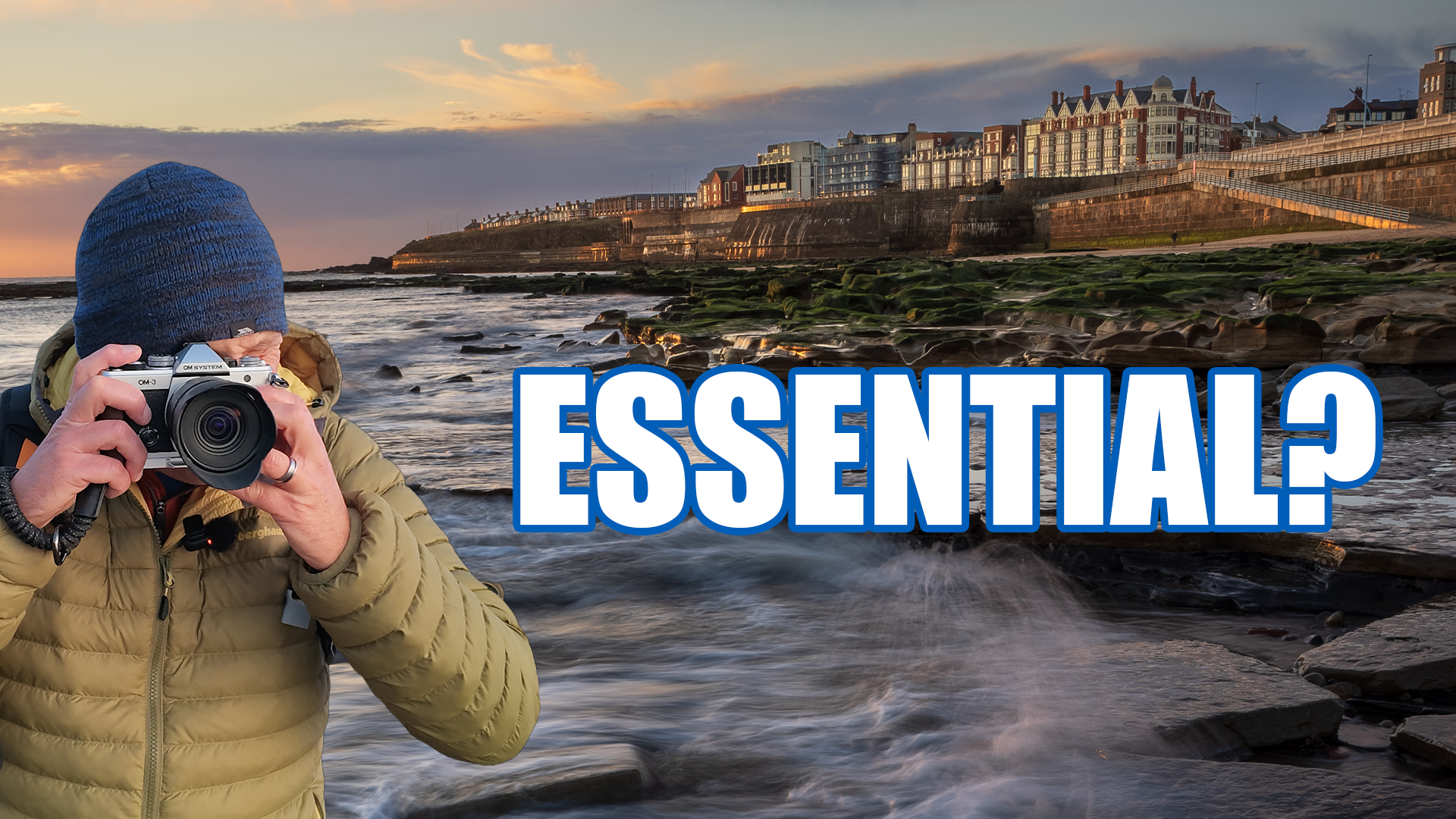
For as long as I can remember, a tripod has been an essential part of my landscape photography equipment. Whether I’m heading into the mountains, exploring woodland or photographing the coast at sunrise, it’s usually one of the first things I pack.
But with modern cameras offering increasingly impressive image stabilisation, I’ve started questioning whether I really need to carry one everywhere.
So, for a recent sunrise photography session along the North Tyneside coast, I decided to try something different. I left my tripod in the van and headed out with just my OM System OM-3.
The question was simple – Could I photograph an entire sunrise without using a tripod?
A Different Approach to Sunrise Photography
I’ve lived in Whitley Bay for over 25 years, and I’ve lost count of how many mornings I’ve spent photographing this stretch of coastline.
Some mornings have been spectacular. Others have been distinctly average. But that’s one of the joys of photographing somewhere close to home. If the conditions don’t work out, there’s always another opportunity.
What made this particular morning different was the amount of equipment I was carrying — or, more accurately, what I’d decided to leave behind.
Normally, I’d arrive at a location, set up my tripod, carefully compose an image and wait for the light. This time, I wanted to see whether travelling lighter might allow me to work more spontaneously.
It’s something I’ve been thinking about increasingly, particularly with plans to combine more of my photography adventures with cycling and walking.
Photographing Spanish City Without a Tripod
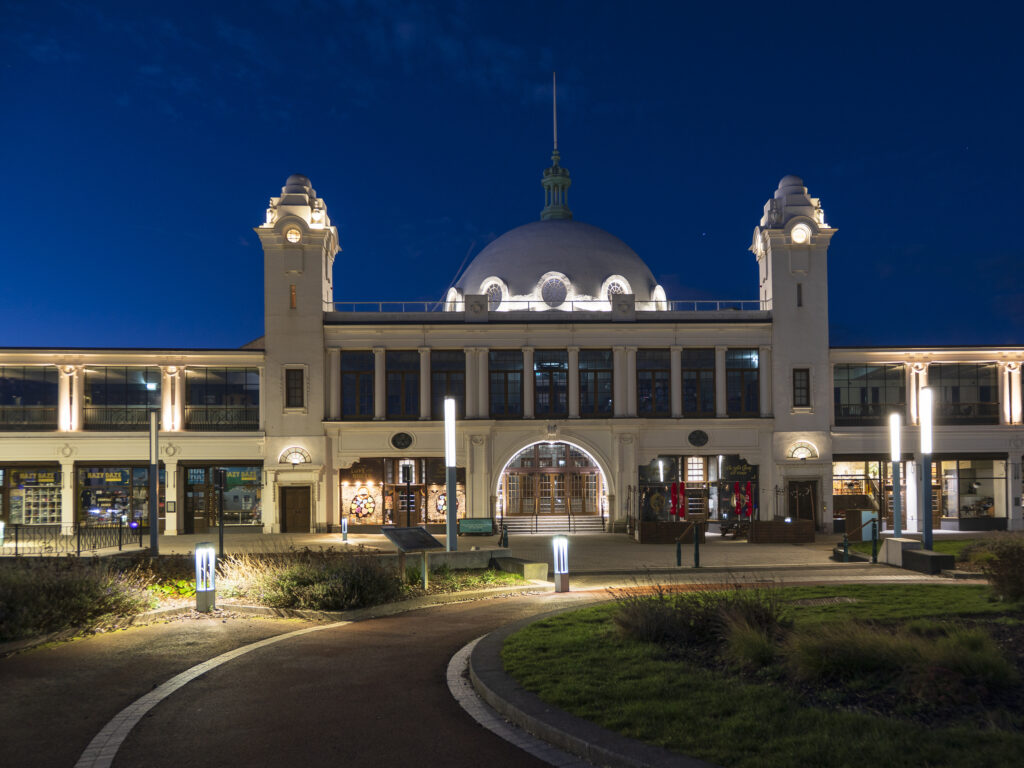
My first subject was the illuminated Spanish City building in Whitley Bay.
It was still dark, and I knew the building’s lights would soon be switched off. Normally, setting up a tripod would be the obvious choice, but this time I simply took the camera out of my bag and started photographing.
Using the OM-3’s in-body image stabilisation, I was able to work with shutter speeds of approximately one second at ISO 200 and f/4.
That’s a shutter speed I would traditionally have associated with tripod photography.
I deliberately chose a wide focal length to give myself the best possible chance of capturing a sharp image. Although I would have preferred a smaller aperture, the combination of the Micro Four Thirds format and the camera’s stabilisation gave me some confidence.
It felt strange, almost as though I was breaking one of my own long-established rules.
But the results were encouraging.
Slowing Down Without a Tripod
As the morning progressed, I moved along the seafront looking for other compositions.
One of the things I’ve always enjoyed about landscape photography is the process of finding a viewpoint and gradually refining an image. The tripod plays an important role in that process.
Without it, I found myself working differently.
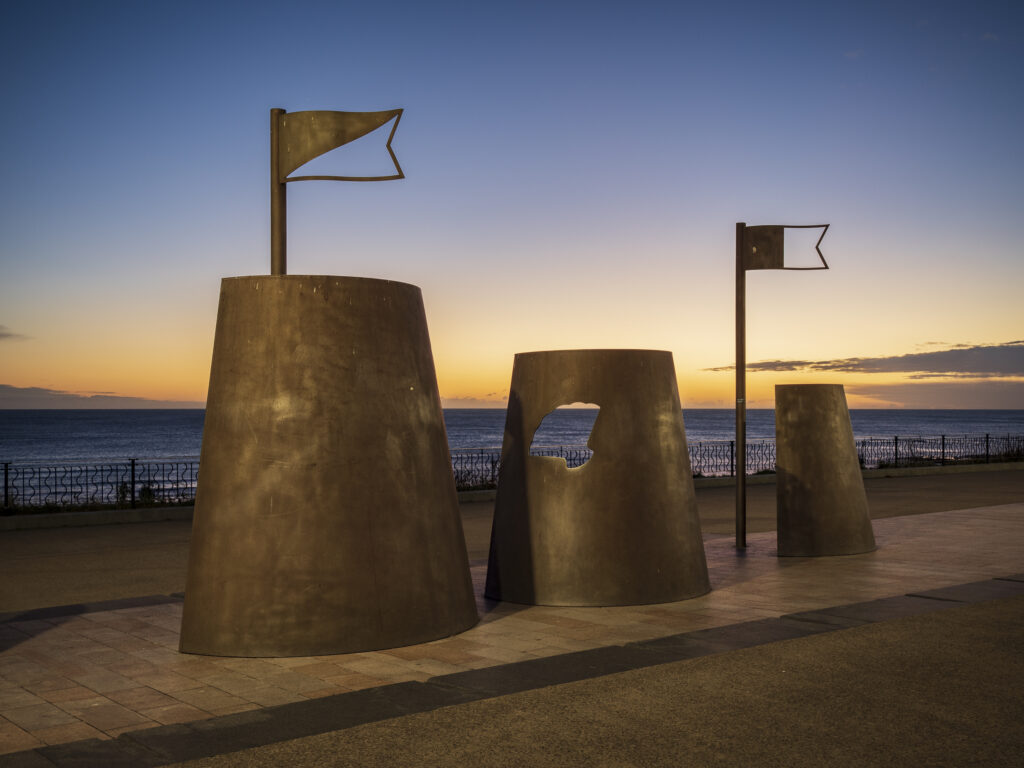
I photographed one of the seafront’s distinctive structures against the pre-dawn sky, balancing the remaining artificial illumination with the developing colour in the clouds.
At f/5.6, my shutter speed was around a quarter of a second. Once again, the stabilisation made handheld photography perfectly practical.
Technically, everything was working.
But I was beginning to notice something interesting about the experience.
Photographing Moving Water Handheld
My final challenge was to photograph the movement of the sea as the sun began to rise.
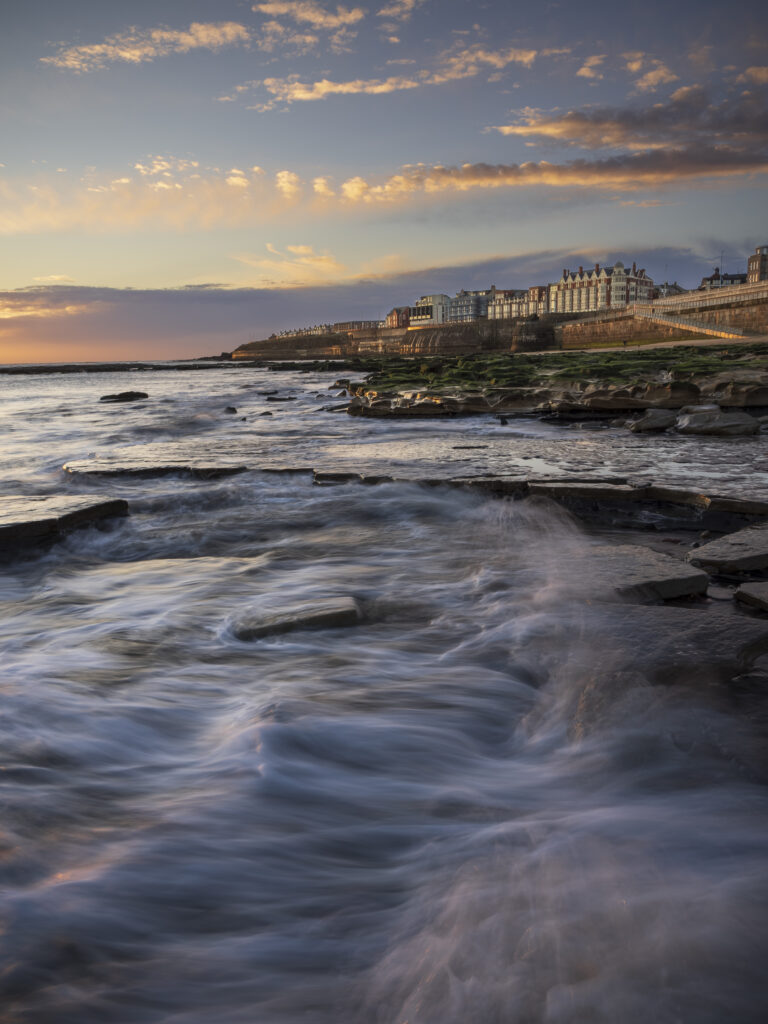
Using the OM-3’s built-in Live ND feature, I experimented with longer exposures to introduce movement into the water.
This was where the limitations of my handheld approach became more obvious.
As the waves moved across the rocks, I found myself constantly adjusting my position and reacting to the changing conditions. Maintaining exactly the same composition between exposures was almost impossible.
With a tripod, I would normally establish my composition and then concentrate entirely on the movement of the water, waiting for the right wave or the right moment of light.
Without one, the whole process felt considerably more unpredictable.
I did eventually capture an image I was happy with, although not before getting my feet thoroughly soaked!
Some things, apparently, never change.
So, Is a Tripod Still Essential for Landscape Photography?
By the end of the morning, I’d proved something to myself.
You absolutely can photograph a sunrise without a tripod.
Modern image stabilisation is remarkable, and being able to capture sharp handheld images at shutter speeds approaching a second opens up possibilities that would once have been difficult to imagine.
For travelling light, cycling, hiking or simply heading out with a small camera bag, that freedom is incredibly valuable.
However, I also came away with a slightly unexpected conclusion.
Just because something is technically possible doesn’t necessarily mean it’s the best creative approach.
For me, using a tripod isn’t simply about preventing camera shake. It’s part of the photographic process.
I enjoy finding a composition, setting up the camera and taking the time to observe how the light changes. I enjoy being able to return to exactly the same framing while experimenting with different exposures or waiting for the perfect moment.
Working handheld certainly offers more freedom, but it can also encourage a more reactive, less considered approach.
Neither method is necessarily better. They’re simply different ways of working.
Finding the Right Balance
Will I be leaving my tripod at home for every future sunrise photography session?
Probably not.
But this experiment has changed how I think about the equipment I carry.
There will undoubtedly be occasions when travelling light is more important than having complete control over every aspect of an image. And knowing that I can confidently photograph landscapes handheld, even in relatively low light, is genuinely liberating.
Perhaps the biggest lesson from the morning wasn’t about image stabilisation at all.
It was about recognising that the equipment we choose doesn’t just influence the photographs we create. It also influences how we experience the landscape.
And sometimes, the slower approach is still the one I enjoy most.
Watch the Sunrise Photography Experiment
You can join me on the North Tyneside coast in the video below, where I put the OM System OM-3 to the test, photograph three different subjects and discover whether leaving my tripod behind was actually a good idea.
What about you? Do you still use a tripod for landscape photography, or has modern image stabilisation changed the way you work?

Leave a Reply