
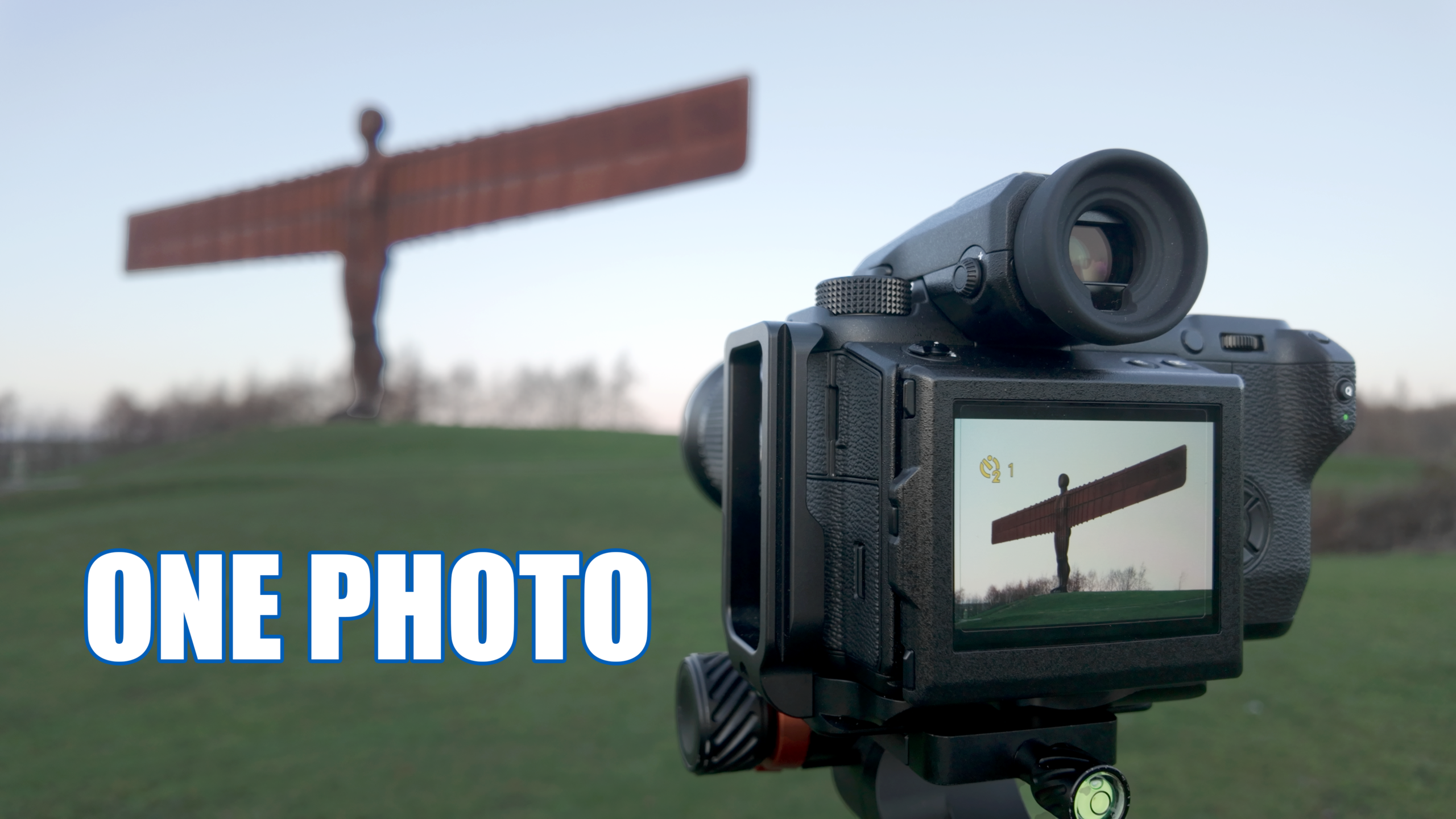
There’s something quietly intimidating about photographing an iconic subject. You arrive knowing that the image has been taken thousands of times before — often from the same viewpoints — and that makes every decision feel heavier than usual.
For this shoot, I set myself a very simple but deliberately restrictive challenge: one sunrise, one composition, one final photograph of the Angel of the North.
No wandering around grabbing multiple angles. No hedging my bets. Just one image.
Arriving early and committing to a single idea
I arrived before sunrise, hoping for clouds behind the Angel as the sun rose in the east. The idea was simple: soft early light illuminating the sculpture, with just enough texture in the sky to add interest.
At first, I wasn’t convinced it was going to happen. The sky felt uncertain, the light flat, and time was already ticking. But rather than rushing to set up, I did what I often recommend — I walked.
Using a viewfinder app on my phone, I explored the limited angles available, previewing how the Angel would sit in the frame with a 50mm lens on a medium format sensor. The rule I’d set myself was strict: once I chose the composition, that was it. I could take multiple exposures, but only of that one view.
Eventually, I settled on a classic angle. A safe choice, perhaps — but one I hoped the light would elevate.
A familiar camera, used with intention
For this shoot, I was once again using the original Fujifilm GFX 50S (Mark I). It’s big, slow, and clunky — even by medium format standards — but that’s exactly why I like it for projects like this.
Paired with a manual 50mm shift lens, the setup forces you to think carefully about every step. There’s no rushing, no spray-and-pray, and no distractions. Just composition, focus, and waiting for the light to do something interesting.
I’ll happily admit it’s not the quietest place to shoot. Traffic noise is constant, and it’s far from serene. But once the camera is on the tripod and the composition is locked in, that fades into the background.
Why I chose a shift lens for this image
One of the main reasons for using a shift lens here was control. With a subject like the Angel of the North, keeping everything upright and visually stable is crucial. Even a slight tilt can make it feel like the sculpture is leaning or falling out of the frame.
By shifting the lens rather than tilting the camera, I could:
- Keep verticals straight
- Maintain a natural perspective
- Place the Angel exactly where I wanted it in the frame
The composition itself is very simple. This image lives or dies entirely on the quality of the light.
Embracing restrictions in photography
While waiting for the sun to rise, I talked in the video about why I deliberately limit myself on shoots like this. Restrictions — whether that’s one lens, one composition, or one final image — are incredibly powerful creative tools.
If I’d arrived with a smaller, faster camera, there’s a good chance I’d have spent the entire sunrise chasing alternative angles and never quite committing to anything. By deciding in advance that I was only allowed one photograph, I slowed everything down.
This is also why I love using a tripod, especially for sunrise photography. Not just for stability, but because once everything is set, you’re free to wait. You’re no longer reacting — you’re observing.
Waiting for the light (and accepting what you get)
As the sun rose, the clouds I’d been hoping for slowly disappeared. That was disappointing, but it’s also part of the process. You don’t always get the conditions you imagine — and learning to work with what does happen is just as important.
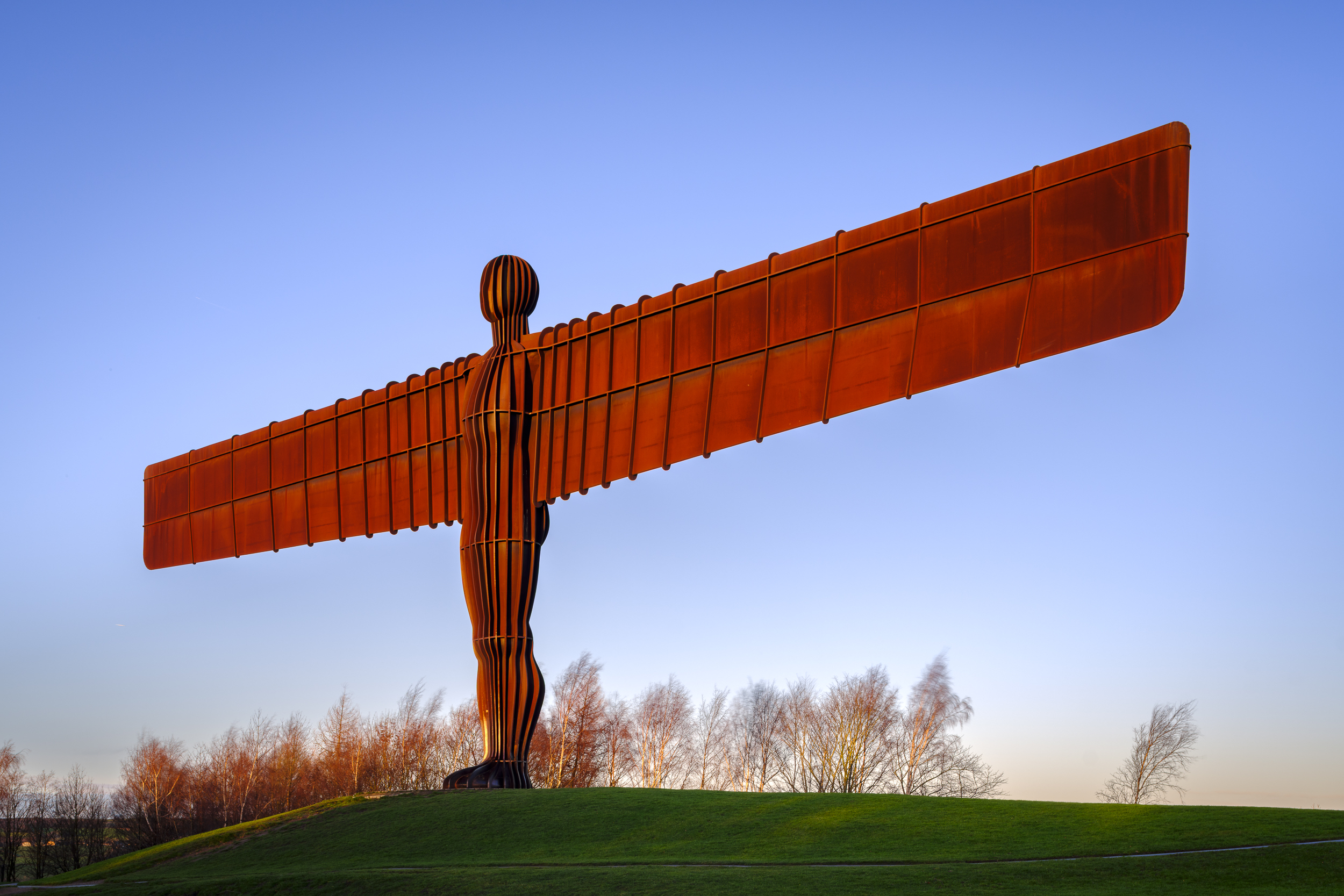
Eventually, the light hit the Angel cleanly. No dramatic sky. No spectacle. Just calm, early-morning illumination.
That was the moment.
One exposure. One frame.
The final image
The finished photograph is quiet and restrained — exactly what I’d hoped for when I set myself this challenge. It isn’t about novelty or drama. It’s about commitment, patience, and trusting a single idea enough to see it through.
I genuinely believe exercises like this make you a better photographer. Not because every image will be a success, but because they train you to slow down, to commit, and to stop hiding behind endless variations.
Final thoughts
Photographing something as iconic as the Angel of the North can feel daunting, but setting clear boundaries turned it into a really enjoyable and focused shoot. One sunrise. One composition. One photograph.
It’s a challenge I’d highly recommend trying yourself — whether it’s at a famous landmark or somewhere much closer to home.
You can watch the full video below, where I talk through the process in real time and share the final image.



Leave a Reply