
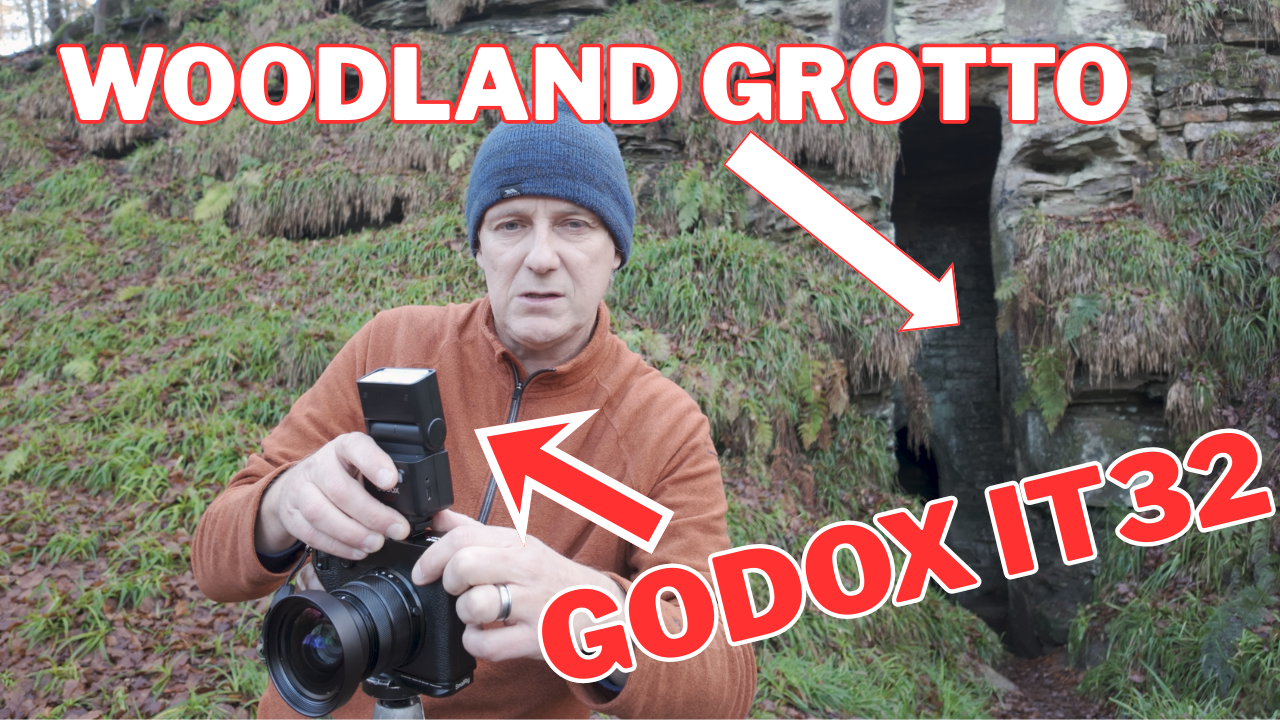
I’ll be honest — woodland photography is not where you’d normally expect to be testing a flash gun. But that’s exactly what I found myself doing on this shoot, while exploring a completely new location and trying out a new piece of kit: the Godox i32 flash.
This isn’t a review. Not yet, anyway. Think of this as a first outing — a chance to get creative with flash outdoors, see how it behaves in real-world conditions, and work out whether it has genuine photographic potential beyond controlled studio use.
An Unexpected Start
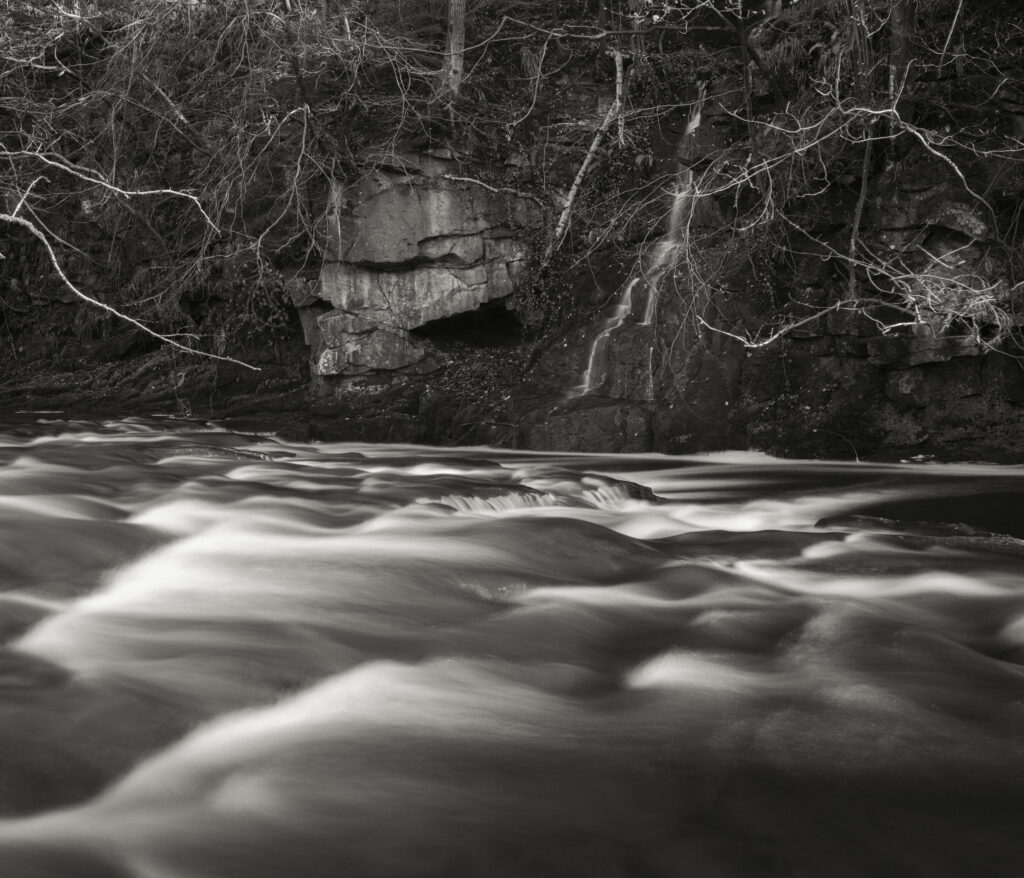
The day began in classic fashion: muddy boots, overcast skies, and very low expectations. But almost immediately, the location threw up a surprise — a small woodland waterfall tucked away between the trees.
It wasn’t the sort of scene I’d planned to photograph, but that’s often how the best images happen. I instinctively gravitated towards a square crop, leaned towards black and white, and began shaping a composition that felt intimate rather than grand.
Using a neutral density filter and a long exposure, I worked carefully to preserve highlights in the water while embracing the contrast created by the brighter conditions. It wasn’t textbook woodland photography — but it felt right.

And that set the tone for the day.
Discovering the Grotto
Further along the path, I stumbled across something completely unexpected: a small woodland grotto — an eccentric, listed structure hidden away among the trees.
Dark, cluttered, and full of contrast, it was immediately obvious that this would be a technical challenge. And this is where the flash came into play.
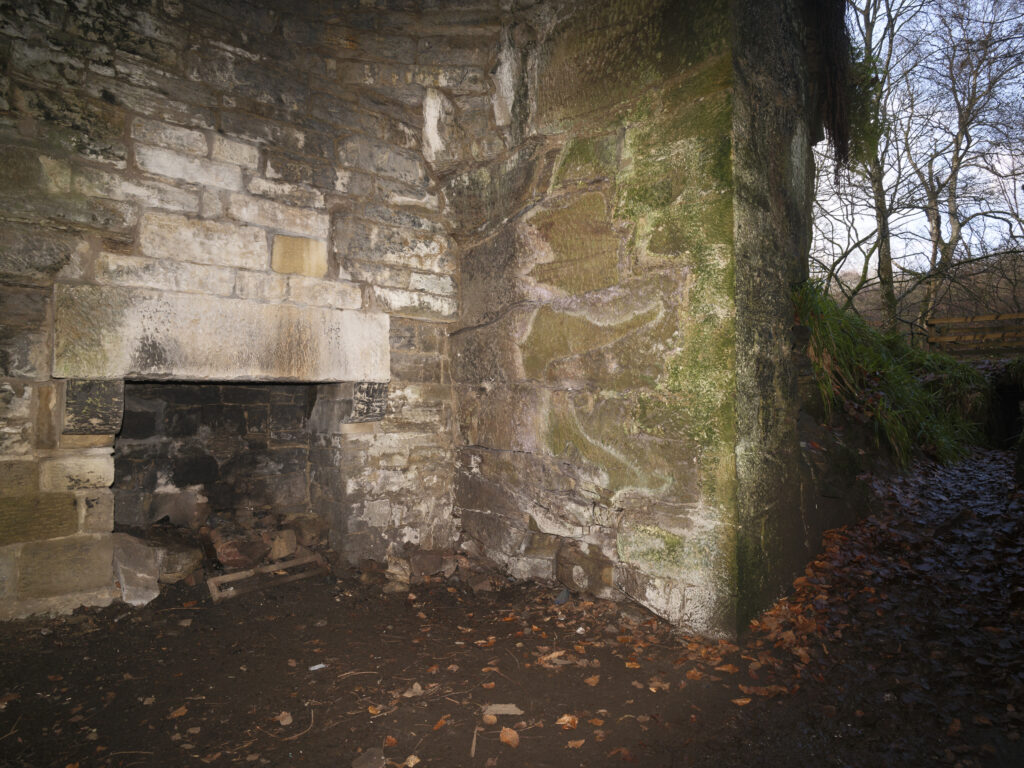
Inside the grotto, the exposure difference between the interior and the outside world was huge. Rather than fighting it, I leaned into the problem — metering for the exterior first, then using flash to lift the shadows inside.
This is where the Godox i32 really began to impress.
Using Flash Creatively (Not Clinically)
The real appeal of the i32 is its modular design. The flash head separates from the hot shoe unit, turning the camera-mounted section into a wireless trigger. That meant I could place the flash inside the scene itself — tucked into doorways, angled across stonework, and used to selectively lift parts of the frame without flattening the light.
Instead of blasting everything evenly, I used flash to sculpt the scene:
- balancing interior shadows
- preserving atmosphere
- and keeping the exterior exposure believable
It wasn’t a scientific process — more instinctive than precise — but that’s often where creativity lives.
A Change of Direction
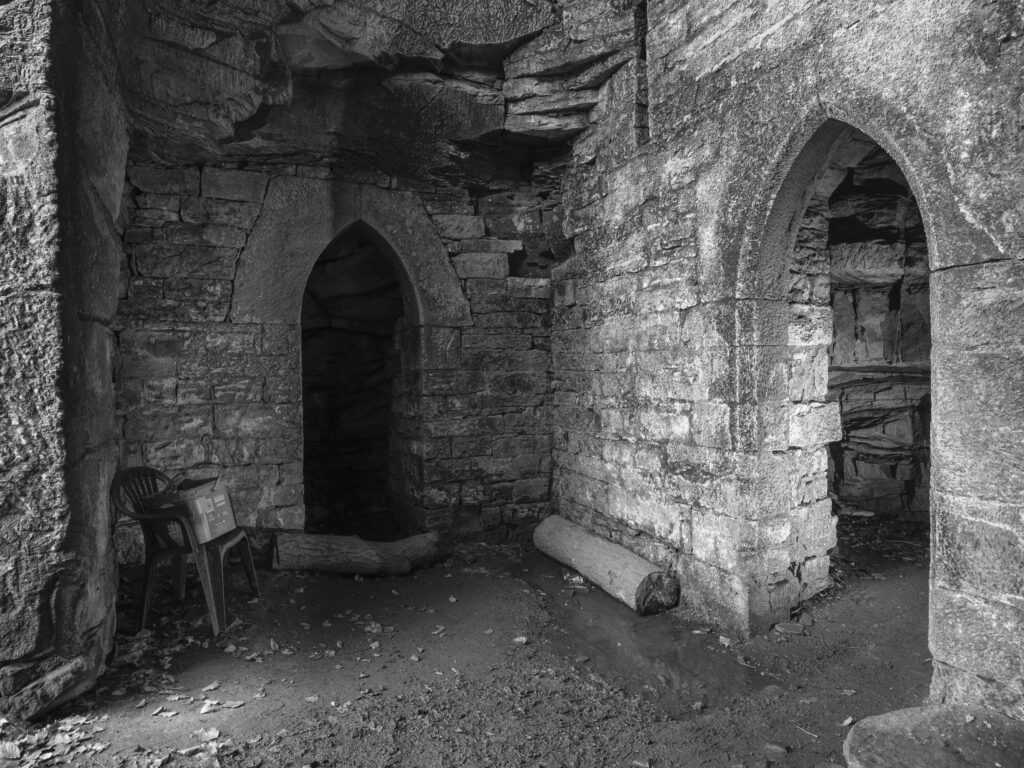
Midway through, I switched from black and white to colour, raised the ISO slightly, and adjusted the exposure to better accommodate the mixed lighting. The results felt more natural, and the flash blended surprisingly well with the ambient light.
Working in such a confined, messy space wasn’t comfortable — but that discomfort forced decisions. And those decisions led to images I wouldn’t normally make.
First Impressions
This wasn’t about perfect technique or polished results. It was about experimentation.
The i32 proved powerful enough for creative off-camera use, small enough to pair beautifully with the GFX100RF, and flexible enough to encourage problem-solving rather than restrict it. Whether it becomes a permanent part of my kit remains to be seen — but first impressions were very positive.
Final Thoughts
I’ll save a proper review for later. But as a first outing, this shoot confirmed something I already believe strongly: new tools are only useful when they push you into unfamiliar situations.
This one did exactly that.
And sometimes, that’s all a piece of gear needs to do.



Leave a Reply