
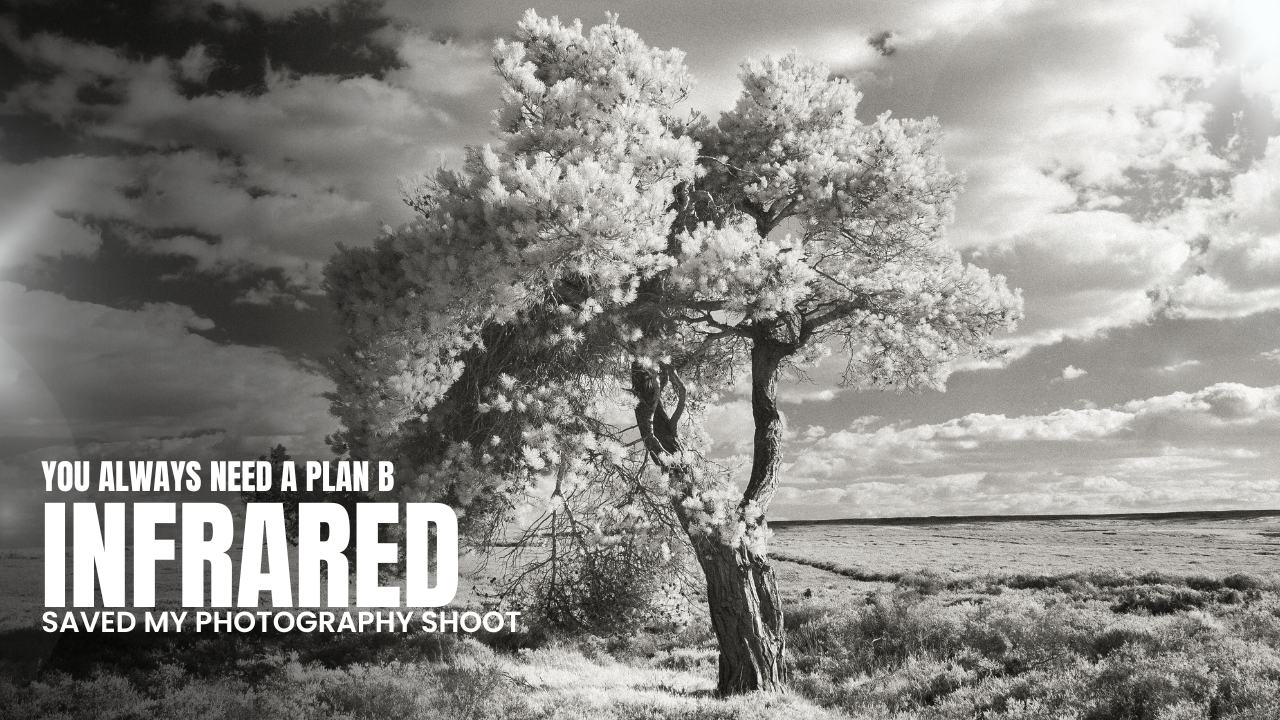
I headed back to the North York Moors with a very specific photo in mind.
A couple of years ago, I made an image I really loved — a lone tree surrounded by a carpet of purple flowering heather. Classic Moors summer. Simple, graphic, and full of that late-season colour.
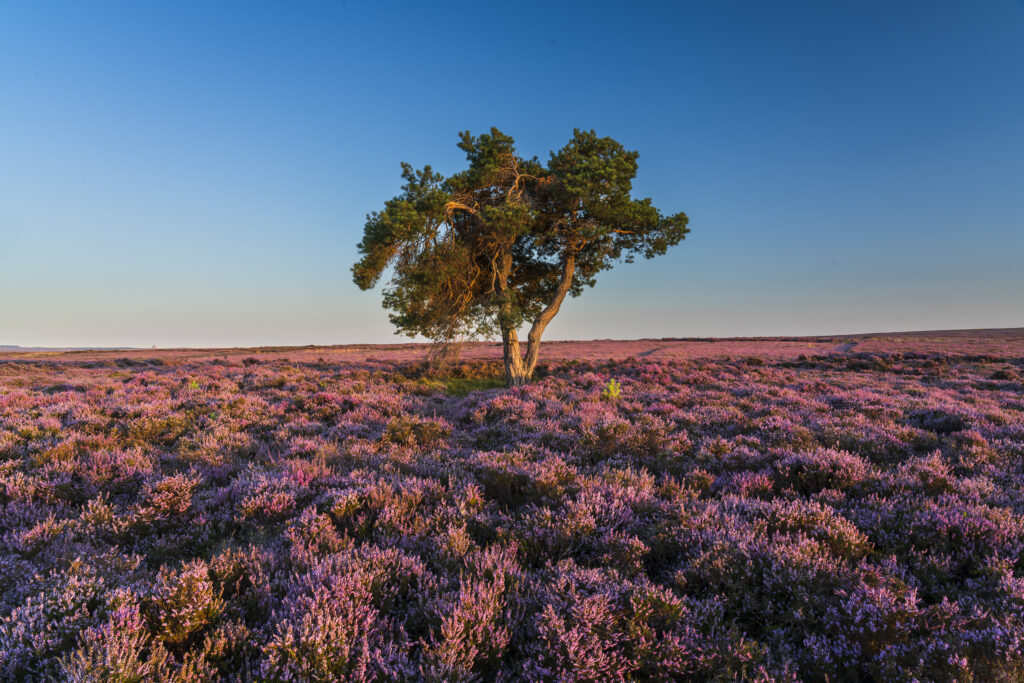
This time, I wanted to replicate it.
Except… the heather wasn’t playing ball.
The Problem With Returning for “That Shot”
I’d photographed the tree before around the 10th of August, and I was back on the 3rd of August, thinking the heather would be well on its way.
But when I arrived, it looked dry, stunted, and nowhere near as vibrant as I expected. And that’s the danger of chasing a repeat image — you turn up with a pre-made photo in your head… and reality doesn’t care.
At that point I had two options:
- keep forcing the original idea and leave disappointed
- accept it’s a Plan B day and adapt
So I adapted.
The “Plan B” Camera That Changed the Whole Shoot
Right at the last minute I threw an extra camera in the bag. Not something exciting on paper — actually a pretty humble little body:
A Fujifilm X20… but converted to 720nm infrared.
I wasn’t even looking for an infrared camera, but I spotted one on eBay bundled with a lens and managed to grab it for a price that made it feel like a no-brainer. Small, cheap enough to live in the bag, and perfect for those days when visible-light landscapes aren’t delivering.
And this was exactly one of those days.
Why Infrared Works When Colour Doesn’t
Infrared photography is basically photographing light we can’t see. With a 720nm conversion, you’re capturing mostly infrared (with a tiny bit of visible light still sneaking in), which completely transforms familiar scenes.
The magic, for me, is what it does to contrast:
- blue skies go dark / jet black
- sunlit foliage goes bright / ghostly white
- and suddenly even an “ordinary” scene gets drama
Which was exactly what the Moors were lacking that day.
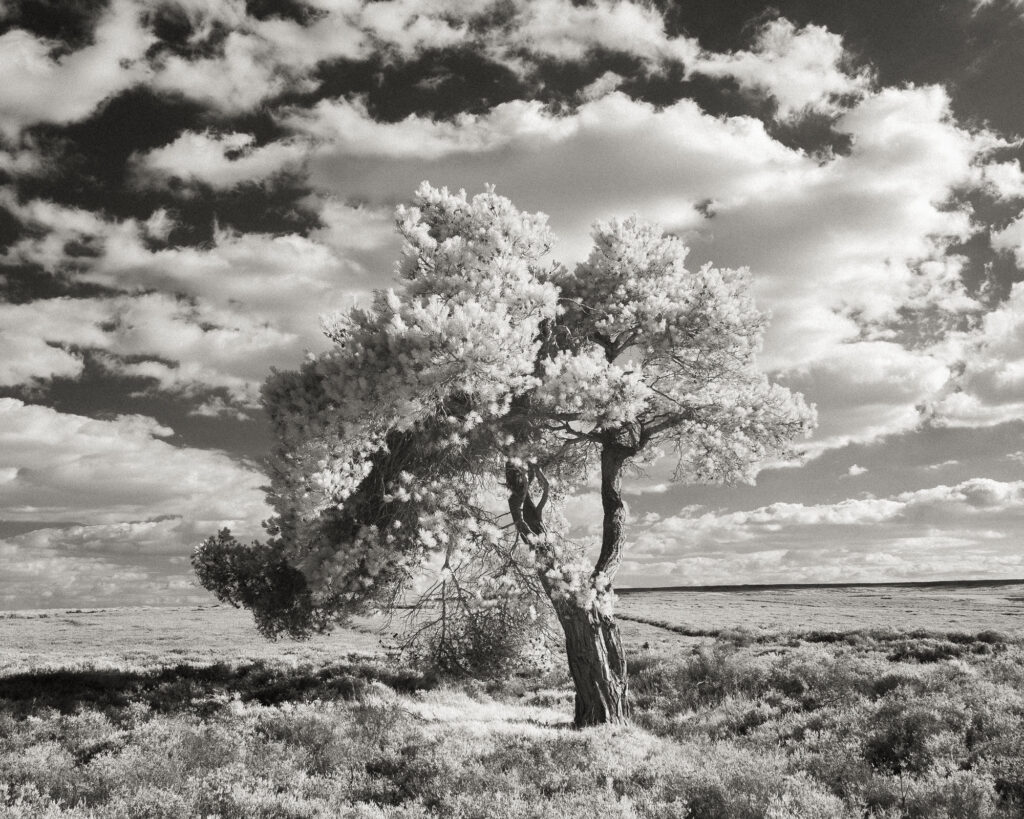
Shot #1: The Tree (Saved by Clouds)
The first infrared subject was obvious: the same tree.
But what made it work wasn’t the heather — it was the sky. I spent a good hour circling the tree, trying different angles, waiting for the right cloud formations behind it to give separation and structure.
In visible light, it would have been… fine.
In infrared, it became something else entirely.
Plan B Doesn’t Mean Random — It Means Options
From there I drove around and started treating the day like a “what can I salvage?” shoot.
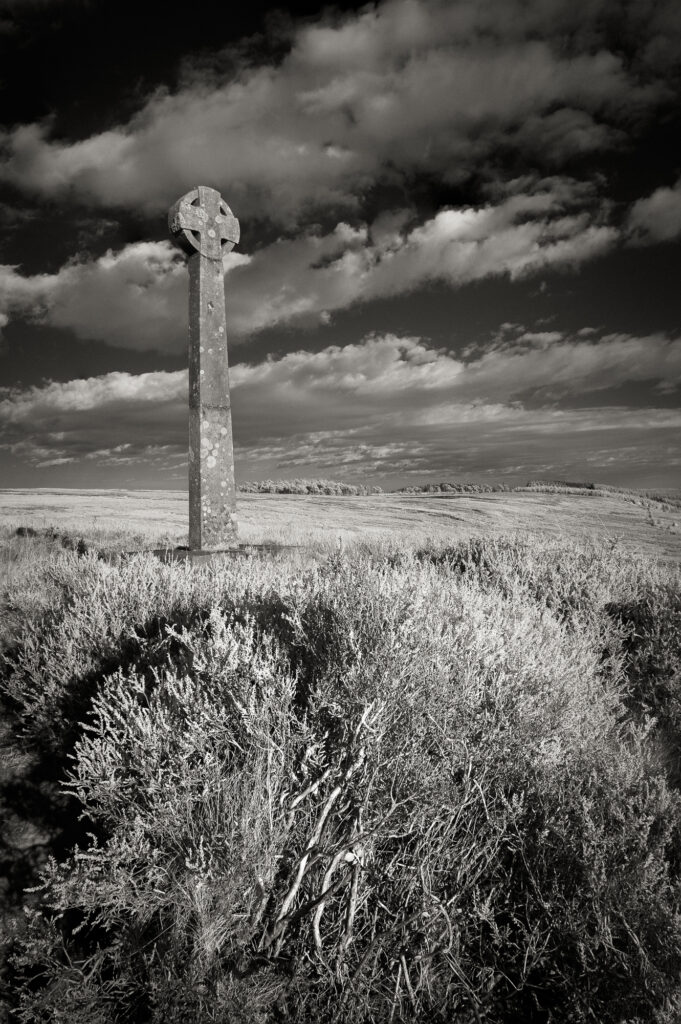
That’s when I found a cross stone and tried another infrared frame, using texture in the foreground and the sky behind for contrast. It wasn’t my strongest image of the day — but it was a real photograph, made in real conditions, instead of driving home empty-handed.
And that’s the point.
I’m not saying everyone should carry an infrared body “just in case”. But you should have something in your toolkit that lets you switch gears when conditions don’t match the fantasy version you planned.
That could be:
- a macro lens for details
- a longer lens for compression
- black and white as a deliberate choice
- a different location entirely
- or, in my case, infrared
The Unexpected Twist: Infrared Beat the “Pleasant” Colour Shot
Later I found another tree with some genuinely lovely warm tones in the landscape. I set up the GFX100RF for a colour shot and it looked… pleasant.
Nice light. Nice scene. But the sky didn’t have enough drama.
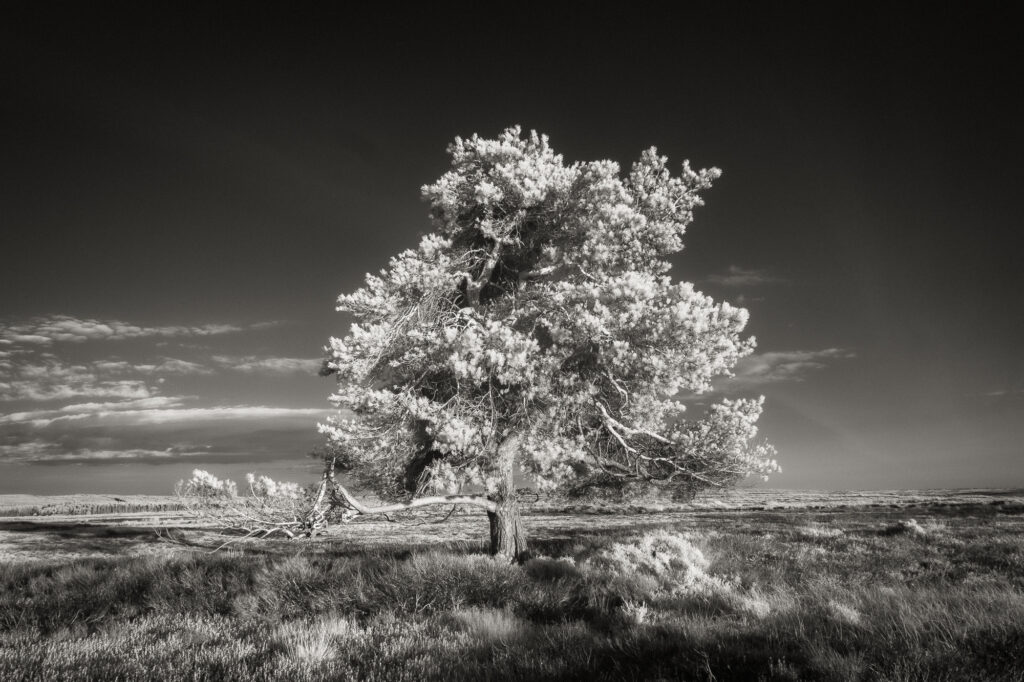
Out of curiosity, I pulled out the infrared camera and took the same idea again — and instantly the image had more bite. The sky went black, the tree popped, and the whole frame gained the contrast it was missing in visible light.
That was the moment I realised:
Sometimes your Plan B doesn’t just “save” the day… it actually produces the better image.
The Real Takeaway: Always Have a Plan B (Even a Small One)
This whole shoot was meant to be a classic North York Moors heather day. Rolling hills, purple colour, simple compositions.
It didn’t happen.
But by having an alternative option — in this case, a tiny infrared camera — I came away with one or two images I’m genuinely pleased with.
And maybe that’s the most evergreen photography lesson of all:
The best photographers aren’t the ones who always get perfect conditions.
They’re the ones who can adapt when conditions don’t match the plan.


Leave a Reply