
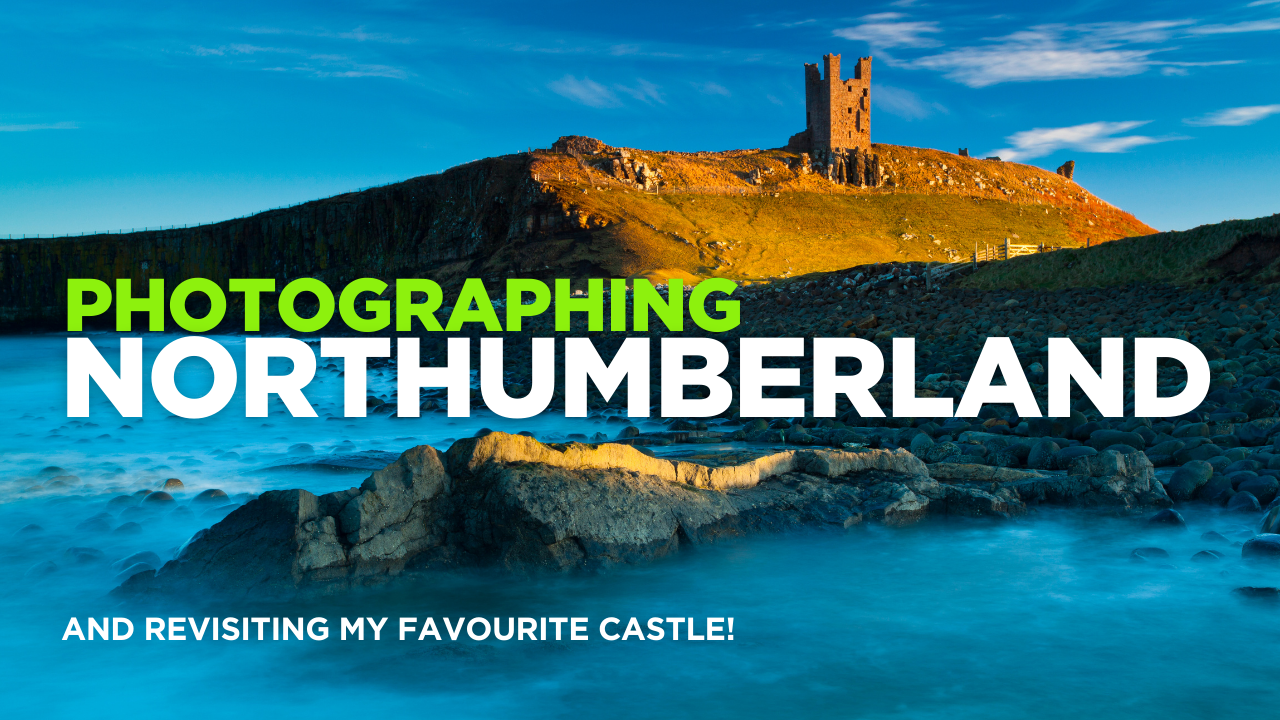
If there’s one thing Northumberland does well, it’s castles. It’s often called castle country, and it’s home to more castles than any other English county — which is probably why I end up photographing them so often.
What’s unusual for me is photographing three in a single day.
So this trip was a bit of a one-off:
Warkworth Castle for spring daffodils, Dunstanburgh Castle (my favourite) for a moody coastal scene, then finishing at Bamburgh Castle for something different at golden hour.
Stop 1: Warkworth Castle and the Daffodil Blanket
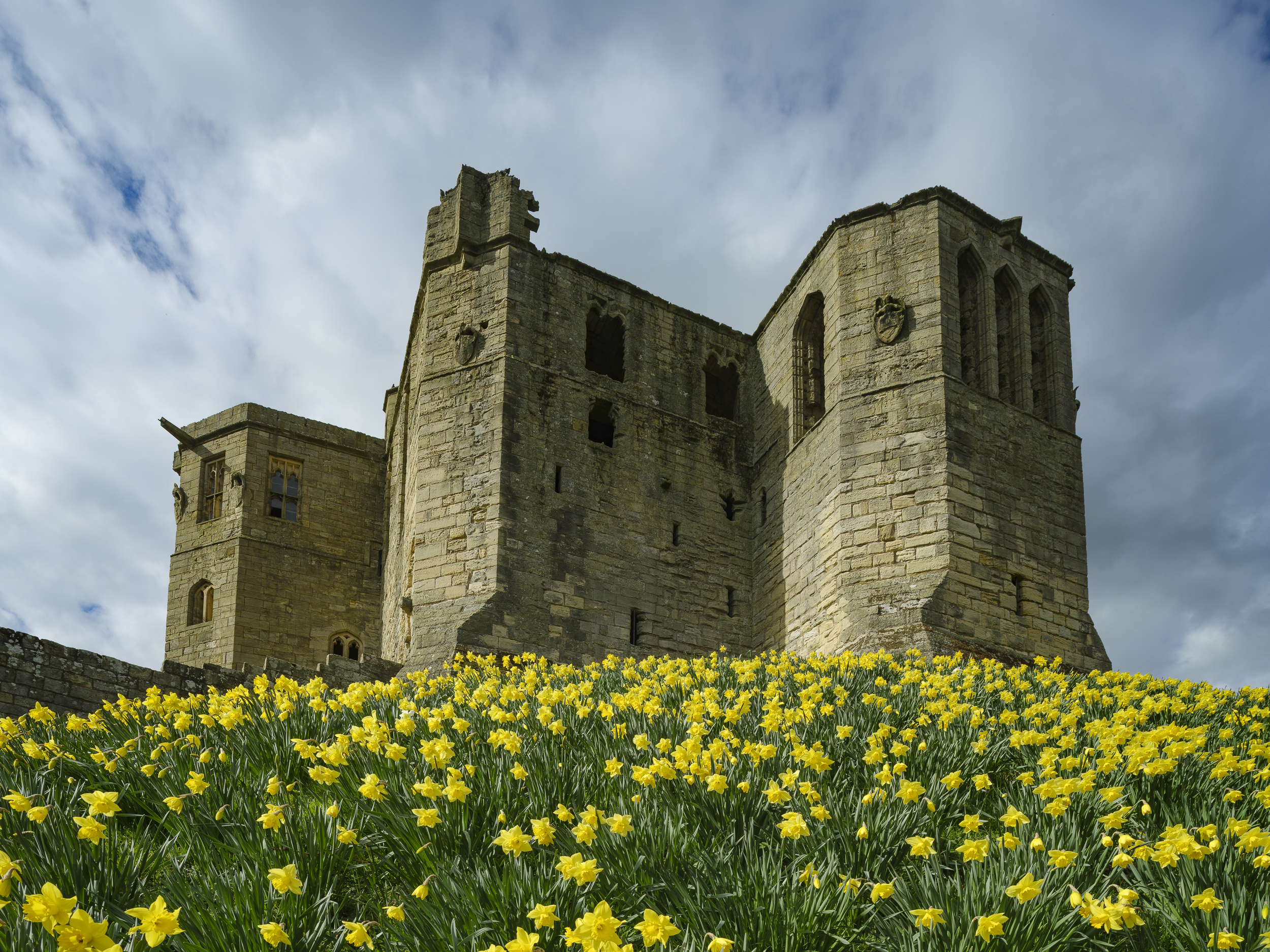
Warkworth in spring is a gift. When the daffodils are near peak, the hill below the castle turns into this huge blanket of yellow, and it’s one of those Northumberland scenes that almost photographs itself… almost.
The challenge is perspective.
To make the daffodils feel big in the frame, you need to get low and close — but as soon as you tip the camera back to include the castle, you introduce converging verticals and the whole building starts to look like it’s falling backwards.
The tilt-shift solution
This is where a shift (tilt-shift) lens earns its keep. Keeping the camera more level and shifting the lens upwards lets you include more castle/sky without the same extreme perspective correction afterwards.
It’s not “perfectly architectural” — but it massively reduces the problem and keeps the file cleaner for editing.
And then it becomes the usual waiting game: nice sky… now just give me a bit of light.
Stop 2: Dunstanburgh Castle, Rock Pools, and a Retreating Tide
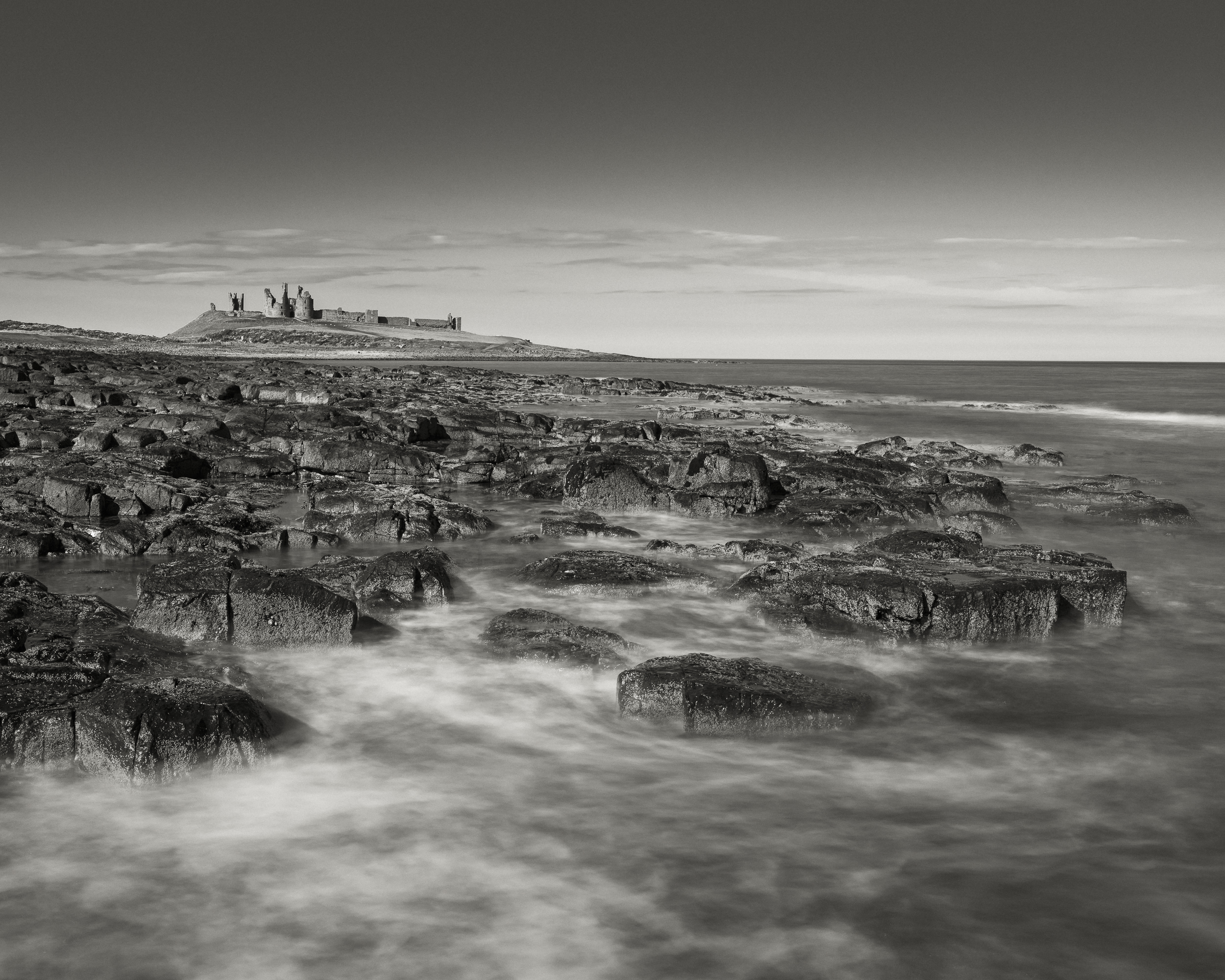
Dunstanburgh is the one I always come back to. It’s got that brilliant mix of ruin + coastline + scale, and on a good day it can look absolutely epic.
This shoot was less about “castle portrait” and more about castle in the landscape — using the rocks, pools and shoreline to lead your eye through the frame, with the castle as the anchor point.
The only problem: I was working against a retreating tide, which is never my favourite. When the water’s coming in you can work a scene and refine it. When it’s going out, you’re constantly watching the shoreline change and trying to stay ahead of it.
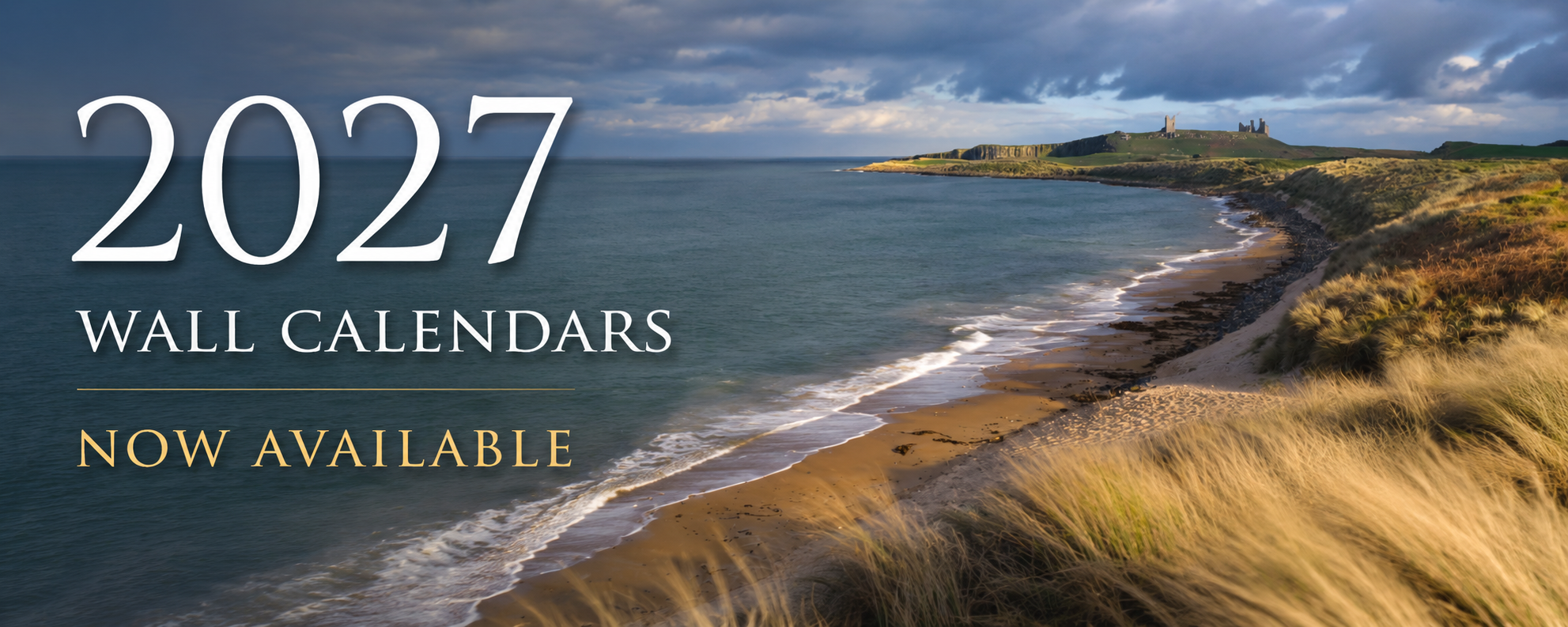
I ended up taking a 10-stop ND out onto the rocks and trying to time those little swirls around the foreground — which, inevitably, resulted in wet feet (the universal sign you’re probably in the right place). Long exposures at Dunstanburgh are a classic approach for good reason.
Stop 3: Bamburgh Castle… and the Shot I Didn’t Expect
Bamburgh greeted me with something that often worries me more than bad weather:
perfect, uniform blue sky.
No mood. No drama. Just nothingness.
My plan was a classic sunset castle shot from the rocks — but with a sky like that, I started looking for a different angle: dunes, colour, shapes, maybe using a polariser and working with the light rather than hoping for clouds.
And then I found it: a fenced dune restoration area, catching low sunlight and throwing strong shadows, with Bamburgh sitting there in the distance. There are real dune/foreshore protection efforts along this stretch, including small fenced areas designed to help plants re-establish and strengthen the dunes.
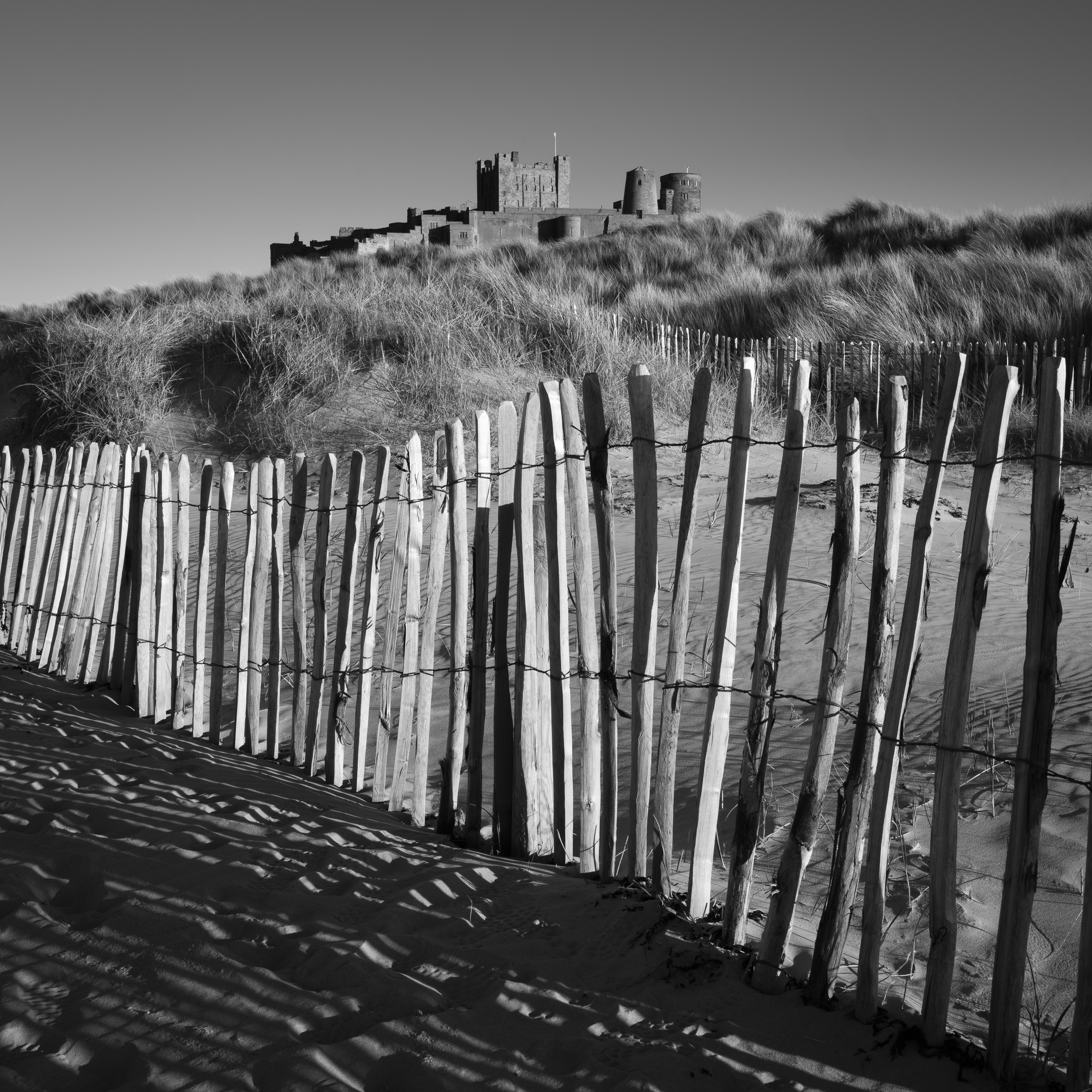
Black and white, square crop, maximum contrast
Instead of fighting the blue sky, I went the other way:
- black and white
- square crop
- fence + shadow pattern as the main subject
- castle as the quiet secondary element
And honestly… that ended up being the image of the day for me. The lack of clouds actually helped because it stopped the sky competing — the fence took centre stage.
It was a good reminder (again) that the best shot is often the one you didn’t turn up expecting to take.
A quick takeaway from the day
This wasn’t a gear video. It was just a photography day — and I needed one of those.
If there’s a theme running through it, it’s this:
- show up with an idea
- but don’t cling to it
- respond to what’s actually happening in front of you
Sometimes the day gives you daffodils.
Sometimes it gives you wet feet.
Sometimes it gives you a fence and a square crop… and that ends up being the keeper.


Leave a Reply