
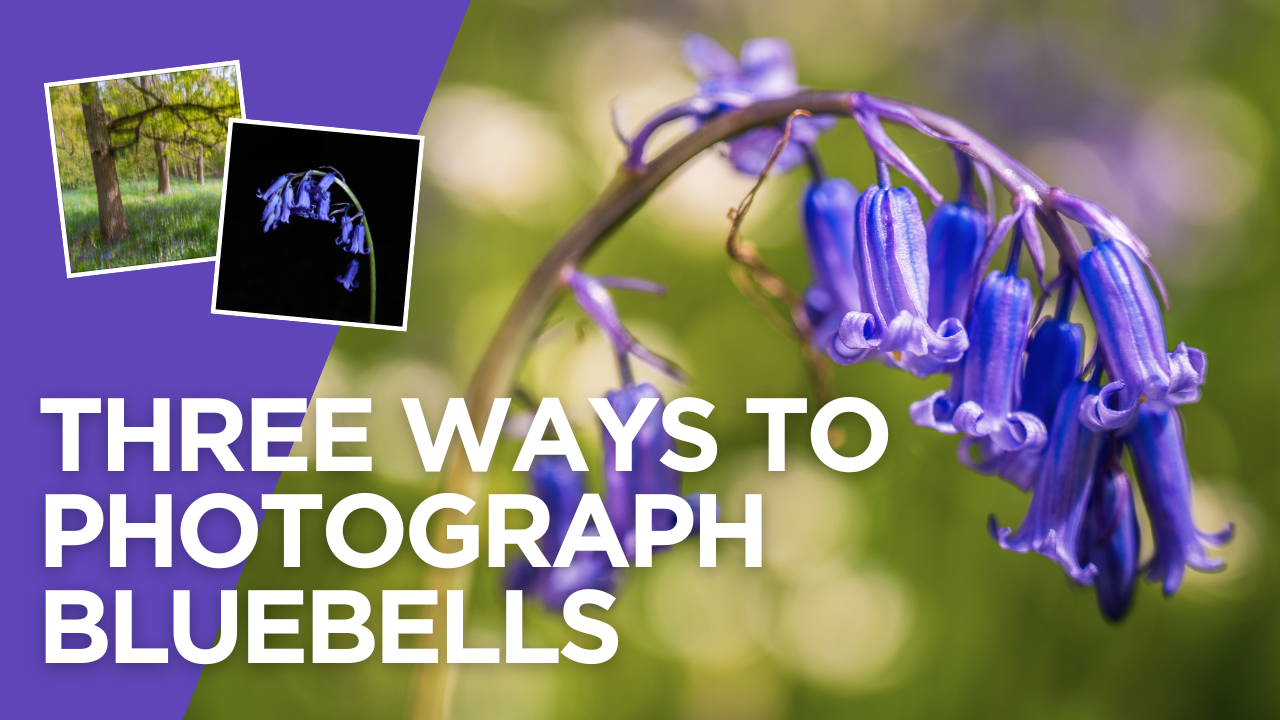
Here in the UK, spring has well and truly arrived. We’ve had that familiar patch of fine weather that isn’t always ideal for photography, but it’s been brilliant for the garden — and even better for wildflowers. And with that comes the annual tradition: the moment when just about everyone who owns a camera heads to the nearest woodland to photograph bluebells.
I get it. Bluebells are one of those subjects that feel almost irresistible. The colour is unmistakable, the atmosphere in a woodland can be magical, and if you catch them at their peak, they practically photograph themselves… in theory. In reality, they’re also a subject that can quickly lead to samey images, or a frustrating morning spent chasing “the perfect shot”.
So in this visit to Newton under Roseberry in North Yorkshire, I set myself a simple challenge: make three very different photographs of bluebells, using three different approaches. The aim wasn’t to produce a definitive “best” image, but to show how varied your results can be when you stop thinking of bluebells as one subject and start treating them as a set of creative options.
1) The “floral portrait”: let the background do half the work
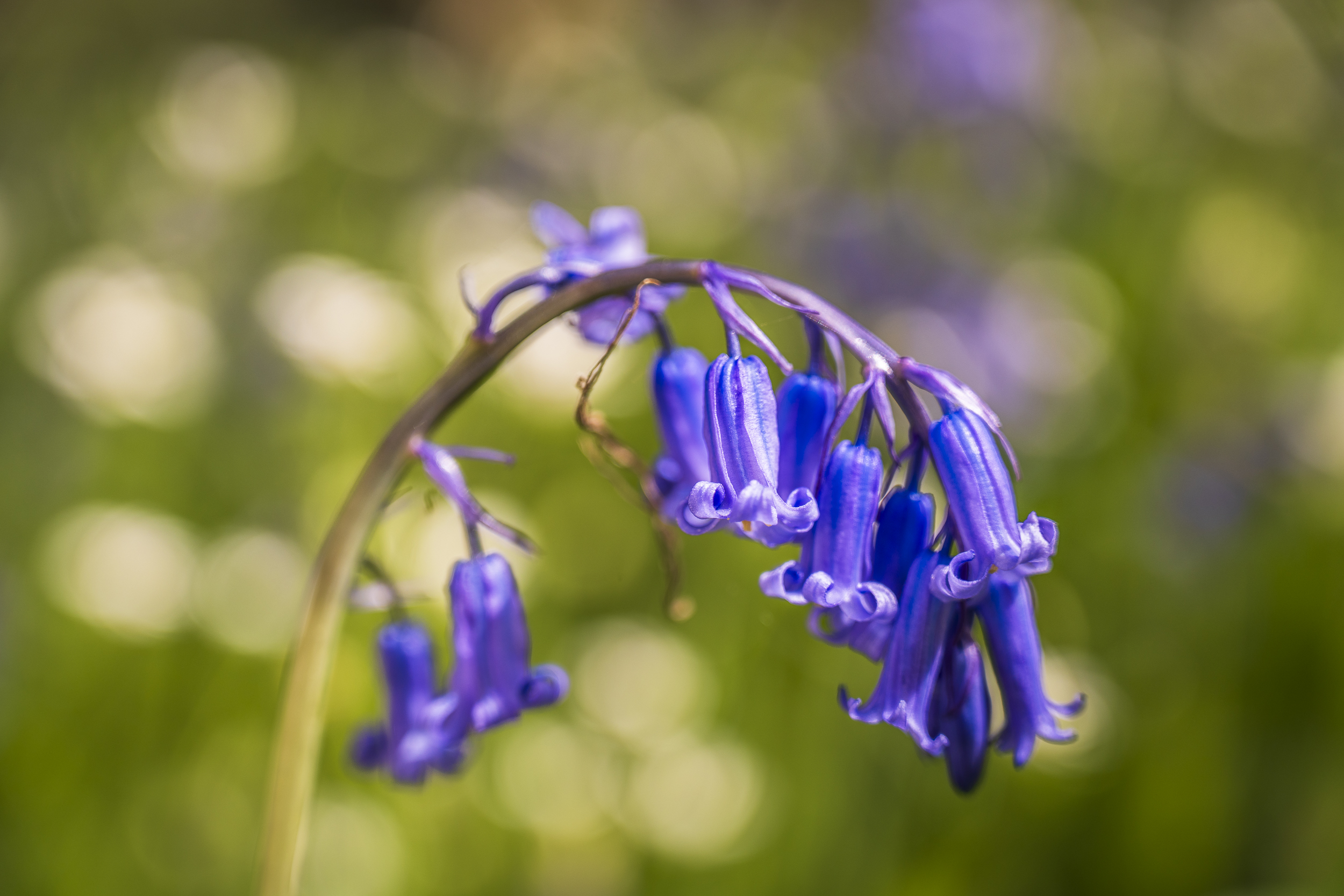
The first approach is how I often think about wildflower photography in general — almost like portrait photography. A portrait photographer doesn’t just point the camera at a person and hope for the best; they think about the subject, the angle, the light, and (crucially) the background. Wildflowers deserve the same attention.
When I arrived, I spent a good half an hour simply exploring. Not shooting. Just looking for a patch that felt “right” — and being careful not to trample anything. Sadly, you often see bluebell patches that have been stamped down by foot traffic, and it’s heartbreaking. So I was mindful of where I placed my feet and tripod.
For the first shot, I wanted something intimate: a detail-focused image that felt like a portrait of a small group of bluebells. That meant I wasn’t chasing front-to-back sharpness at all. In fact, I wanted the opposite: a soft, interesting, out-of-focus background with texture and colour.
The breakthrough wasn’t some complex technique — it was tiny adjustments. Dropping the camera angle a fraction. Shifting the framing so the background had more “sparkle”. In this kind of photography, those subtle changes can make a world of difference.
I added a polariser mainly to tame highlights and keep the petals looking gentler, and because there was a breeze, I opted for a faster shutter speed to reduce movement. The final photo worked because of selective focus — but equally because the background was carefully chosen. It wasn’t just “blur”; it was blur with purpose.
The takeaway: when you’re doing close, shallow-depth-of-field flower shots, the background is not an afterthought. It’s half the image.
2) ICM bluebells: an impression of spring, not a record of it
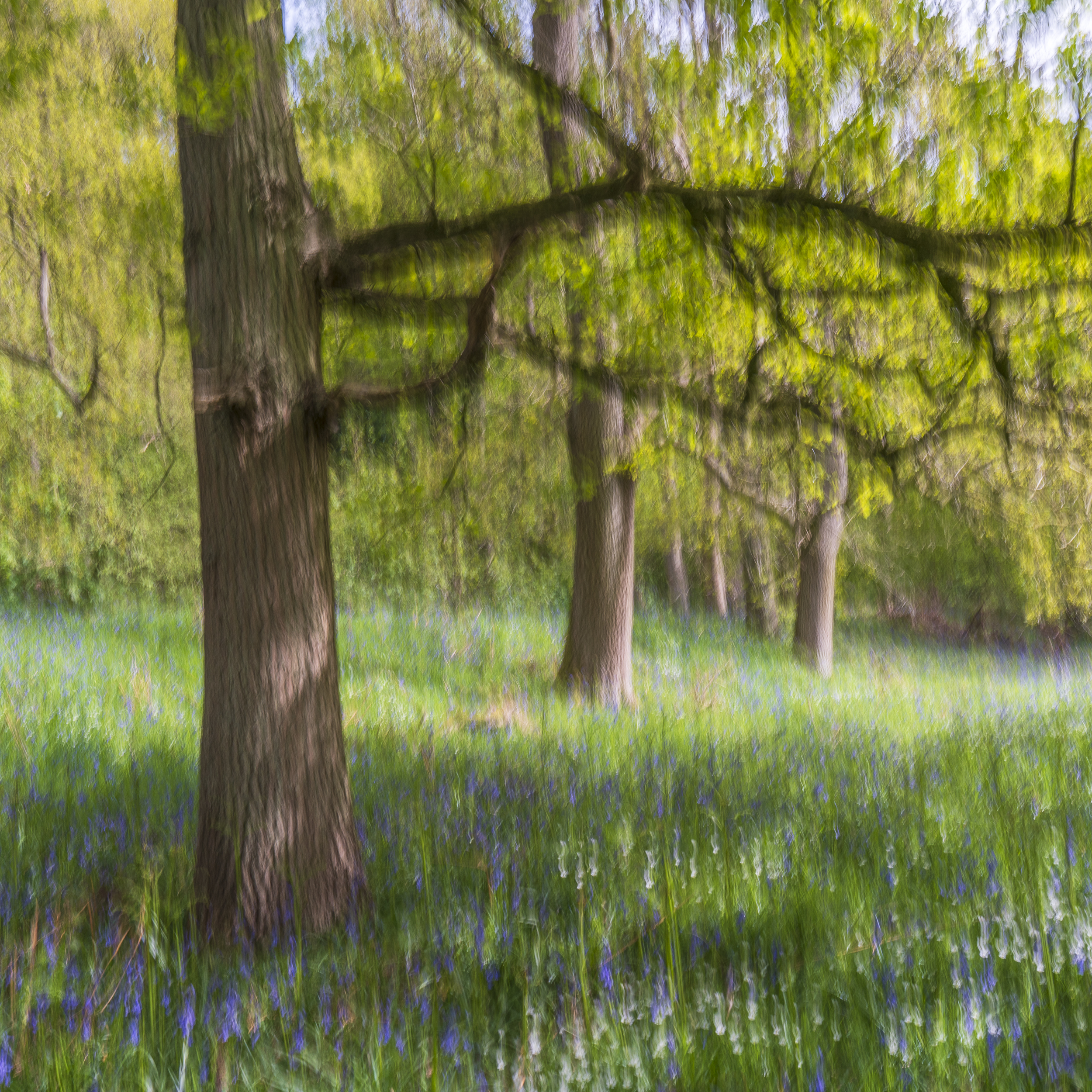
The second approach was deliberately different. Instead of locking everything down on a tripod and trying to control every detail, I wanted something looser — something that felt more like an impression of the woodland than a literal description.
So I went for ICM (Intentional Camera Movement).
I’ll be honest: I’m not an expert at ICM. For me it’s still trial and error, and that’s part of the appeal. It’s a technique that forces you to loosen your grip on technical perfection and focus on feeling, colour, and rhythm.

The setup was simple: manual mode, an ND filter to slow the shutter, base ISO, and a shutter speed around a third of a second. During the exposure, I moved the camera slightly and triggered the shutter while that motion was happening.
The results can be surprisingly similar in spirit to shallow depth-of-field work — you still get the sense of bluebells without rendering every individual flower sharply. But the character is completely different. It can look painterly, almost like an impressionist take on the woodland floor. It even reminds me of older film-era experiments — like people smearing a bit of Vaseline on a filter to soften everything. Same idea: stepping away from clinical sharpness and embracing a more interpretive image.
The takeaway: ICM is a brilliant reminder that photography doesn’t always need to look like “a photograph”. Sometimes it’s about atmosphere, not accuracy.
3) The wide scene: bluebells as a colour accent, not the main subject
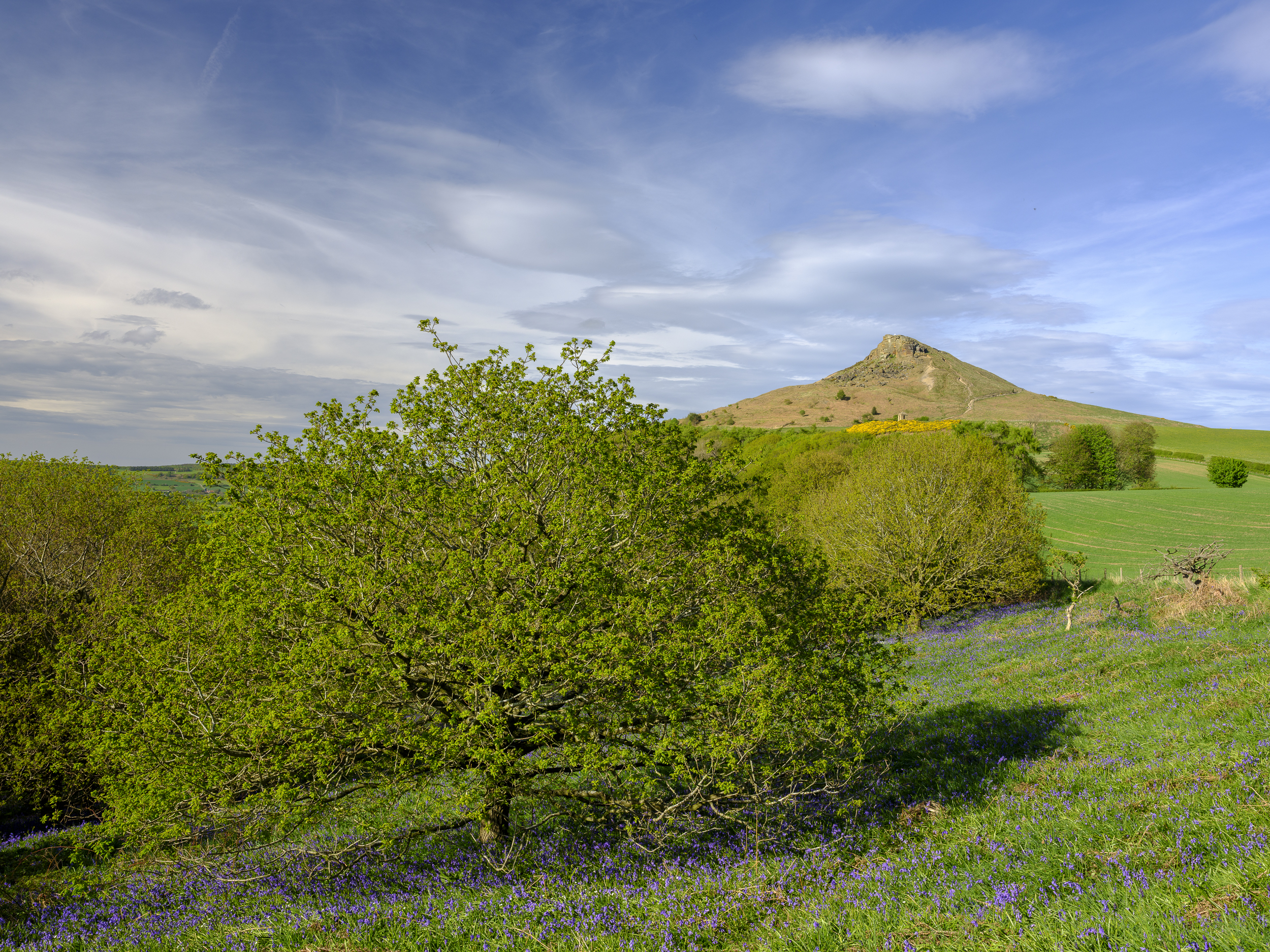
For the final shot, I flipped the whole idea on its head. You could argue it isn’t even a “bluebell photo” at first glance — because the landscape becomes the subject.
Instead of making bluebells prominent, I used them as a splash of seasonal colour in the foreground, leading into the wider scene with Roseberry Topping sitting in the distance. It’s a simple idea, but it can be incredibly effective: the bluebells tell you when the photo was taken — April or May — and they lift an otherwise familiar scene.
I’ve photographed this view throughout the year, and honestly, it often looks best at this time simply because that blue streak in the foreground adds life.
This approach also ties into how we naturally experience places. In film and magazines you often get an establishing shot first, then you move into detail. Interestingly, we did the reverse: we began with detail and ended with the wide shot — but together the three images told a fuller story.
Technically, it wasn’t complicated. ISO 100, f/14, around 1/30s, a polariser doing a subtle job on the sky. The bigger challenge was timing. The clouds were shifting, the light was changing, and shadows eventually started creeping in and complicating the scene. I got the shot at the right moment — and then it began to fade.
Which leads to a bigger thought…
The bigger point: stop chasing “clinically perfect”
Standing there watching the light change, I found myself falling back into an old habit: being a bit of a golden-hour junkie. I’ve done it for years — convincing myself photography only really happens at sunrise and sunset. But the truth is, that mindset causes you to miss opportunities, and it’s not even how I photographed when I first started.
Bluebells are a perfect reminder that you don’t need to make sterile, technically flawless photographs to make something beautiful. Not everything needs front-to-back sharpness. Don’t panic if parts of the flower are out of focus. Don’t worry if parts of the scene blur or move. Photography is bigger than technical perfection.
If there’s one message I’d want you to take away, it’s this: enjoy the process. Try different approaches. Make a “portrait”. Make an impression. Make a wide scene. And let the bluebells be whatever you need them to be — not just the same photo everyone else is trying to take.



Leave a Reply