
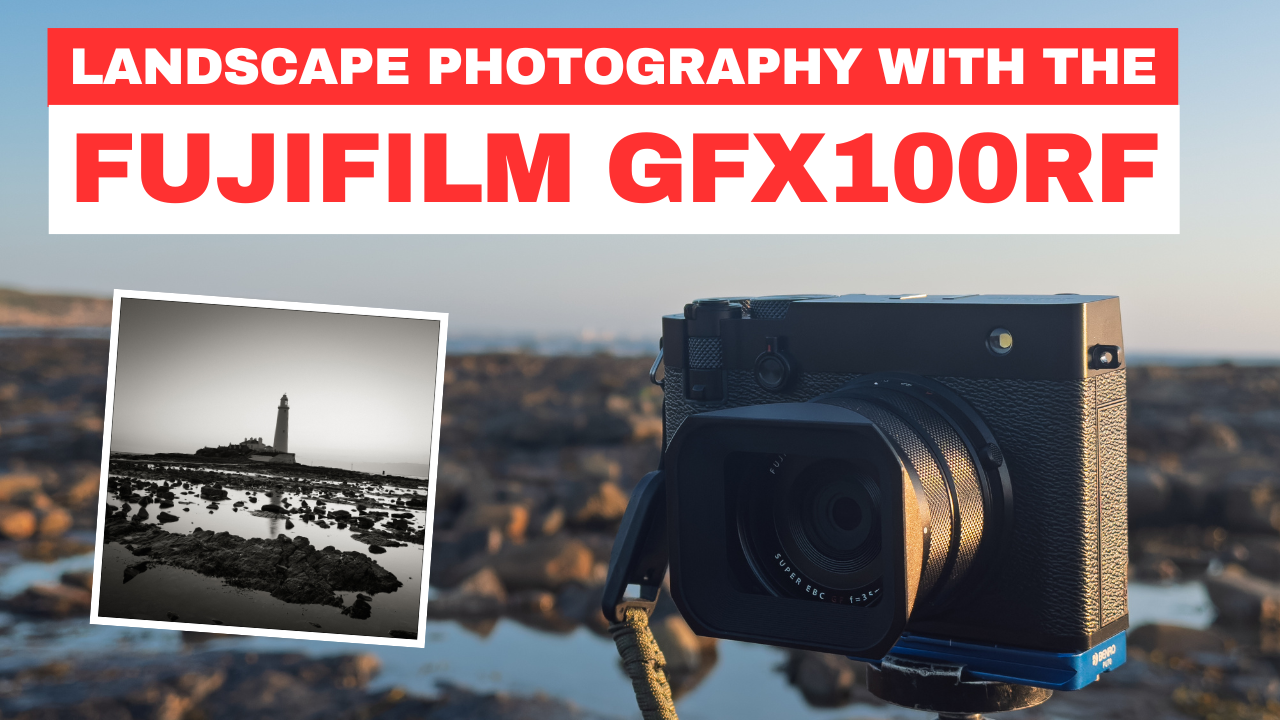
This is a first impressions session with the Fujifilm GFX100RF out in the real world, shooting landscape at my local lighthouse. It’s not a lab test and it’s definitely not a long-term review — it’s simply my initial reaction to using this camera for the kind of photography I actually do.
The GFX100RF is a fascinating idea on paper: a 100-megapixel medium format sensor in a relatively compact, fixed-lens body. That combination immediately raises a big question for landscape shooters: can a fixed lens be enough… if you’ve got that much resolution to crop with?
Fixed lens, big sensor: the core compromise
The obvious headline is the fixed focal length. With a traditional system camera, you’d solve compositional problems by changing lenses. With the GFX100RF, you’re solving them by moving your feet, committing to the camera’s native view, or using the built-in crop modes.
That’s where this camera gets genuinely interesting. The huge sensor gives you the freedom to crop in a way that still leaves you with very usable file sizes — which makes the “fixed lens” idea feel less restrictive than it normally would. In landscape photography, where you’re often working with strong structure and careful framing, that could be a real advantage.
But it’s also where the internal debate starts: with 100MP available, you want to use the full sensor as much as possible — and there’s a temptation to treat cropping as a compromise rather than a feature. Whether that becomes liberating or frustrating is going to depend on your shooting style.
Aspect ratios and panoramic potential
One of the standout design choices is the emphasis on aspect ratios, with quick access to panoramic crops (including that 65:24 XPan-style look). For anyone who enjoys panoramics, this is a huge part of the appeal: you can shoot with that panoramic intent in-camera and still come away with large, detailed files.
It feels like Fujifilm expects you to use the camera this way — not as a “one size fits all” system, but as a creative tool built around framing choices.
Handling: some love, some friction
In the field, the form factor is a big plus. It’s the kind of camera you could take hiking, throw in a bag, and actually want to carry — which matters more than people admit. That said, first impressions aren’t all glowing. Little things like controls and ergonomics can make or break the experience, and I definitely had moments where the handling felt less refined than I’d hoped (especially when working quickly while composing).
Quiet shooting, built-in ND, and real-world practicality
Two practical features stood out immediately:
- Leaf shutter quietness — it’s genuinely near-silent, which is unusual and could be brilliant in the right situations.
- Built-in ND — super convenient for slowing shutter speeds without adding extra kit.
For landscape work, those features are less about novelty and more about reducing friction: fewer accessories, less faff, faster setup.
So… is it a landscape camera?
My first impressions are honestly mixed, but intrigued.
The GFX100RF feels like it could fill a very specific gap: a camera that delivers serious files while being convenient enough to actually take out more often than a larger medium format setup. But the fixed lens is a genuine commitment, and the camera’s strengths only really make sense if you lean into what it’s designed to do: crop intelligently, explore aspect ratios, and work with composition rather than endlessly switching focal lengths.
It’s a camera with clear pros and clear compromises — and whether it’s “worth it” is going to come down to how much those strengths align with the way you personally shoot landscapes.


Leave a Reply