
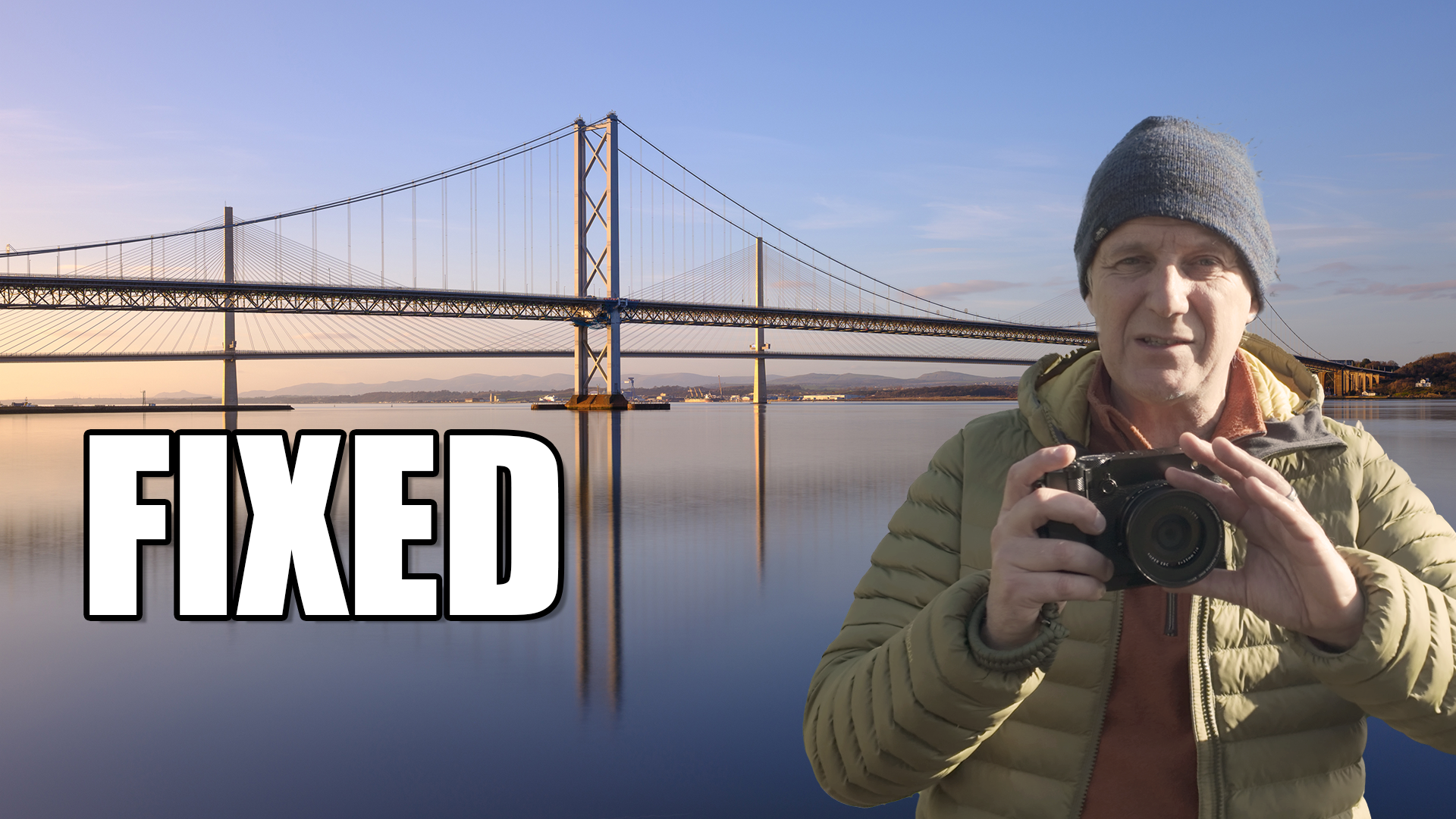
There’s something quite satisfying about going out with one camera, one lens, and no real backup plan.
That was exactly the situation in Edinburgh, where I headed out to photograph the Forth Bridges with the Fujifilm GFX100RF. It’s a camera I’ve really been enjoying, but on this particular day I did have a few doubts. The bridges are such a varied subject, and part of me felt that a zoom lens might have made life easier, especially for picking out smaller details and more abstract compositions.
But then again, that’s often the point.
I’ve said it many times before, but I do genuinely enjoy putting restrictions on my photography. Working within limits usually makes me slow down, think harder, and look more carefully at what’s actually in front of me rather than constantly wondering what another lens or another camera might have done better.
A strong start on the north side
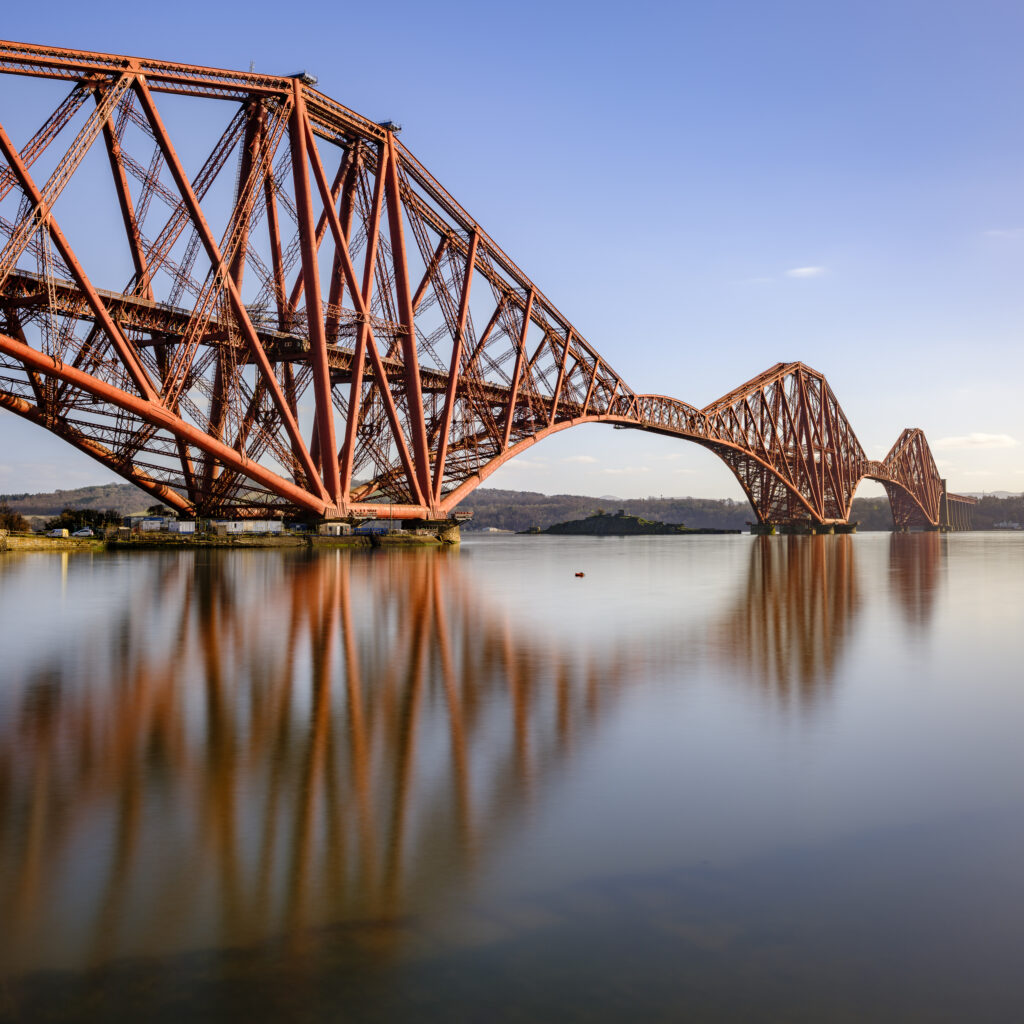
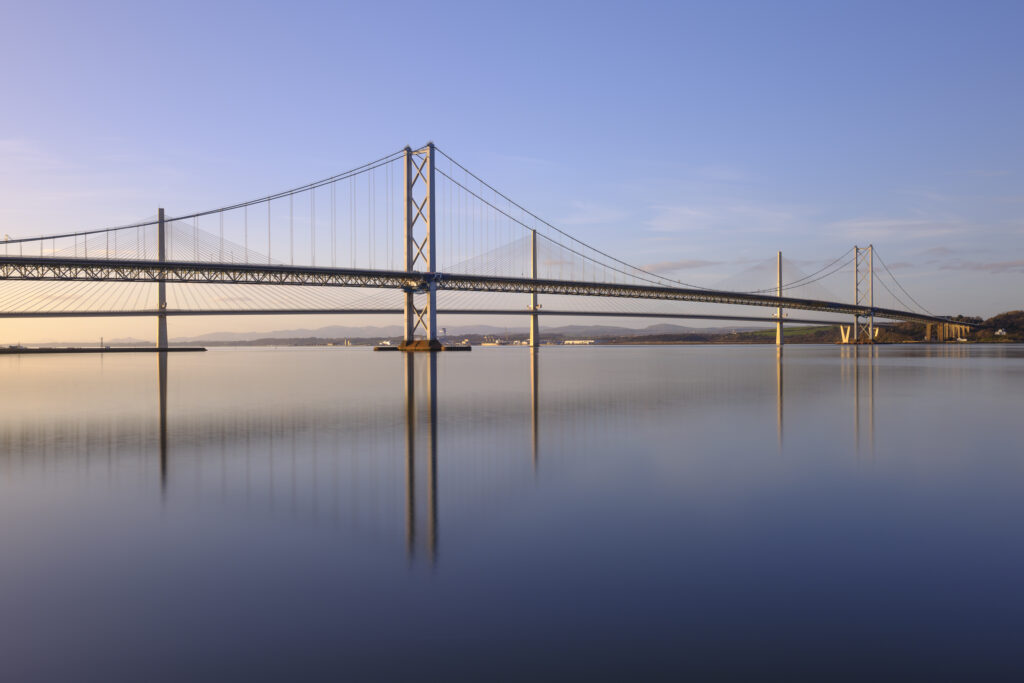
I started out at North Queensferry and pretty quickly found a composition that felt promising. There were some lovely reflections of the railway bridge in the water, and straight away it felt like one of those scenes that needed a slower, more considered approach.
At first I thought black and white might be the obvious choice, but standing there in the warmth, with the water moving and the light catching the bridge, I started to wonder whether colour might actually suit it better. That’s often how these shoots go. You arrive with one idea in your head, and within a few minutes the scene starts nudging you in another direction.
In the end I went with a square crop and a long exposure, trying to smooth out the water slightly and make the reflections feel more prominent. It was a simple image, but a satisfying one, and it felt like a good way to start the day.
Letting the composition change
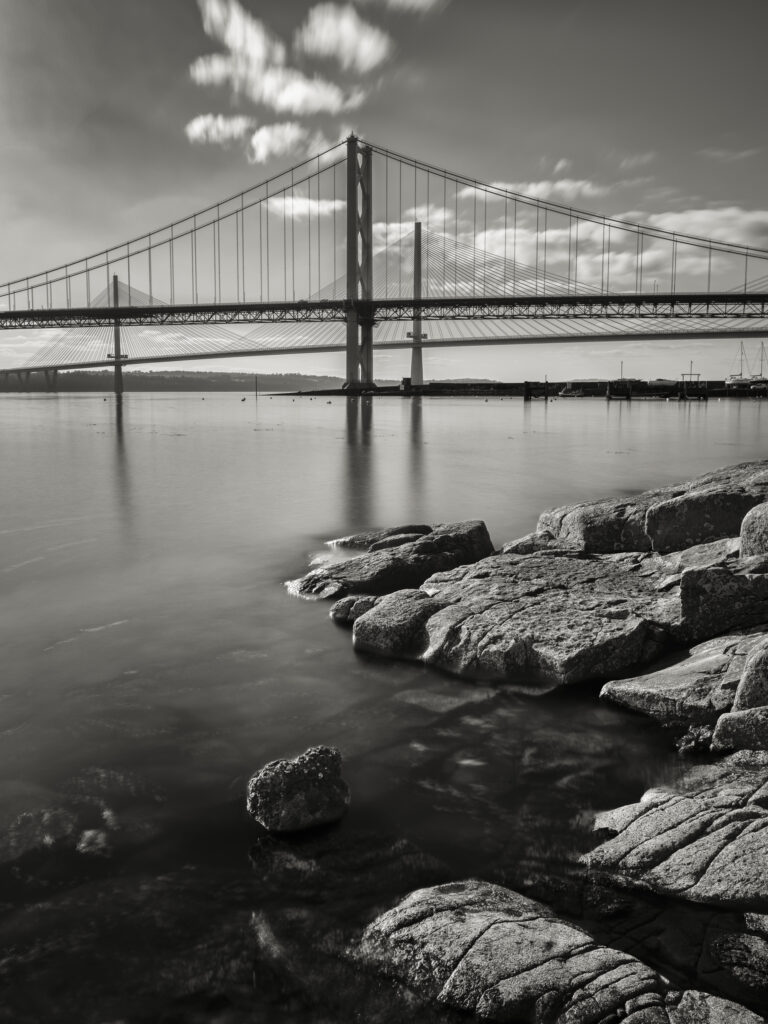
That first image was the obvious one. After that, things became a bit less straightforward.
Looking across at the other bridges, I could see there had to be photographs there somewhere. The rocky shoreline gave me a foreground to work with, and the bridges themselves are so visually strong that it never really feels like you’re short of subject matter. But that doesn’t always mean the composition comes easily.
One of the things I found myself doing a lot on this shoot was adjusting rather than forcing. I’d start with one idea, realise part of the frame wasn’t really doing much, and then shift the composition to simplify it. One scene in particular worked much better once I moved into a portrait composition and concentrated on the stronger side of the frame instead of trying to include everything.
That felt like a theme for the day really. Not trying to make the biggest shot. Not trying to photograph everything at once. Just being willing to let the image become simpler.
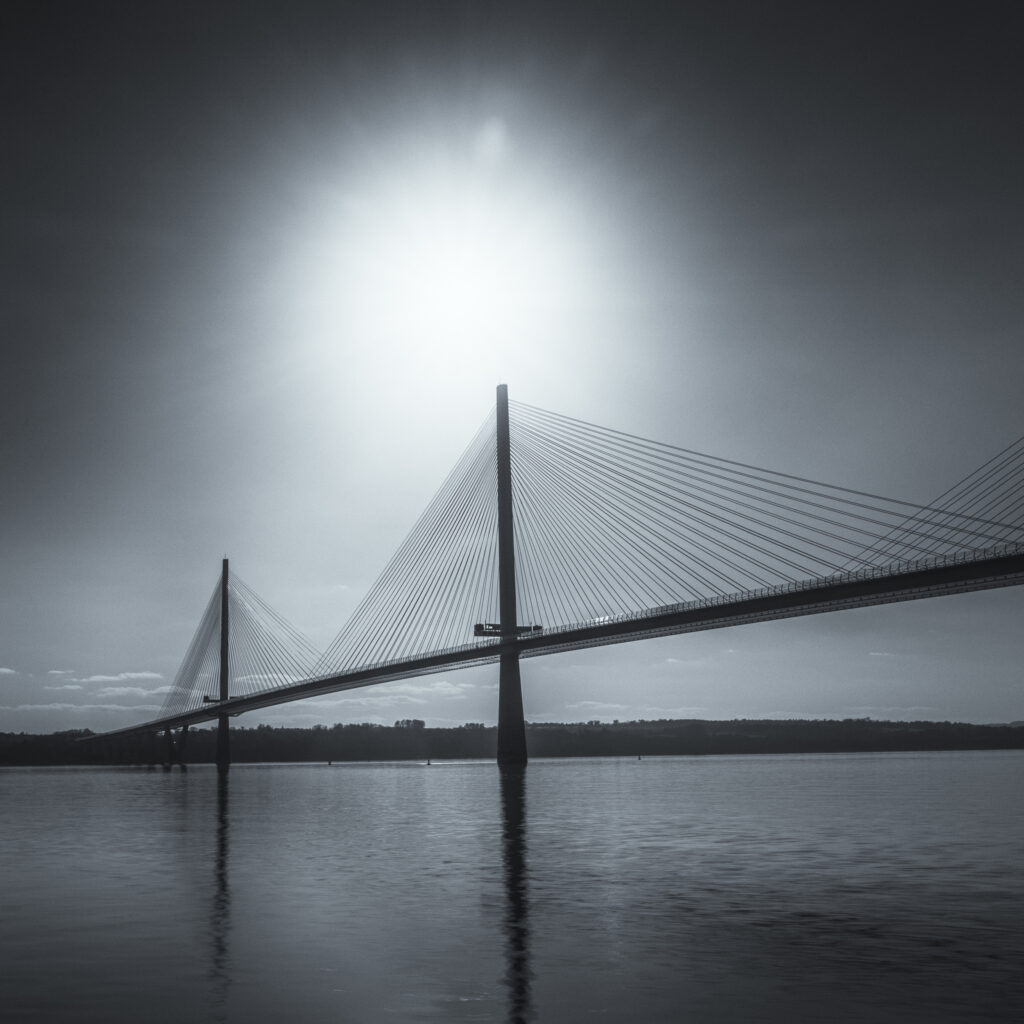
For that second shot I knew quite quickly it wanted to be black and white. When I’m shooting mono, I like to actually see in black and white as I work, so I changed the picture profile in-camera rather than just imagining it later. It helps me commit a bit more to the idea, and I think that matters.
Not every location gives in easily
One of the more interesting parts of the day came when I found a viewpoint I’d never photographed from before. It looked incredibly promising. The structure of the bridge had that graphic, almost abstract quality that felt perfect for this kind of camera and for the sort of compositions I enjoy.
But sometimes a location can look full of potential and still resist you a bit.
I tried a few different ideas there. One pillar on its own. Then another composition using some of the surrounding structure. Then something smaller and more minimal. And while there were moments that looked good, none of it really came together in the way I wanted.
The main problem, I think, was the sun. It was just in the wrong place. Had I stayed there longer, I suspect the light would have shifted into something much more workable, but I also knew I still needed to cross over and find a final viewpoint for sunset and dusk. So it became one of those moments where you have to make peace with the fact that not every idea is going to fully land.
That’s part of photography too, though. It’s very easy to only talk about the frames that worked, but a lot of a day like this is spent testing things, rejecting them, and trying to work out whether the problem is the composition, the light, or simply your own expectations.
The other side wasn’t what I imagined
By the time I reached the southern side, I had a slight feeling I might have made the wrong call.
Sunset was developing behind me, which meant I wasn’t getting the light I’d originally hoped for on the bridges themselves. I’d had this idea in my head of a shot with all three bridges together, and as soon as I got there it became obvious that I probably wasn’t going to get it, at least not in the way I’d imagined, and certainly not with this camera and this viewpoint.
That can be frustrating, but it can also be useful.
Because once you let go of the photo you thought you were going to get, you start noticing the photos that are actually available to you.
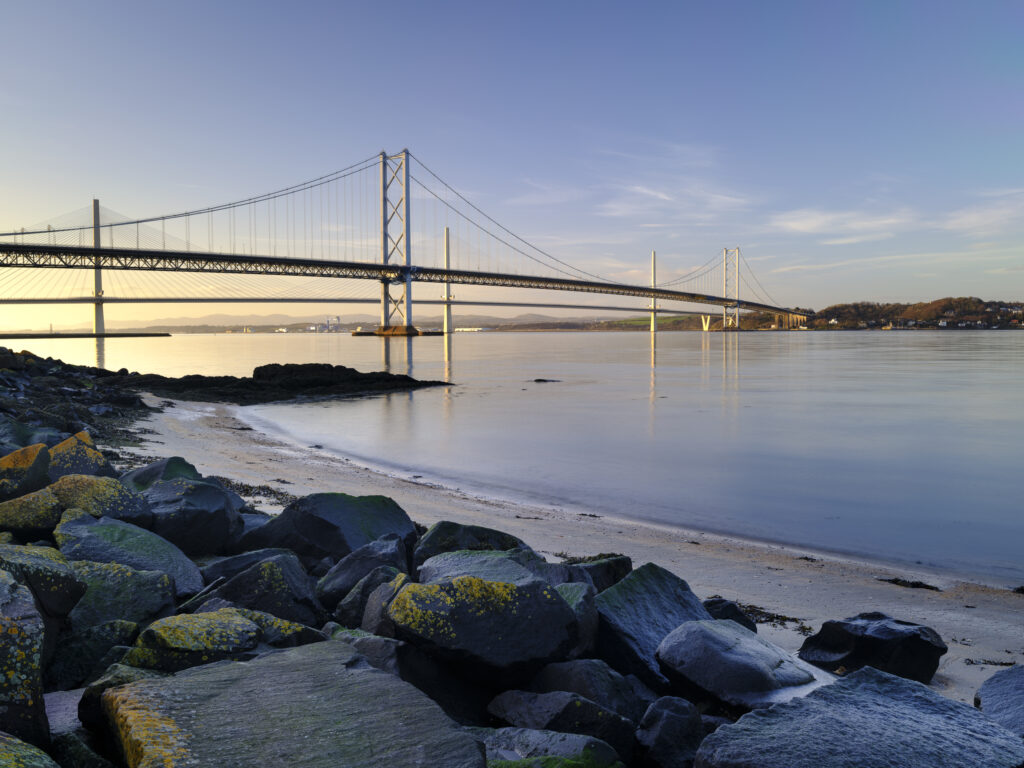
I found a small bay with some rocks in the foreground, and while it wasn’t the dramatic final image I’d expected, it was still a pleasant photograph. Not perfect. Not quite what I had in my mind’s eye. But still valid. Still worth taking.
And I think that’s something photographers don’t always admit enough. Sometimes a shot is simply nice. It doesn’t have to be the best image you’ve ever taken to be worth making.
The shot I wasn’t expecting
In the end, one of my favourite images from the evening was a much simpler one than I’d planned.
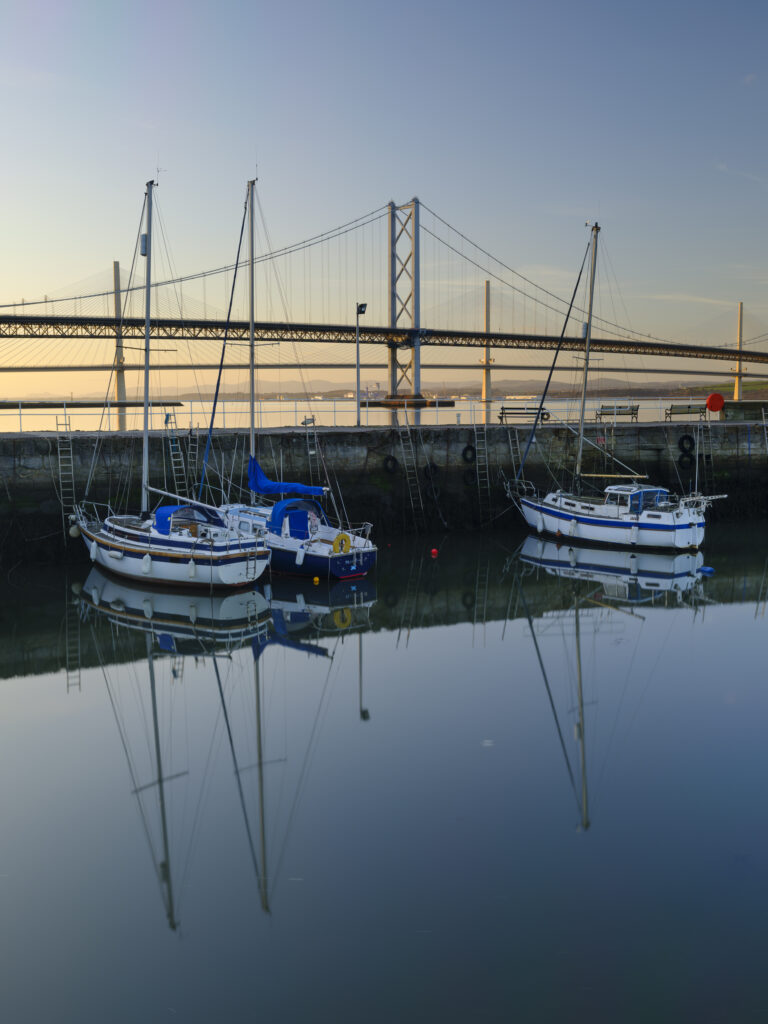
It was just a few boats in the foreground with the bridges behind them. A very straightforward composition, really. But it told the story of the place beautifully. It had a sense of calm to it, and by that point in the evening the light had dropped enough for a longer exposure, which helped simplify the scene further.
It wasn’t the grand bridge photograph I’d imagined at the start of the day. It wasn’t especially dramatic. But it felt honest, and it felt connected to the experience of actually being there.
That’s often the way, I think. You head out expecting one image, and the photograph that ends up mattering most is the one you hadn’t really considered at all.
What the restriction actually gave me
Going out with a compact camera and one fixed lens did make this shoot harder in some ways. There were definitely moments where I wished I could zoom in a little more, or go wider, or isolate details in a different way.
But I don’t think that’s necessarily a bad thing.
Restrictions have a way of making you work harder, but they also make you work more deliberately. You move more. You think more. You edit more carefully in the field. And sometimes, instead of chasing every possible shot, you end up making stronger decisions because your options are narrower.
That was really the takeaway from this day. Not that one fixed lens is always better. Not that limitation magically improves everything. Just that sometimes having less to work with can make you see more clearly.
And that’s usually worth something.


Leave a Reply