
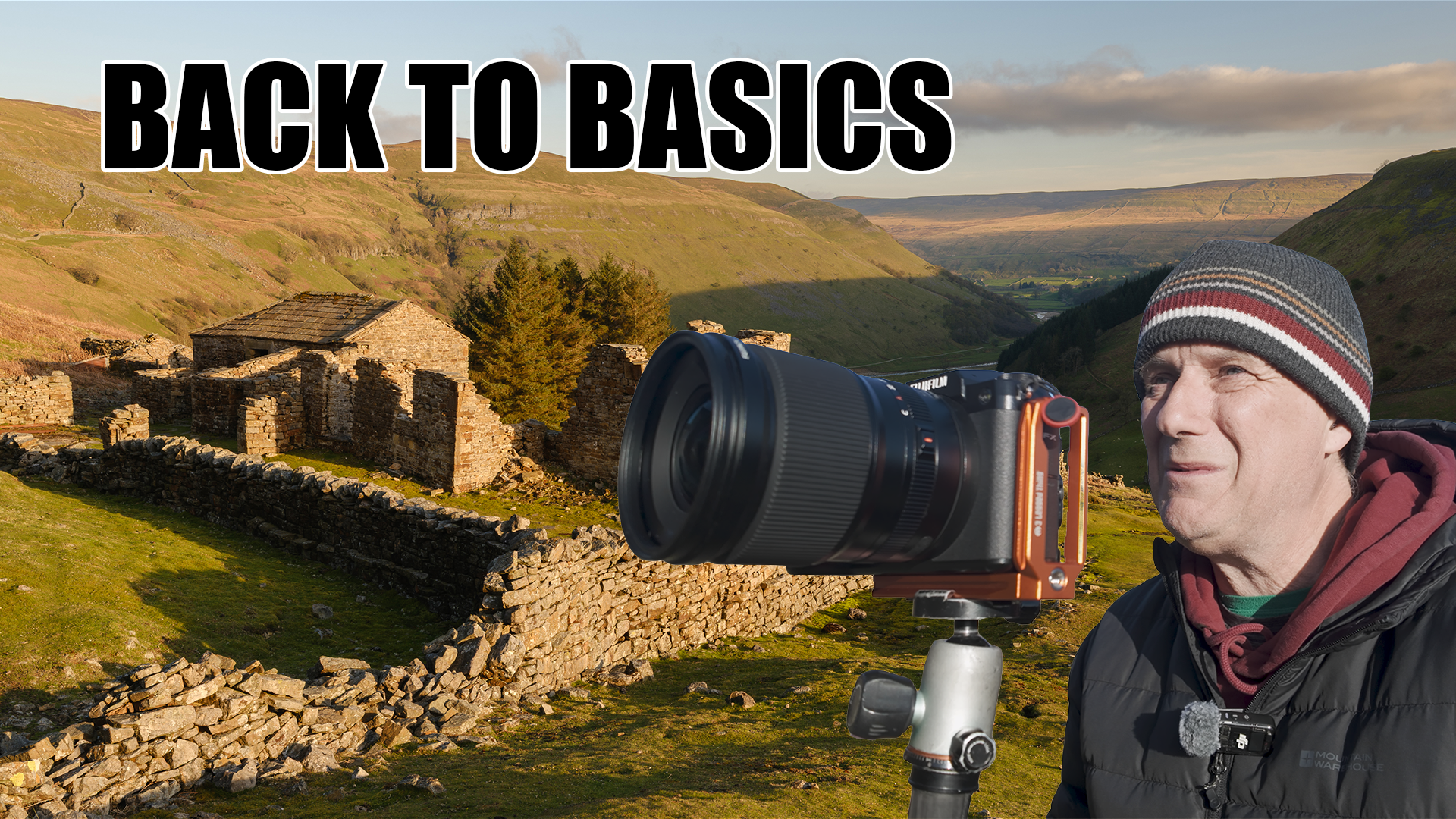
Sometimes photography is better when there isn’t a plan.
That might sound strange, especially when so much landscape photography is built around preparation, timing, weather forecasts, locations, light, tides, sunrise, sunset, and all the other things we convince ourselves we need to get right.
But occasionally, it’s good to go back to basics.
No big theme. No strict challenge. No gear test. No need to prove a point.
Just a camera, a walk, and the possibility of finding a photograph along the way.
That was the idea behind this day in Yorkshire. I’d been making a lot of videos recently with a specific angle — trying something, testing something, or creating a clear theme. That’s often necessary, especially on YouTube, where a video usually needs a strong hook to be noticed.
But that isn’t really why I became a photographer.
I became a photographer because I enjoyed exploring.
Long before photography became part of my work, I used to head out walking, visiting stone circles, waterfalls, old ruins and landscapes simply because I wanted to see what was there. The camera came with me, but the photograph wasn’t always the main goal.
If I came home with a good image, brilliant.
If I didn’t, I’d still had a good walk.
That mindset is easy to lose.
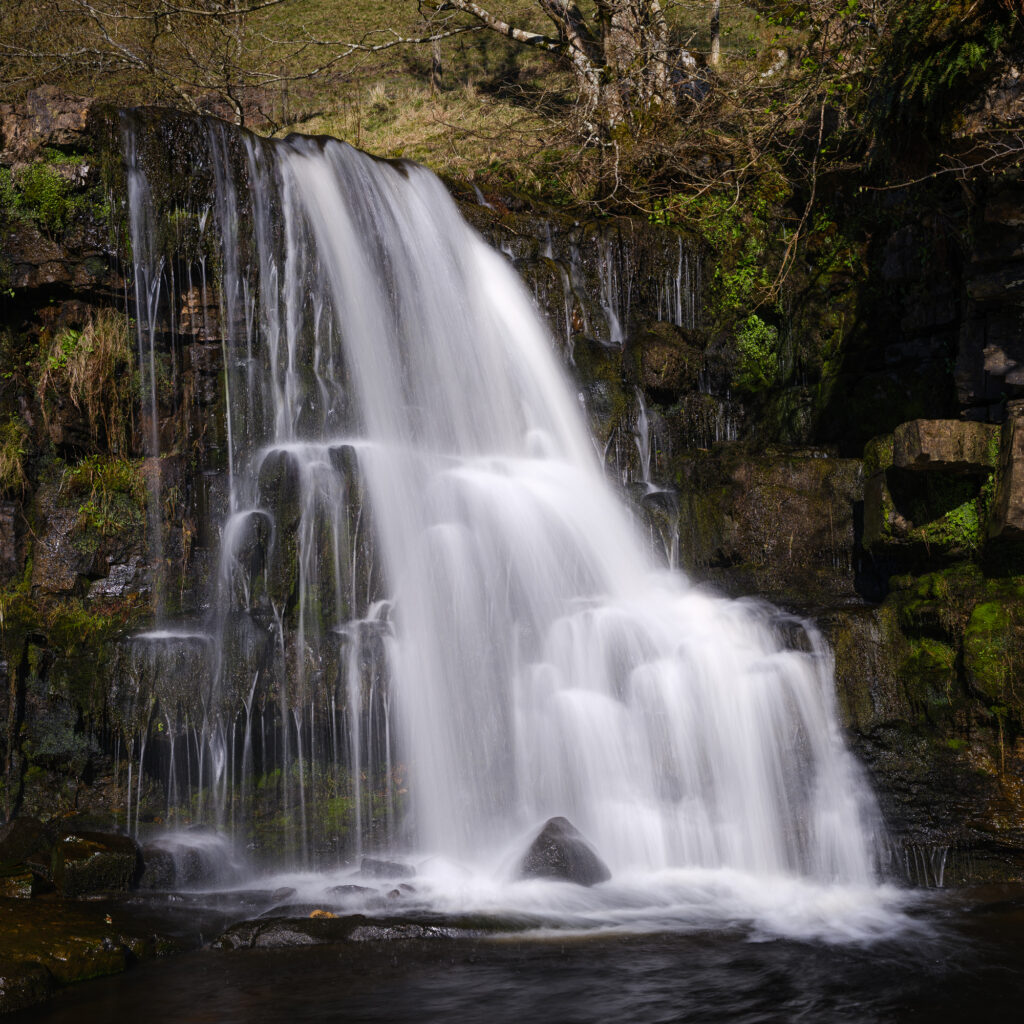
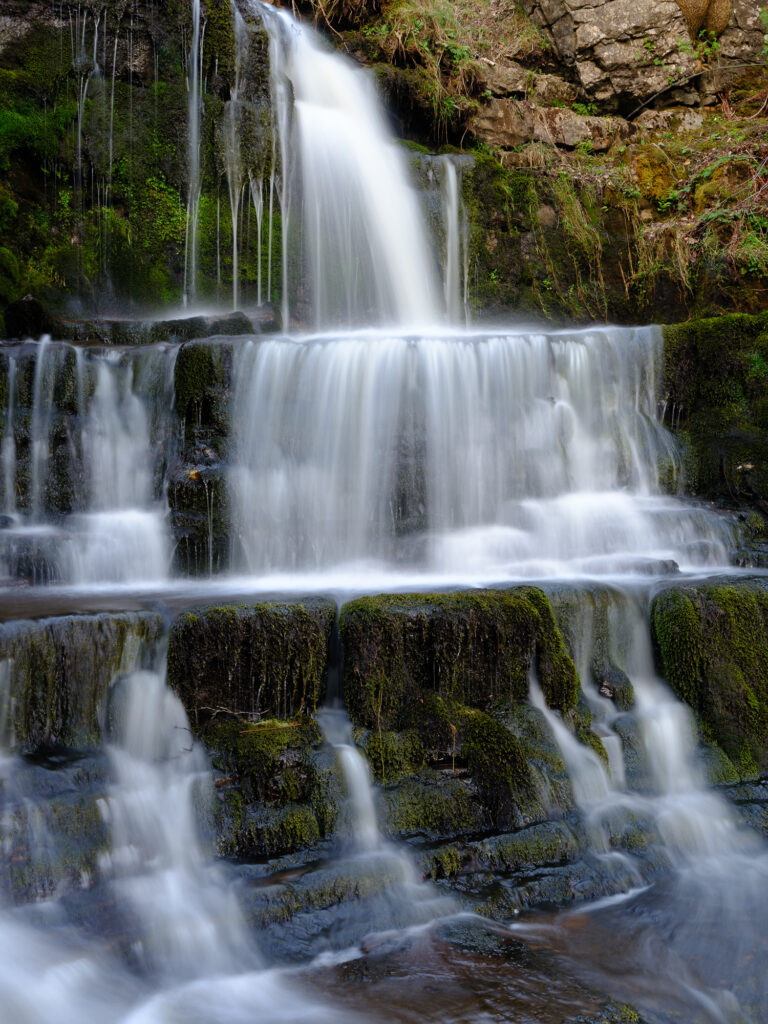
The first subject of the day was a waterfall, and I couldn’t resist it. After nearly 30 years of taking photographs, I’ve still never grown tired of photographing waterfalls. In fact, one of the first images that made me think I might be able to take a half-decent photograph was a waterfall image.
The light wasn’t perfect. I usually prefer photographing waterfalls in soft, overcast conditions to avoid harsh contrast, but this scene was front-lit enough to work. I chose a simple square composition, added a polarising filter to cut reflections on the water, and experimented with shutter speeds until the movement felt right.
In the end, I used a six-stop filter along with the polariser to create that soft, milky water effect. I know that style isn’t for everyone, but for this scene it gave the image a slightly more interpretive feel rather than simply recording what was in front of me.
And that felt like a good start.
From there, the day became less about chasing a particular image and more about wandering. That is one of the best things about combining photography with walking. You might head towards a location because it looks interesting, but if the photograph doesn’t happen, the walk still matters.
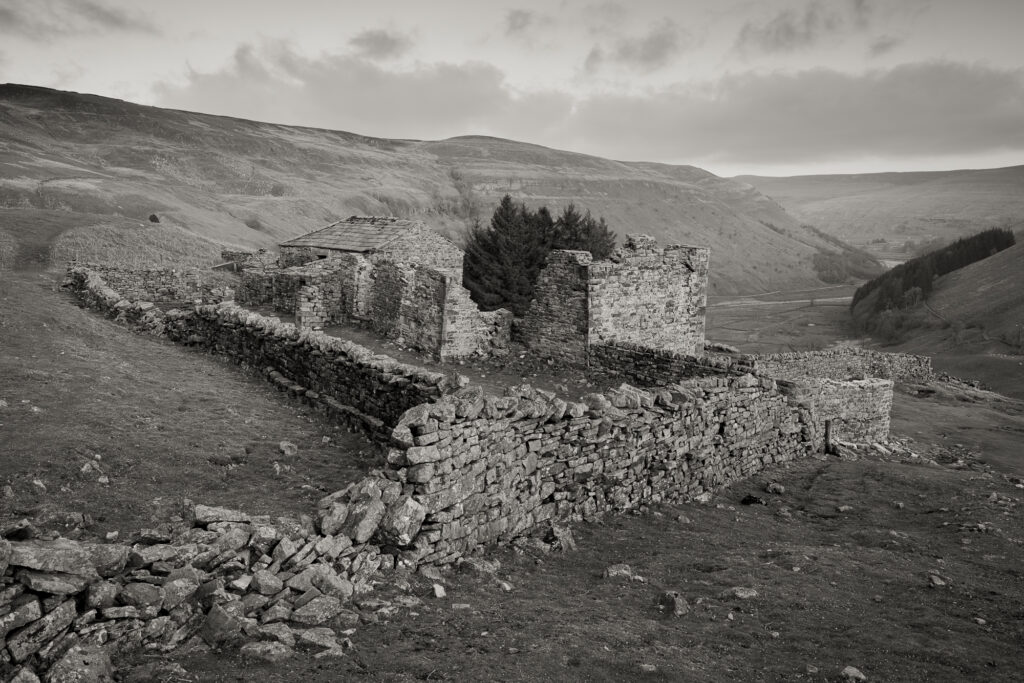
That took me to Crackpot Hall.
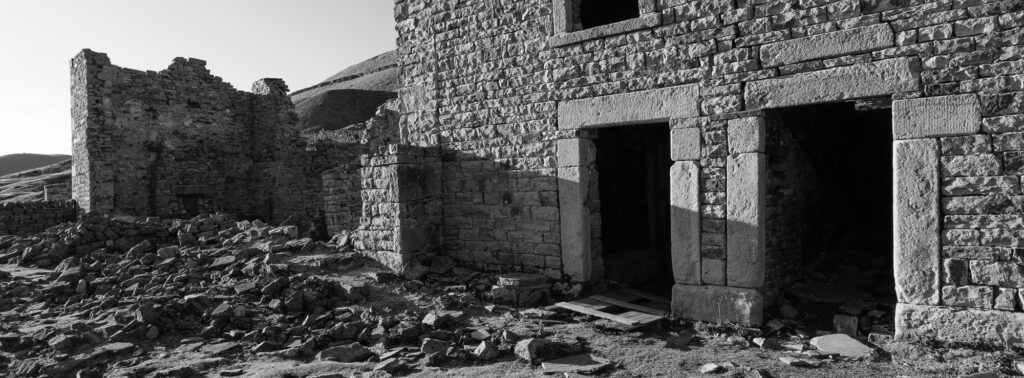
I hadn’t gone out with a rigid shot in mind, but the old building, the valley, the wind, and the changing light all offered possibilities. At first, I thought there might be a black and white image of the ruins with the landscape behind. Then I started seeing a wider panoramic composition, using the building and the valley together.
It wasn’t straightforward.
The contrast was difficult, with bright highlights and deep shadows across the scene. With digital photography, I always try to protect the highlights first. Once they’re gone, there’s very little to recover. Shadow detail can often be brought back, and sometimes deep shadows are exactly what a black and white image needs anyway.
So I worked carefully with the histogram, exposing as far to the right as I could without clipping the highlights.
The resulting image wasn’t necessarily what I expected to make, but that was the point of the day. It came from being there, responding to the scene, and letting the walk guide the photography rather than the other way around.
Later, I found a stronger viewpoint looking down the valley. It had the potential to be a big panoramic landscape, but the light wasn’t quite where I wanted it. That familiar landscape photographer dilemma appeared: do you wait and hope the light improves, or move on and see what else the day offers?
I moved on.
Then, inevitably, the fear of missing out kicked in and I walked back up to try again.
That is part of the process too.
Sometimes you make the right call. Sometimes you don’t. Sometimes the light arrives two minutes after you leave. Sometimes it never arrives at all. But when the whole purpose of the day is simply to be out making photographs, it matters a little less.
And actually, I think I enjoyed the photography more because of that.
When I’m making videos, it’s easy to become distracted by the filming side — the talking, the B-roll, the structure, the need to make the video work. On this day, I tried to concentrate more on the photography itself. The video became secondary, and the images were better for it.
That’s something I need to remind myself of more often.
Photography doesn’t always need an angle.
It doesn’t always need a dramatic title, a perfect forecast, or a guaranteed result. Sometimes it just needs curiosity. A place to walk. A camera over your shoulder. And the willingness to see what happens.
Because that is where photography started for me.
And every now and again, it’s nice to go back there.


Leave a Reply