
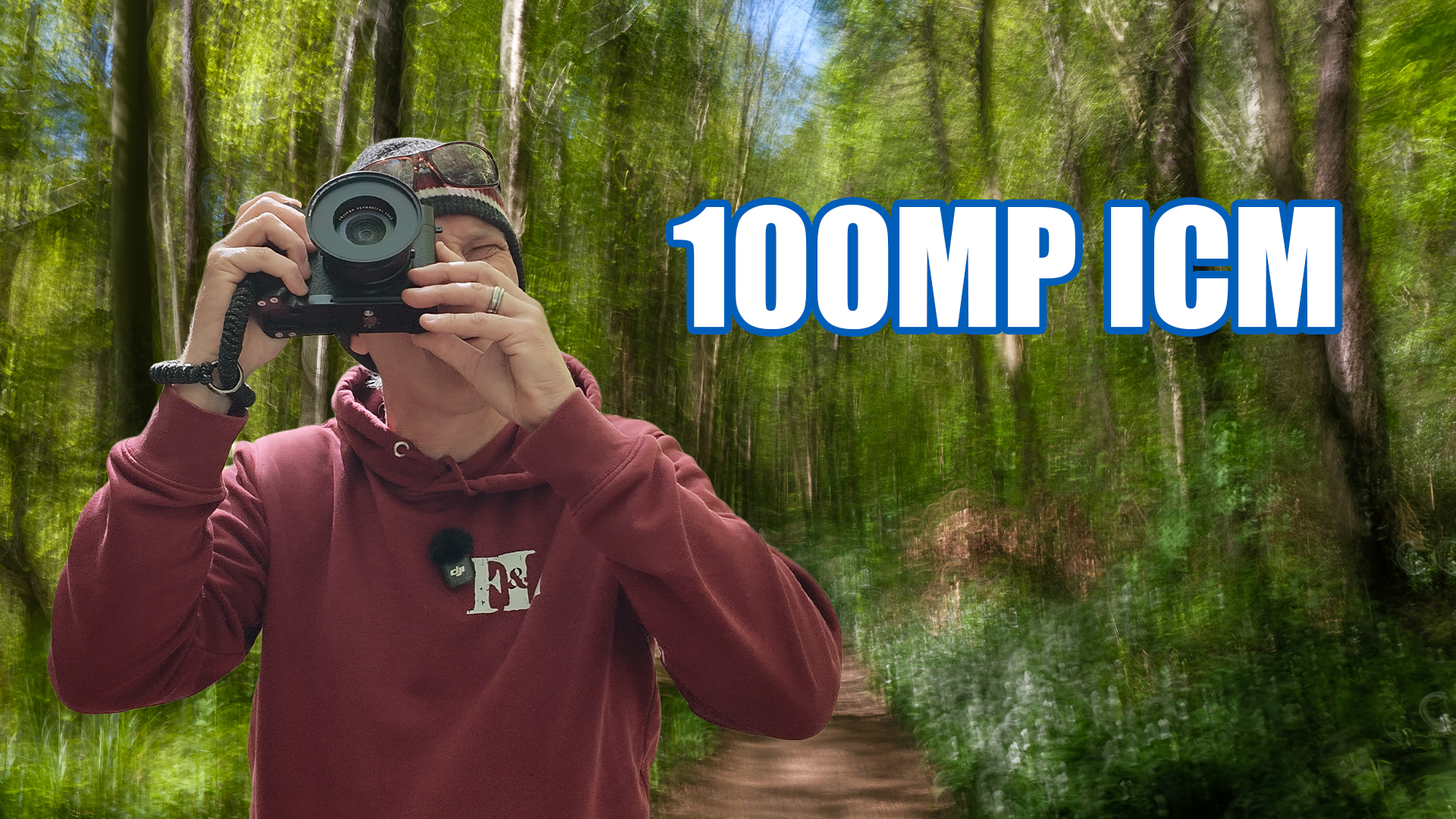
Earlier this year, I made a video about intentional camera movement photography using a small Micro Four Thirds camera. It made sense for the job. Lightweight, manageable files, and the sort of camera you naturally associate with experimentation.
Then somebody suggested I try the same thing with the Fujifilm GFX100RF.
A 100-megapixel medium format camera.
At first, I honestly thought the idea was slightly ridiculous.
But the more I thought about it, the more curious I became. Sometimes photography becomes far more interesting when you stop asking whether something makes sense and simply ask what happens if you try it.
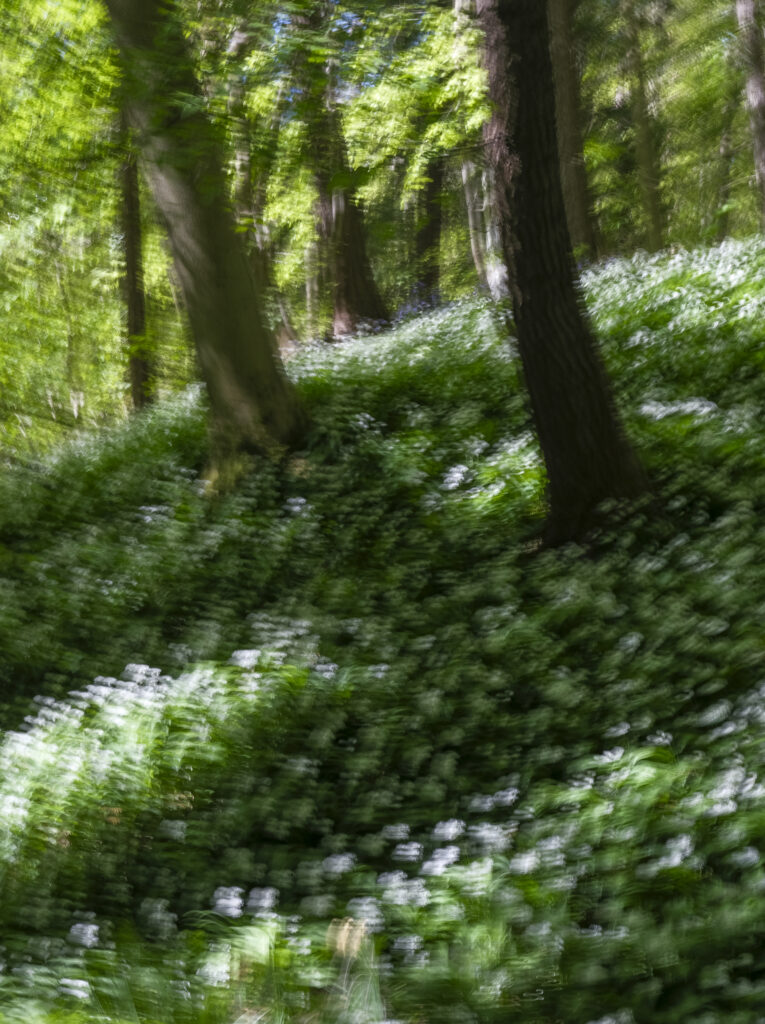
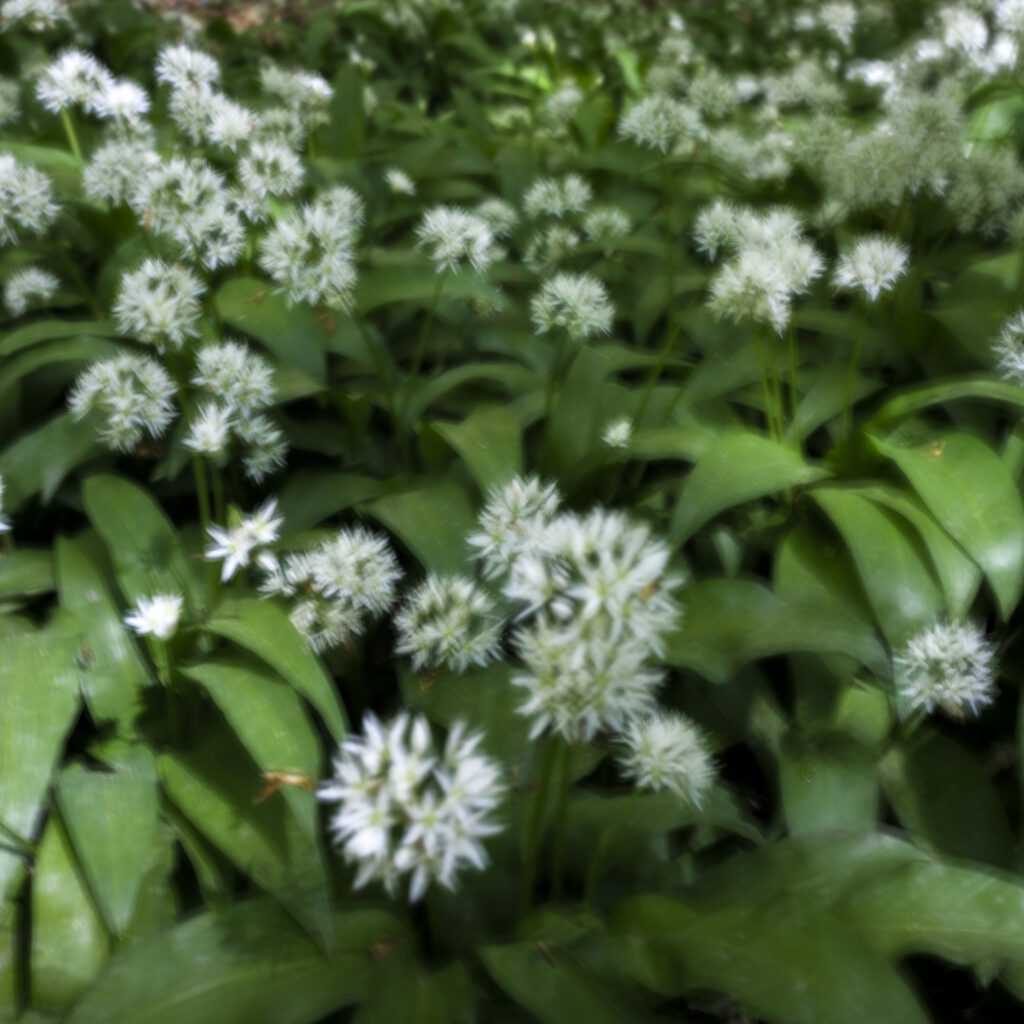
This particular shoot took me into woodland in southeast Northumberland, surrounded by wild garlic, spring greens, and pockets of bluebells just beginning to appear. It felt like the perfect place to experiment.
One of the first problems I had to solve was workflow.
The thought of returning home with hundreds of 100MP RAW ICM files sounded genuinely painful, so I decided very quickly that this would be a JPEG-led shoot. RAW+JPEG was enabled as a backup, but the intention was always to lean into the Fujifilm film simulations and treat the experience more like shooting film than modern digital photography.
That immediately changed how I approached the camera.
Instead of thinking about endless post-processing options later, I had to make decisions in the moment:
- Which film simulation suited the scene?
- Which aspect ratio worked best?
- How much movement felt right?
- Did I want softness or structure?
I settled mostly on Reala Ace during the woodland sequences because it gave relatively soft contrast and colours that worked nicely with the greens and whites of spring woodland.
And honestly, that commitment made the whole process far more enjoyable.

Why the GFX100RF Actually Works for ICM
Nobody needs a 100MP medium format camera for intentional camera movement photography.
But surprisingly, the camera does have a few features that make it incredibly enjoyable for this sort of work.
The built-in ND filter is probably the biggest advantage. Rather than constantly attaching and removing filters, I could simply enable the ND filter and then control shutter speed using the aperture ring. It made the process feel fluid and instinctive instead of technical.
What surprised me even more, though, was the aspect ratio dial.
That became central to the experience.
Rather than composing first and cropping later, I could physically switch between square, vertical, and wider formats while looking at the scene. For ICM photography, where composition is already abstract and interpretive, that immediate visual feedback made a huge difference.
Some scenes worked beautifully as square crops. Others immediately felt stronger vertically because of the trees and movement direction. Being able to make those decisions instantly inside the camera changed the way I approached the photographs.
Small Movements Worked Best
One thing I quickly discovered was that subtle movement generally produced more interesting results than dramatic movement.
It’s tempting with ICM photography to throw the camera around wildly, but I found the gentler, more controlled motions often retained enough structure to keep the image engaging.
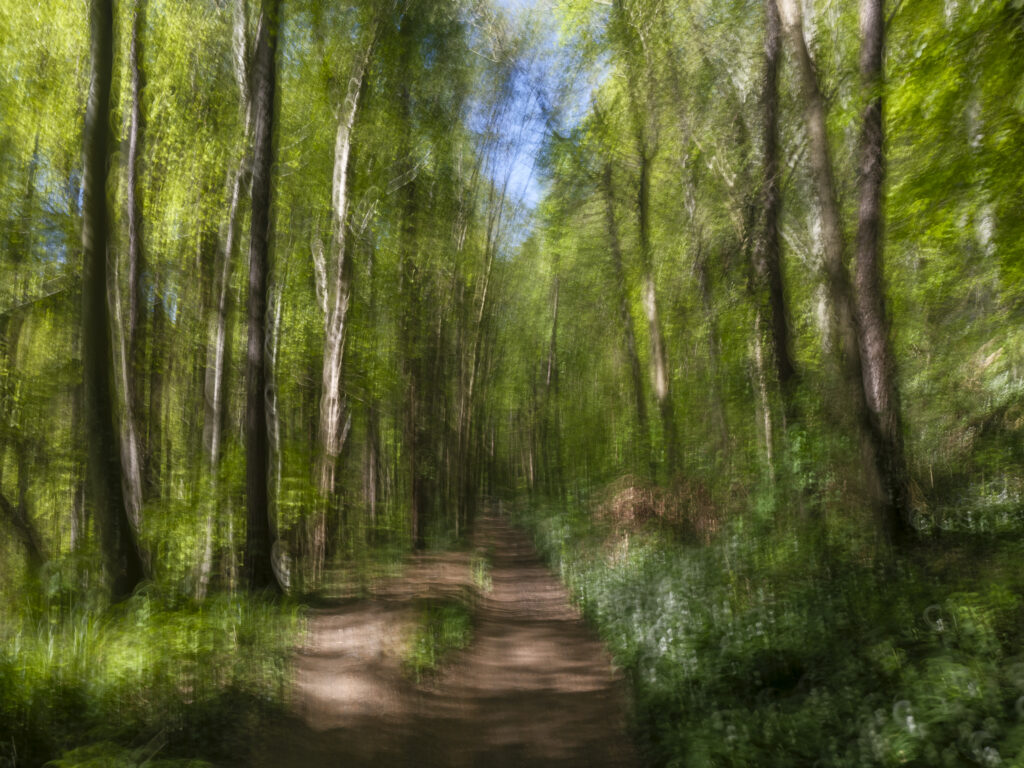
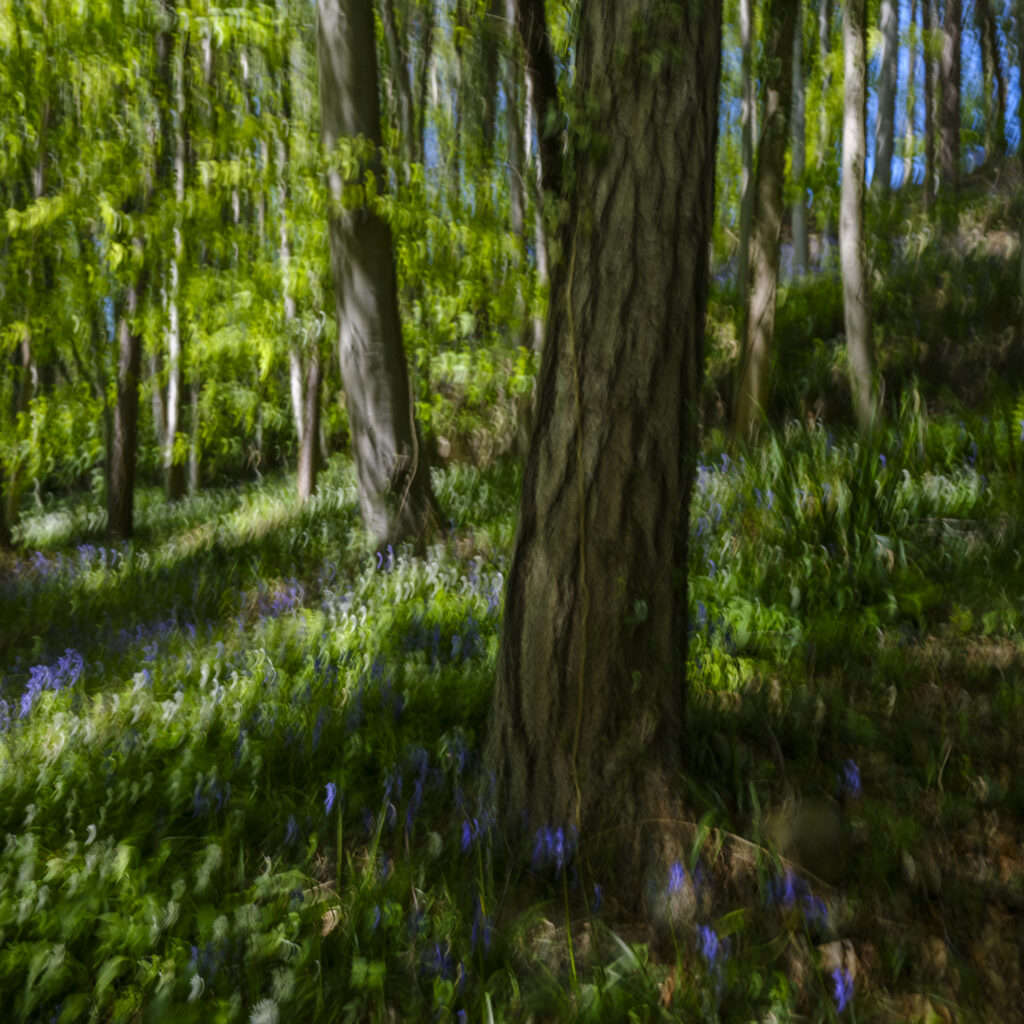
Small vertical movements worked especially well amongst the trees.
There was still enough recognisable detail to anchor the image, while the movement introduced softness and atmosphere. Some of the final photographs almost resembled pastel paintings more than digital images.
And strangely enough, I started enjoying the results more than some traditional landscape photographs.
That was unexpected.
Photography Should Be Fun
The biggest thing this shoot reminded me of was something I say repeatedly on the channel:
Photography should be fun.
Not every photograph has to be technically perfect.
Not every shoot needs a serious purpose.
And not every camera has to be used the “correct” way.
The Fujifilm GFX100RF probably wasn’t designed with ICM photography in mind, yet it ended up being one of the most enjoyable cameras I’ve used for it.
Partly because the camera gets out of the way.
The built-in ND filter, aperture control, aspect ratio dial, and film simulations all work together in a way that encourages experimentation rather than slowing it down.
And perhaps that’s the real takeaway from this shoot.
Sometimes the “wrong” way to use a camera ends up being the most creatively rewarding.



Leave a Reply