
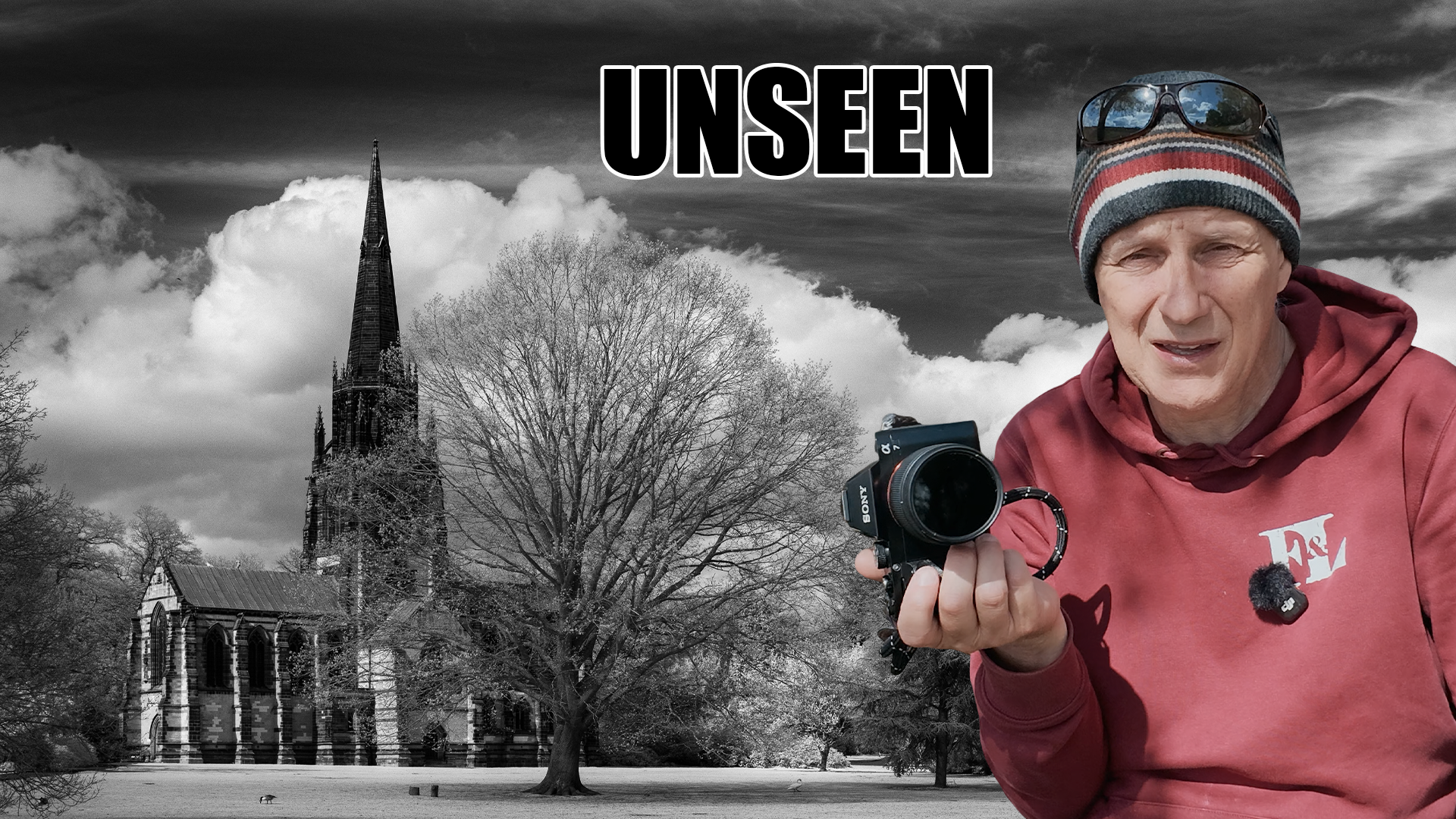
A few weeks ago, I purchased a full spectrum converted Sony A7 and began experimenting with a side of photography that was completely new to me.
For those unfamiliar with the concept, a full spectrum conversion involves removing the camera’s internal UV and infrared blocking filter and replacing it with a plain piece of glass. The result is a camera capable of recording both visible and invisible wavelengths of light, including infrared and ultraviolet.
While infrared photography is something I have explored before, ultraviolet photography was largely unknown territory. I had briefly mentioned it when discussing the camera previously, but at that stage I simply hadn’t spent enough time shooting UV images to form any meaningful conclusions.
That has started to change.
A Hidden Piece of History
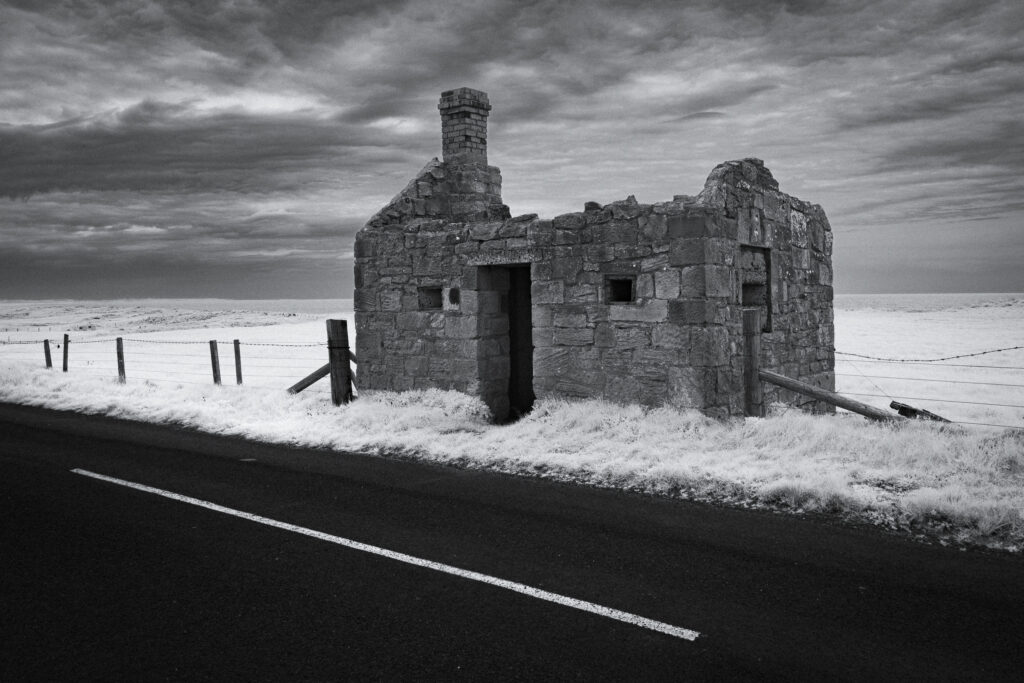
My first destination was a rather unusual building on the Northumberland coast.
At first glance it appears to be nothing more than an abandoned farm cottage sitting beside the road. In reality, it is a disguised World War II pillbox, deliberately designed to resemble an ordinary agricultural building.
During the war, much of Britain’s coastline was heavily defended against the possibility of invasion. While many pillboxes were obvious military structures, this particular one was built to blend into the landscape, remaining hidden until it was needed.
It seemed like the perfect subject for an experiment in ultraviolet photography.
The conditions, however, were far from ideal.
The light was flat, the weather was uncooperative, and I spent much of the afternoon waiting for breaks in the cloud that never really arrived. Under normal circumstances I would probably have left disappointed, convinced that I hadn’t captured anything worthwhile.
Yet something interesting happened when I later reviewed the files.
Understanding UV Photography
One of the biggest challenges with ultraviolet photography is understanding exactly what the camera is recording.

Infrared photography is relatively straightforward. An infrared filter blocks visible light and allows infrared wavelengths to reach the sensor. Ultraviolet photography is considerably more complicated.
Many UV-pass filters also allow infrared light through. To create a truly ultraviolet image, additional filters are often required to block infrared wavelengths. The result is a variety of filter combinations, each producing slightly different effects.
At this stage of my experimentation, I’m still learning which combinations work best.
What became immediately apparent, however, was that ultraviolet photography has its own distinct character.
It isn’t visible-light photography.
It isn’t infrared photography.
It sits somewhere between the two.
The raw files displayed unusual colours and tonal relationships that felt familiar yet strangely different. Once converted to black and white, the images retained a subtle glow that reminded me of infrared, but without the dramatic, almost surreal effect that infrared often produces.
That difference was what intrigued me most.
When the Unexpected Works
Looking at the image from the pillbox location afterwards, I was genuinely surprised.
The scene had appeared dull and uninspiring while I was photographing it. Had I been shooting conventional infrared, I suspect I would have dismissed the result entirely.
Instead, the ultraviolet image possessed a mood and atmosphere that I hadn’t anticipated.
The shadows behaved differently.
The brighter foliage wasn’t glowing in quite the same way as infrared.
The overall rendering felt softer and more restrained.
It was subtle, but it worked.
In many ways, that photograph became the inspiration for continuing the experiment.
Comparing Infrared and Ultraviolet
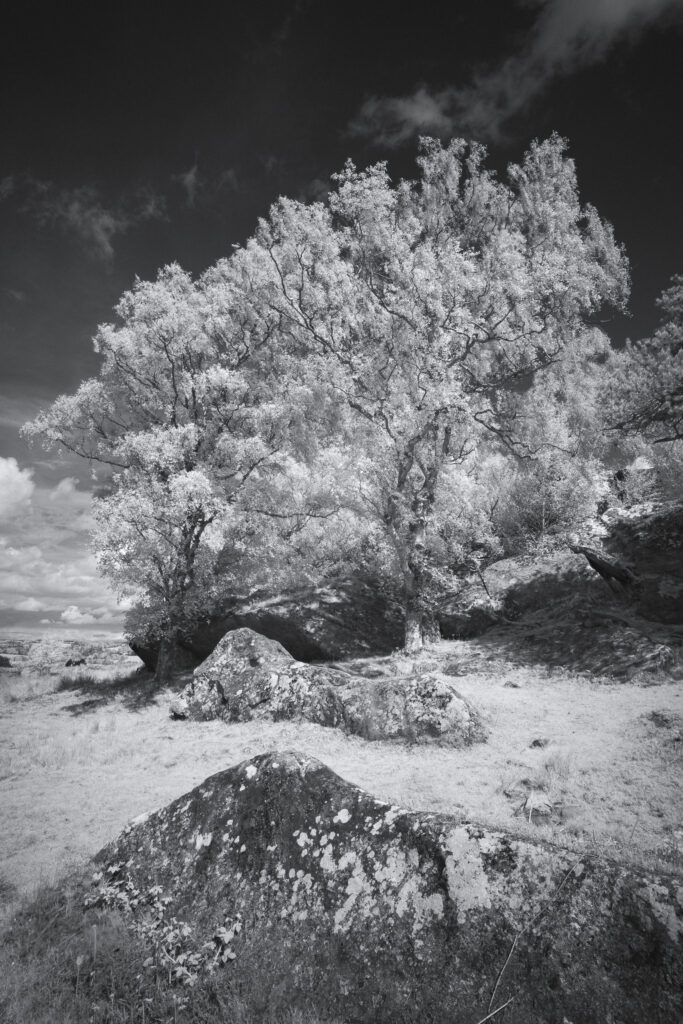
The following day I visited Shaftoe Crags in Northumberland to make a direct comparison between infrared and ultraviolet photography.
Using the same camera and the same scene, I photographed one image through a strong infrared filter before replacing it with a UV filter and repeating the shot.
The results were fascinating.
The infrared image delivered the familiar bright foliage and dramatic tonal separation that many photographers associate with infrared work.
The ultraviolet image felt different.
Similar, but not identical.
The highlights were less aggressive, the shadows retained a different character, and the overall mood was noticeably more subtle.
The more I looked at the files, the more I found myself drawn to the ultraviolet versions.
Not because they were better, but because they were unexpected.
Technical Observations
One thing I have noticed is that UV photography tends to require more exposure compensation than infrared.
Images frequently appear underexposed straight from the camera, requiring additional exposure during capture or processing. Whether this is due to lower UV intensity or simply how the camera meters the scene, I’m still investigating.
The filters themselves can also be challenging to work with. They are prone to collecting dust and fingerprints, and achieving a pure ultraviolet image often requires stacking additional filters to block unwanted infrared contamination.
As with most specialist photography techniques, there is a learning curve involved.
Fortunately, learning curves are often where the most enjoyable photography happens.
The Beginning of a Creative Journey
Perhaps the biggest lesson from this experiment is that photography remains endlessly capable of surprising us.
I left the first location convinced I hadn’t captured anything worthwhile.
Instead, I returned home with one of my favourite images from the day.
That’s the beauty of exploring unfamiliar techniques. They force us to see differently, think differently, and occasionally challenge assumptions we’ve held for years.
Ultraviolet photography is still very much a mystery to me. I have better filters to investigate, more locations to explore, and plenty of questions that remain unanswered.
But that’s exactly what makes it exciting.
For now, I’m simply enjoying the process of photographing the unexpected and discovering where this new creative journey might lead.



Leave a Reply