
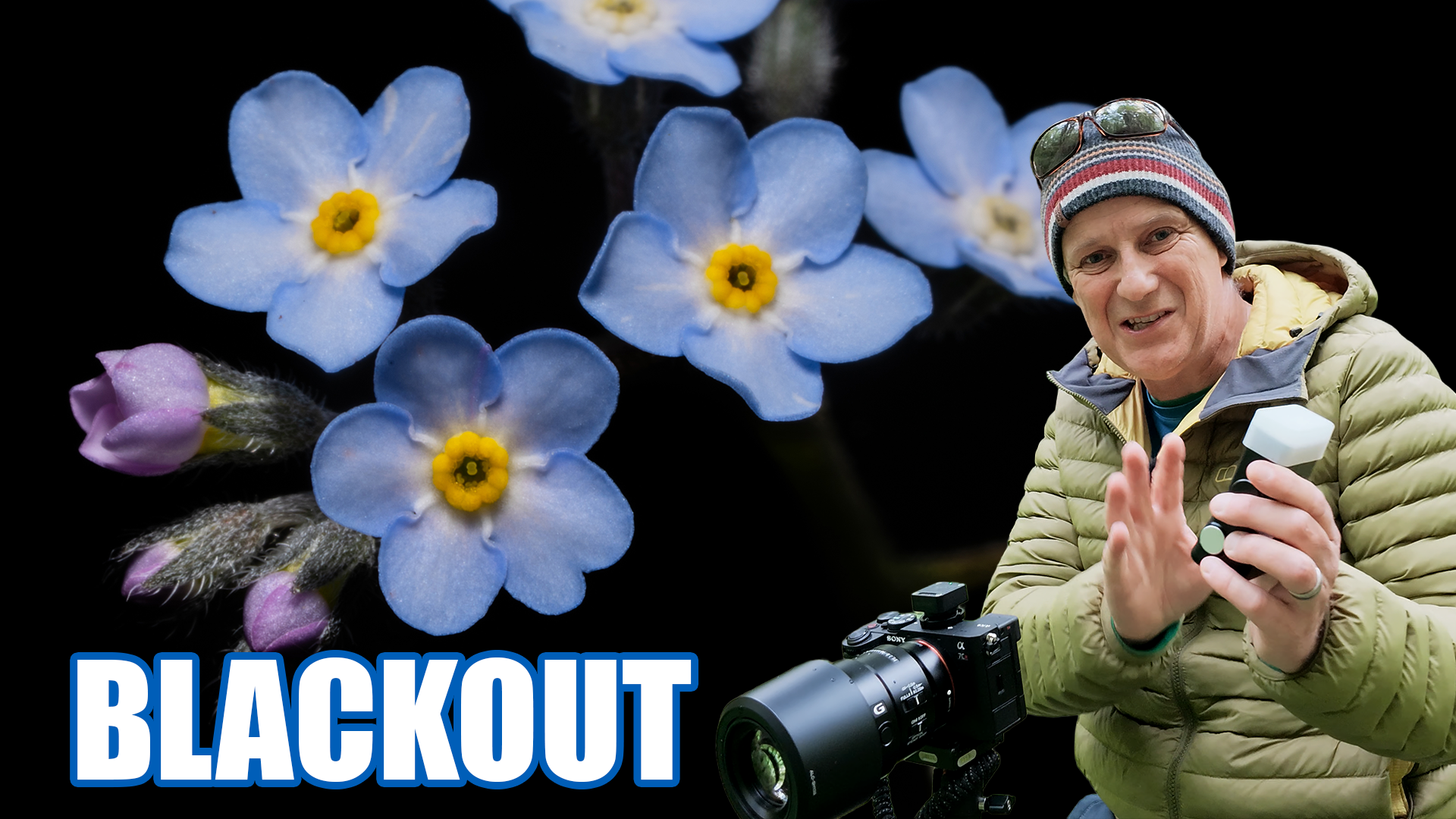
In this video, I set myself a simple little woodland photography challenge: create a triptych of wild flowers using three different colours.
The idea was to photograph one white flower, one blue flower and one red flower, then bring the three images together as a single finished set.
Simple enough in theory.
A Small Woodland Photography Challenge
I headed to Plessey Woods Country Park in Northumberland with the aim of creating a flower triptych.
A triptych is simply a set of three images designed to be viewed together. Rather than treating each photograph as a completely separate image, the challenge is to make sure they work as a coherent final set.
That meant I had to think about more than just finding nice flowers.
I needed consistency.
The same mood, the same lighting style, the same aspect ratio and enough visual connection between the three images to make them feel like they belonged together.
To keep things simple, I decided to use a square crop for all three images.
Why I Used a Black Background
After trying a few ideas, I decided to use a black background for the whole set.
This is a technique I’ve used quite a few times before, but it works beautifully for flower photography. By deliberately underexposing the ambient light and then adding flash back onto the subject, it is possible to create a clean, low-key image where the flower appears against a dark background.
For this setup, I used the Sony A7CR, the Sony 90mm macro lens and a small Godox iT32 flash.
The basic approach was:
- ISO 50
- f/22
- 1/250 sec
- manual flash at or near full power
The camera settings were chosen to make the frame as dark as possible before adding flash. Once the ambient light was almost completely removed, the flash became the main light source.
That gave me the consistent black background I needed for the triptych.
The First Two Images
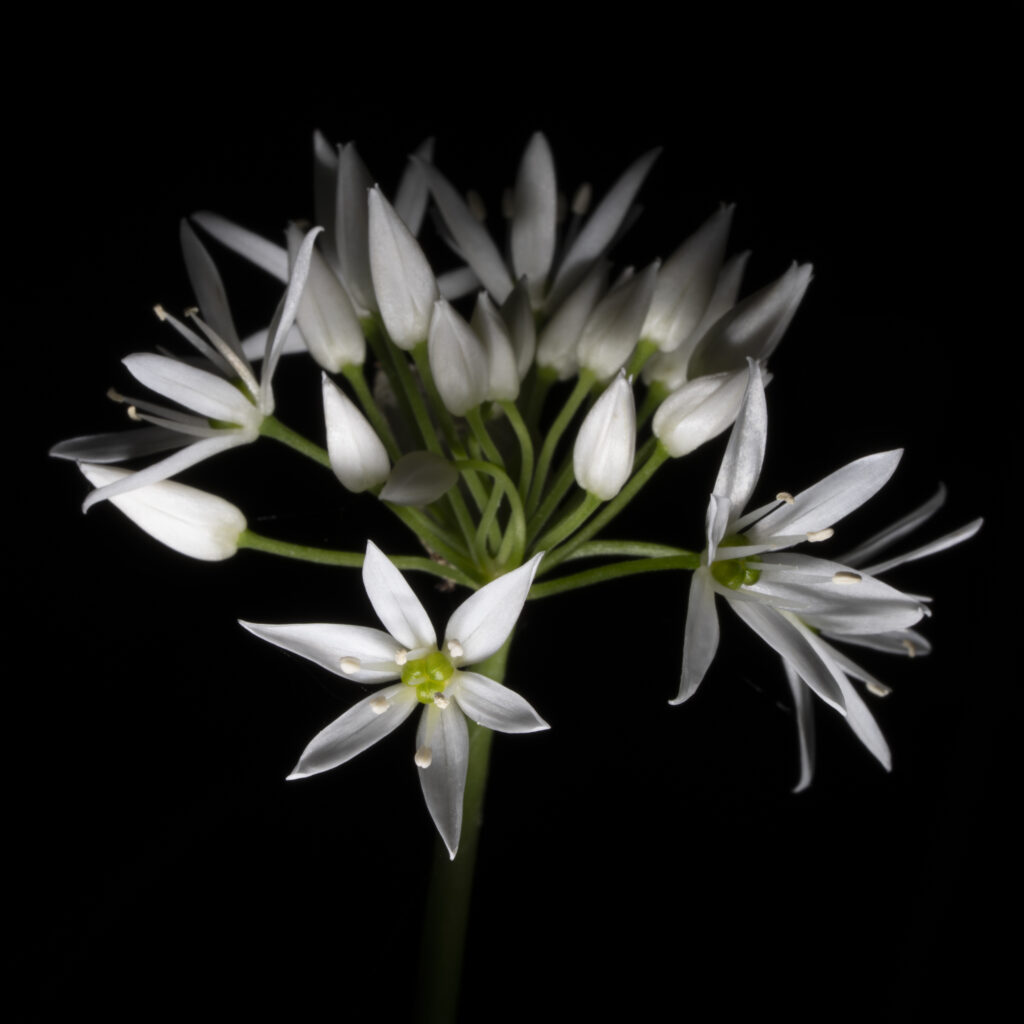
The first image was the white flower, using wild garlic.
This worked nicely and gave me a starting point for the whole set. Once that image was made, it effectively dictated the style for the remaining two photographs.
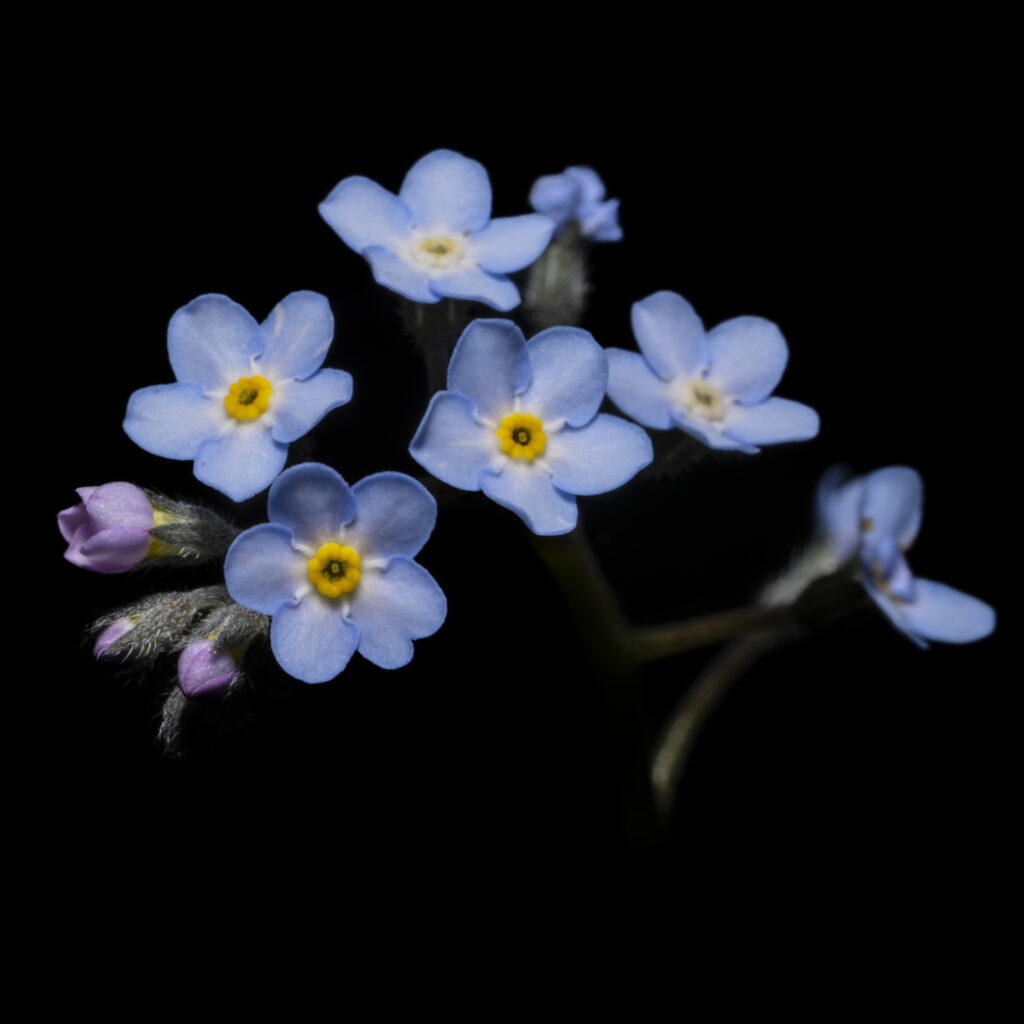
The second image was a group of forget-me-nots.
These were much smaller and a little more awkward to photograph than the wild garlic, but I liked the delicacy of them. I could have made life easier by photographing bluebells, but the forget-me-nots felt a bit more interesting.
The challenge was getting close enough with the macro lens while still positioning the flash in a way that matched the lighting of the first image.
After a bit of trial and error, I had two images that felt like they would work together.
Then came the difficult one.
Finding the Red Flower
The red flower was always going to be the problem.
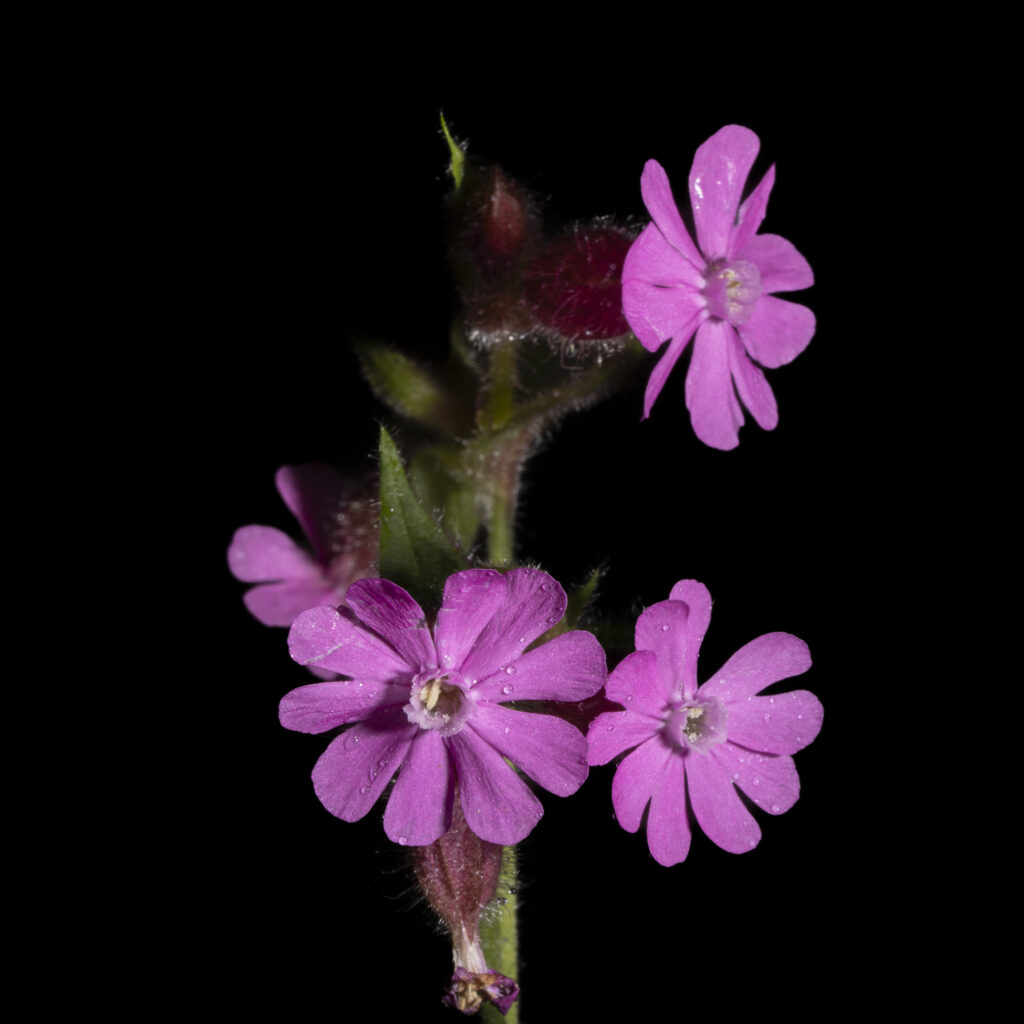
Eventually, I found some red campion, which felt like a fortunate moment because I had almost started heading in the opposite direction.
Finding the flower, however, turned out not to be the hardest part.
Photographing it was.
The first attempt didn’t really work. There wasn’t enough space behind the flower, so the flash was bouncing onto the background and ruining the clean black backdrop. It was acceptable, but it didn’t match the other two images well enough.
Then it started raining.
Rather than compromise, I waited it out and kept looking for a better subject. Eventually I found another group of flowers that gave me a stronger composition and a better match for the rest of the set.
That final image completed the triptych.
Why Mini Projects Help
This is exactly why I enjoy setting small creative challenges.
Sometimes it is nice to go out with no plan at all and simply respond to whatever you find. But other times, having a clear aim forces you to make decisions.
In this case, the project made me think about colour, consistency, lighting, aspect ratio and how three separate images could work together as one finished piece.
It also gave the walk a purpose.
Even though the idea was simple, it became a much more engaging photography session because there was a problem to solve.
Final Thoughts
By the end of the video, I had the three images I needed: white, blue and red flowers, all photographed with the same low-key black background style.
There were definitely moments where I thought the final image wasn’t going to happen, but that is often what makes these small projects enjoyable.
They add just enough pressure to make you think differently.
And in this case, they turned a short walk around a local woodland into a complete creative exercise.
You can watch the full video below to see how the triptych came together in the field.


Leave a Reply