
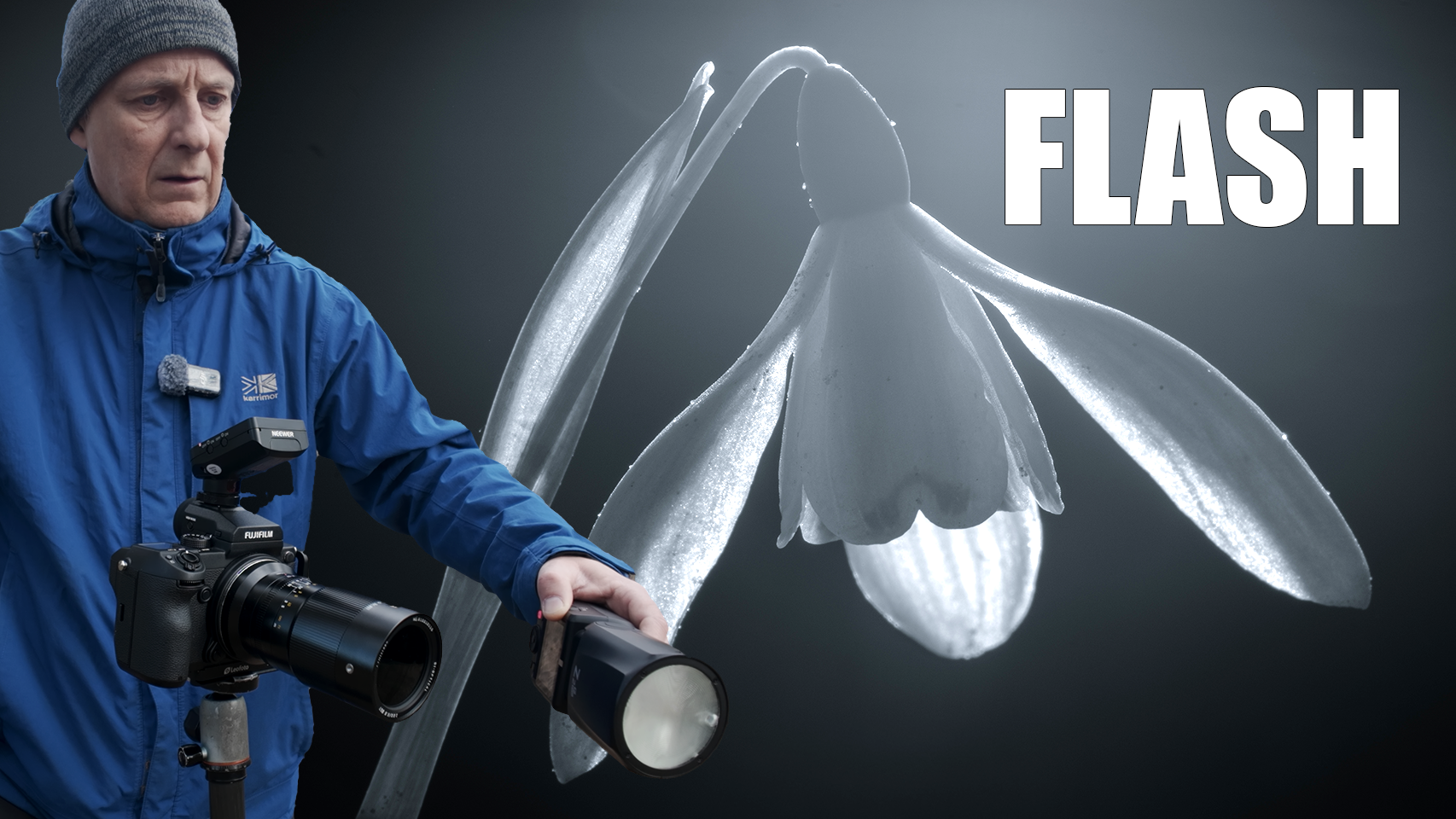
There’s something really satisfying about taking a simple subject in nature and turning it into something a little more striking with the use of flash. In this video I headed out to Pity Woods Country Park to experiment with the Neewer Z2 Pro, not so much as a formal review, but more as a real-world field test to see how it actually performs when used for creative nature photography.
A big part of the shoot centred around one of my favourite techniques — using off-camera flash to create a black background in daylight. It’s a wonderfully simple approach. By dropping the ISO right down, stopping the lens down and setting the camera to flash sync speed, the ambient light is effectively removed from the scene, leaving the subject to be lit entirely by the flash. It’s a technique I’ve used before, but it remains one of the most effective ways to isolate flowers, seed heads and other natural subjects without needing any special backdrop at all.
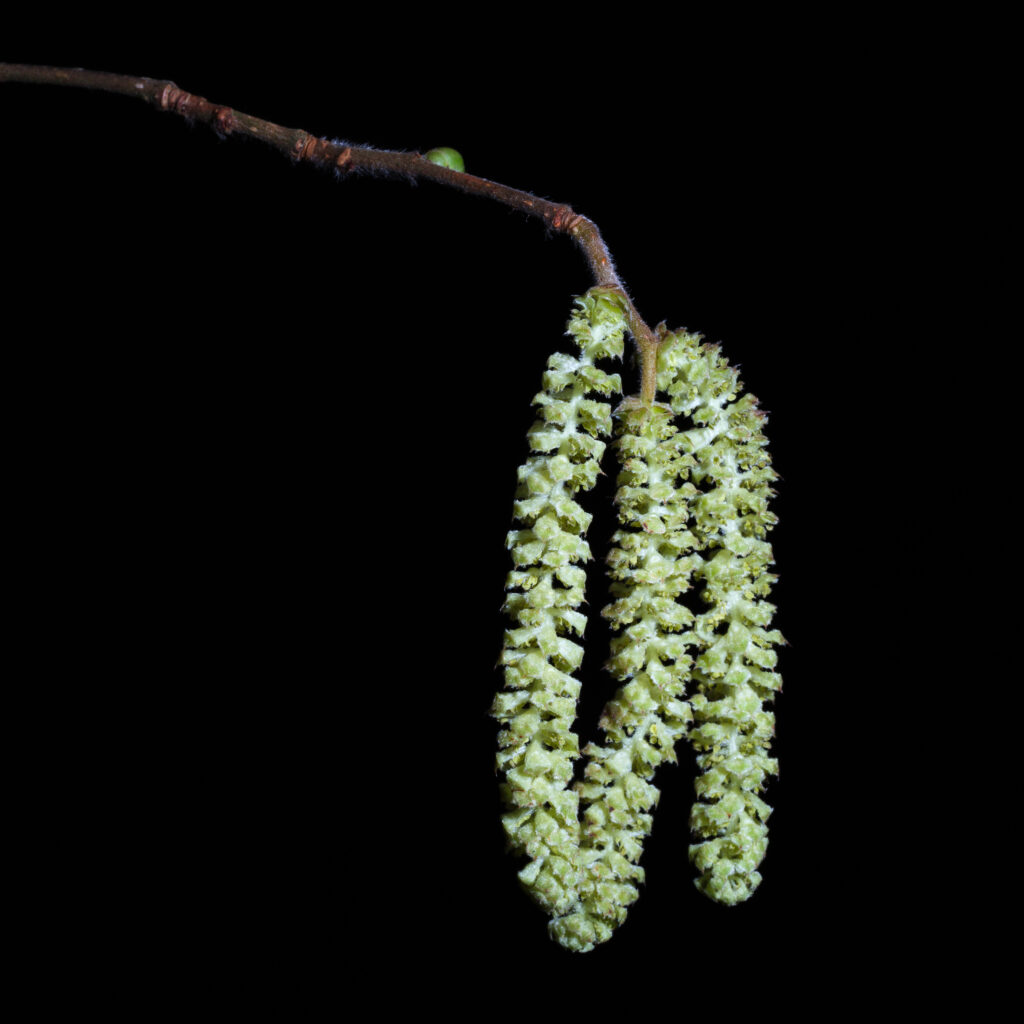
The first subject was a delicate catkin hanging nicely in the woodland, with enough distance behind it to create a soft, buttery background. It made for a pleasant enough natural portrait to begin with, but once the flash came into play the image immediately became more dramatic. That was really the point of the day — not simply documenting what was there, but seeing how flash could be used creatively to transform fairly ordinary scenes into something more graphic and deliberate.
What made the session particularly interesting was that it wasn’t all completely smooth sailing. Early on I ran into some reliability issues with the trigger and flash communication. At times it fired perfectly, and at others it seemed to stop responding for no obvious reason. After a bit of trial and error, it became clear that the problem seemed to happen when the flash was positioned too close to the trigger. Once there was a bit more distance between the two, things improved considerably. It was an odd quirk, and definitely something worth noting, but once I understood it, the shoot became much more straightforward.
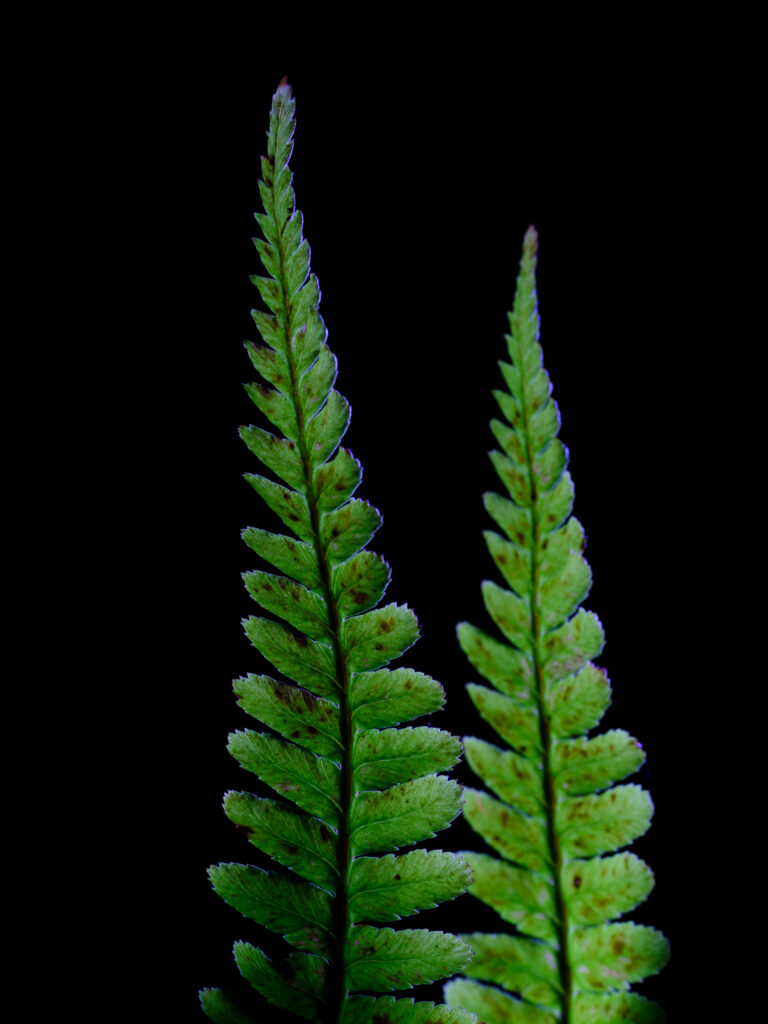
From there I moved on to a fallen fern and began experimenting with backlighting, using the flash to bring out shape, colour and translucency in the leaves. This is where off-camera flash can really shine in nature photography. Instead of simply lighting the front of a subject, moving the light around and trying different angles can reveal structure and texture that would otherwise go unnoticed. It becomes less about recording the plant and more about interpreting it.
Later in the shoot I revisited a familiar patch of snowdrops. They had clearly suffered after a very wet winter, with flood debris and fallen branches scattered around and many of the flowers looking a little worse for wear. Even so, I couldn’t quite leave without photographing at least one. Snowdrops always feel like the first quiet sign that spring is beginning to arrive, and there’s something about them that always makes me want to pick up a camera. For the final shot I kept things simple, isolating a single flower and using the flash to create a softly glowing effect against a black background. It was a straightforward image in many ways, but sometimes the simplest subjects are the most satisfying.

By the end of the morning I’d come away with three images I was genuinely pleased with, which felt like a successful outing. As for the Neewer Z2 Pro itself, I came away with mixed but mostly positive feelings. It doesn’t feel especially premium in the hand, and the recycle times seemed a little slower than I would ideally like, but the actual flash output was impressive and the price point makes it very appealing. For outdoor nature photography, where subjects are static and you have time to work carefully, it feels like very good value. For faster-paced work such as weddings, I’d probably be less convinced.
Still, for this sort of slow, creative field use, it proved itself to be a very capable little flash. And more than anything, the shoot was a reminder of how much fun off-camera flash can be when you start using it not just for illumination, but as a genuinely creative tool.


Leave a Reply