
Good morning from Scotland — and I really do mean morning. The kind where your first job isn’t checking the light, it’s getting your gloves on and convincing your body that leaving the van was a good idea. It was properly chilly overnight, and when I stepped outside there was a thin frost clinging to the ground. Beautiful, yes… but not exactly comfortable.
The funny thing about this shoot is that it began with a lack of certainty. I wasn’t entirely sure where I was, and that’s not something I say very often when I’m out photographing. The original plan had been to stay at St Mary’s Loch, but when we arrived late the night before (around 11pm), parking options weren’t ideal. A local ranger suggested we drive a little further and base ourselves at Megget Reservoir instead — a spot with decent parking and, as it turns out, a cracking view.
They were definitely right about the view.
Starting the day with zero preconceptions
Arriving somewhere new late at night always throws me slightly. In familiar locations, you can work almost on autopilot: you know where the compositions are, where the light hits, where you should be at certain times. But in a new place? Everything is unknown. The potential is exciting… and also slightly disorientating.
This trip was the total reverse of the previous week, where I’d photographed somewhere I know like the back of my hand. Here, I had no saved viewpoints, no pre-planned shots, and no idea what I “should” be photographing. And honestly, that can be a gift.
With no expectations to live up to, you can simply respond to what’s in front of you.
At the water’s edge, the first thing that caught my eye was the quiet glow building in the distance. There was still darkness in the scene, but the light was changing quickly — that subtle shift that happens in the minutes before sunrise when the whole world seems to brighten almost between breaths.
At first, I tried to include the moon’s reflection in the water, but I wasn’t fully convinced it added anything meaningful. Sometimes the moon feels like a bonus; other times it’s just a distraction. I nudged my position slightly, reframed, and deliberately composed to remove the reflection from the shot.
With exposures around 8–10 seconds at roughly f/9–f/10, it was a simple, quiet image — the kind that works because it feels calm. Nothing dramatic. Just Scotland waking up.
A man-made foreground… and pushing past the doubt
From there, I walked across the dam, looking down the valley towards St Mary’s Loch. In the distance, there was a line of fog sitting low in the landscape — the sort of thing that makes you want to rush towards it. It looked gorgeous down there, and I’ll admit I felt a bit gutted that we hadn’t stayed closer.
But the more I looked around, the more I realised something else: the immediate scene in front of me felt… a bit man-made. Access roads, hard edges, engineered lines. And that isn’t usually what I’m drawn to when I’m out making landscape photographs.
Still, that’s exactly why it was worth trying.
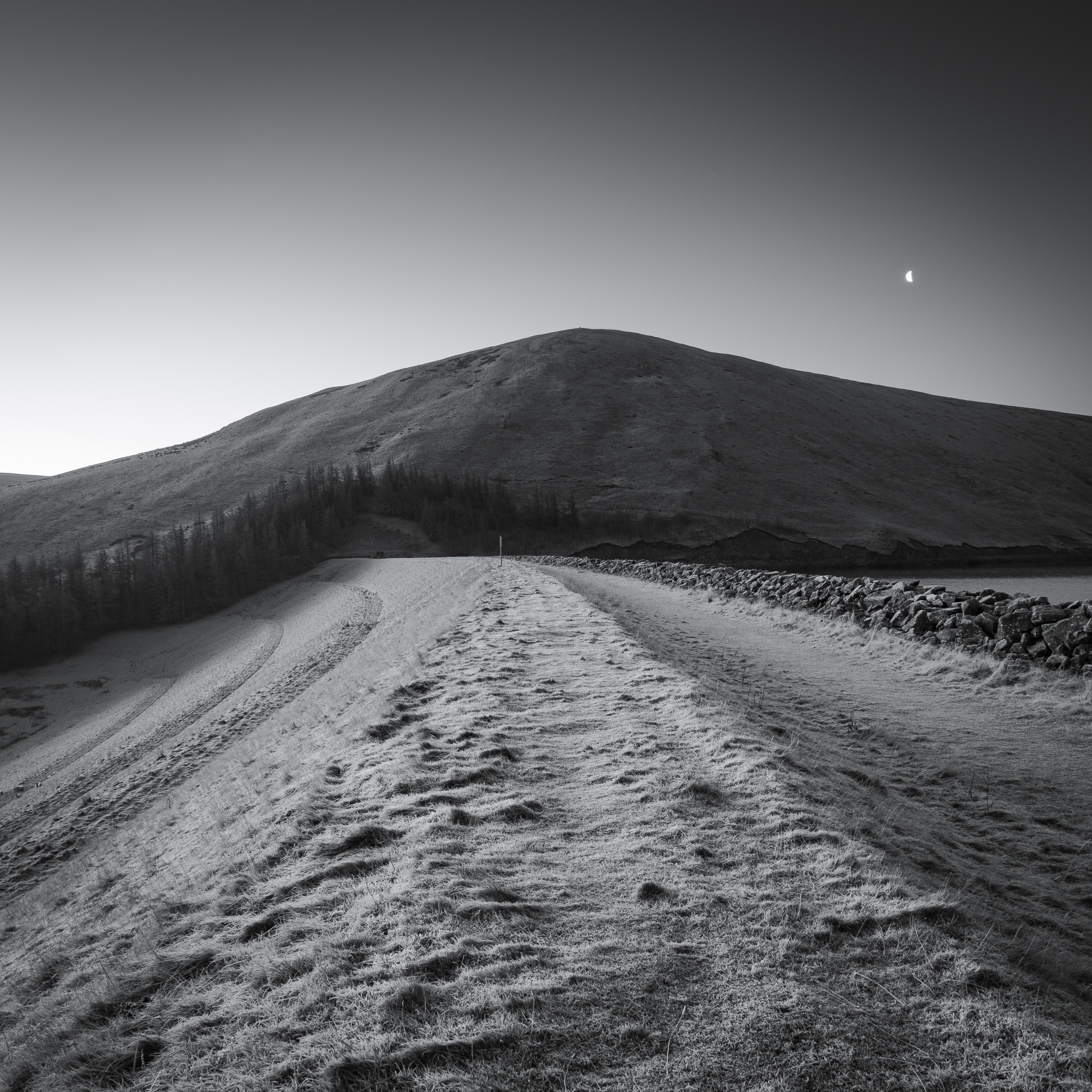
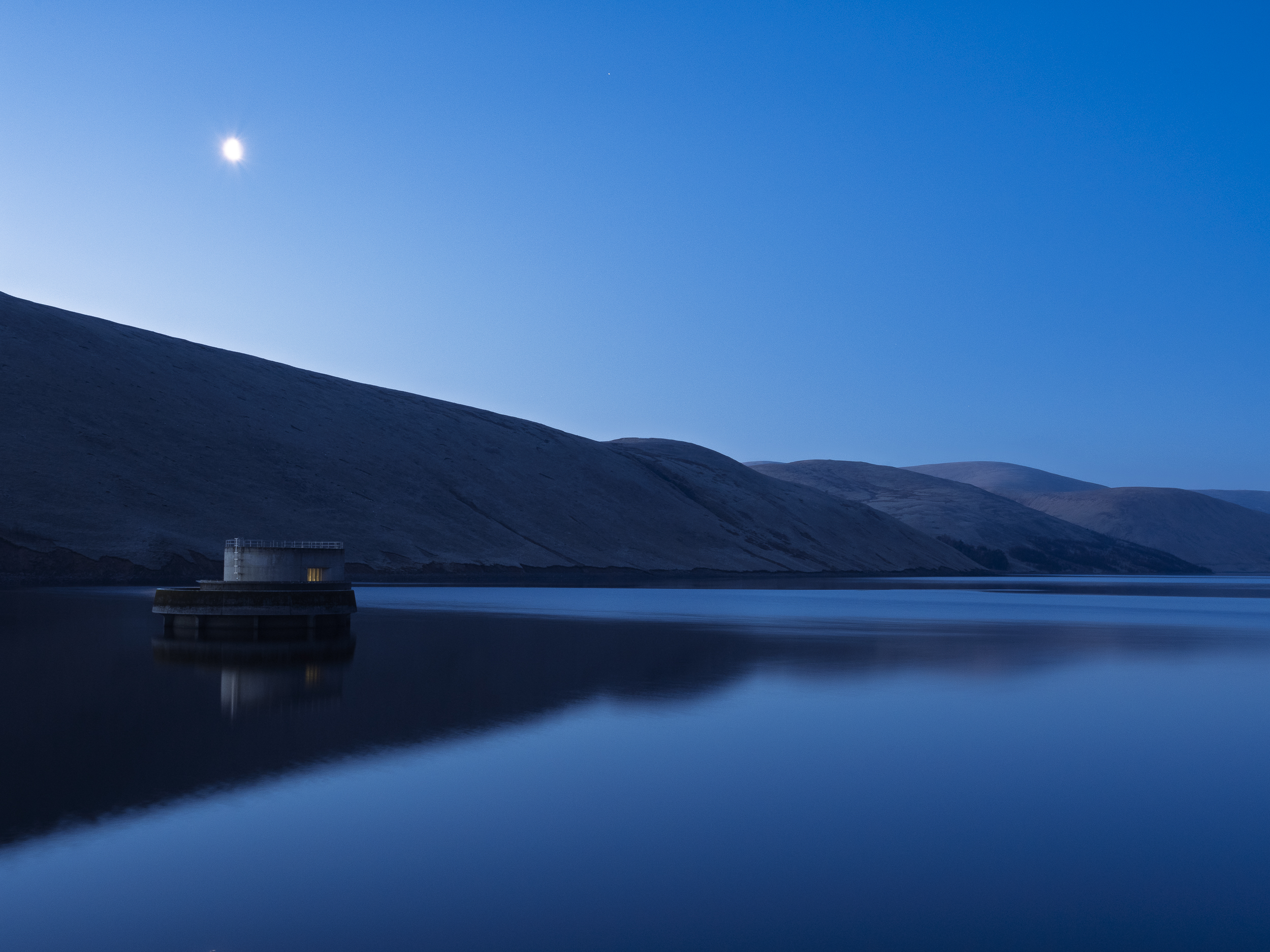
Rather than forcing a classic “big view” down the valley that didn’t quite have enough interest (and frankly, not enough cloud texture either), I found myself leaning into the geometry of the dam itself — a leading line across the frame, the mountain beyond it, and even the moon returning as a compositional element.
This is where visiting somewhere unfamiliar really comes into its own. I hadn’t seen photos of this place. I didn’t even know I was coming here. I hadn’t studied a map. I had zero preconceptions — and that meant I could experiment freely.
I played with aspect ratios and quickly found that a square crop suited the structure of the scene. It felt graphic. Simple. Almost like it wanted to be black and white. And the more I worked the frame, the more it started to make sense.
It’s a nice reminder that not every photograph needs to be made in a “perfect” natural setting. Sometimes the shot is the one that makes you slightly uncomfortable at first.
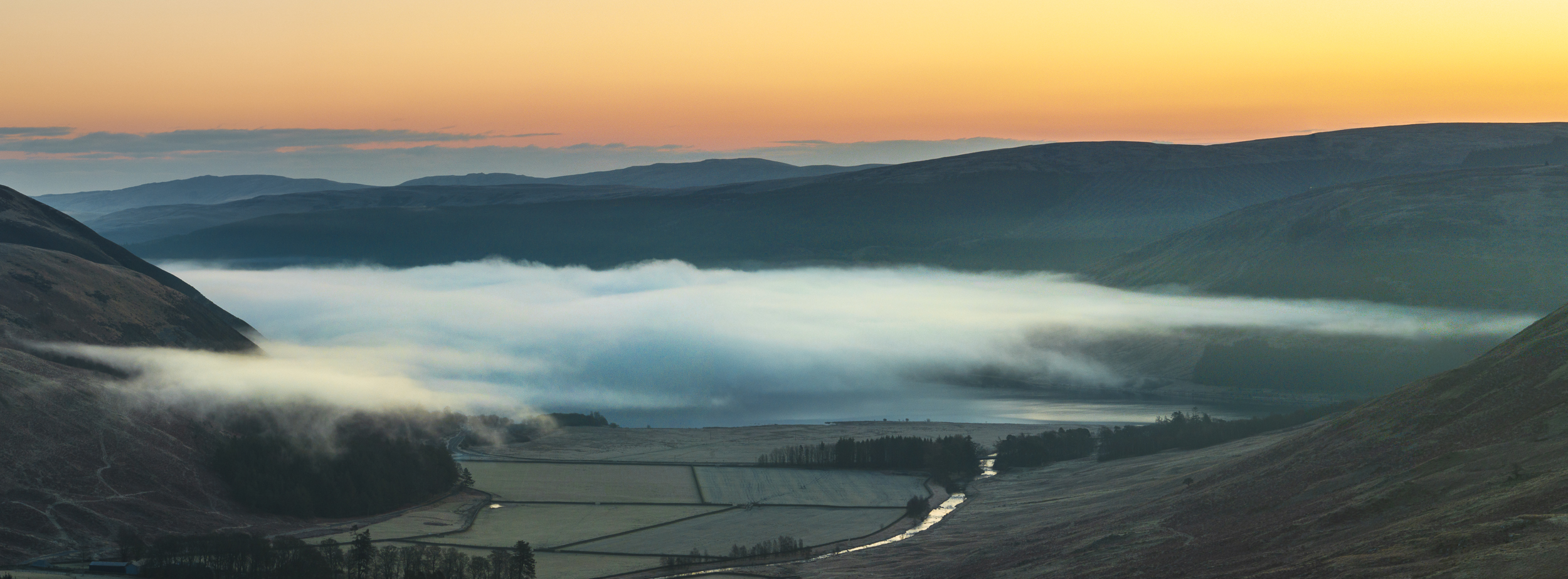
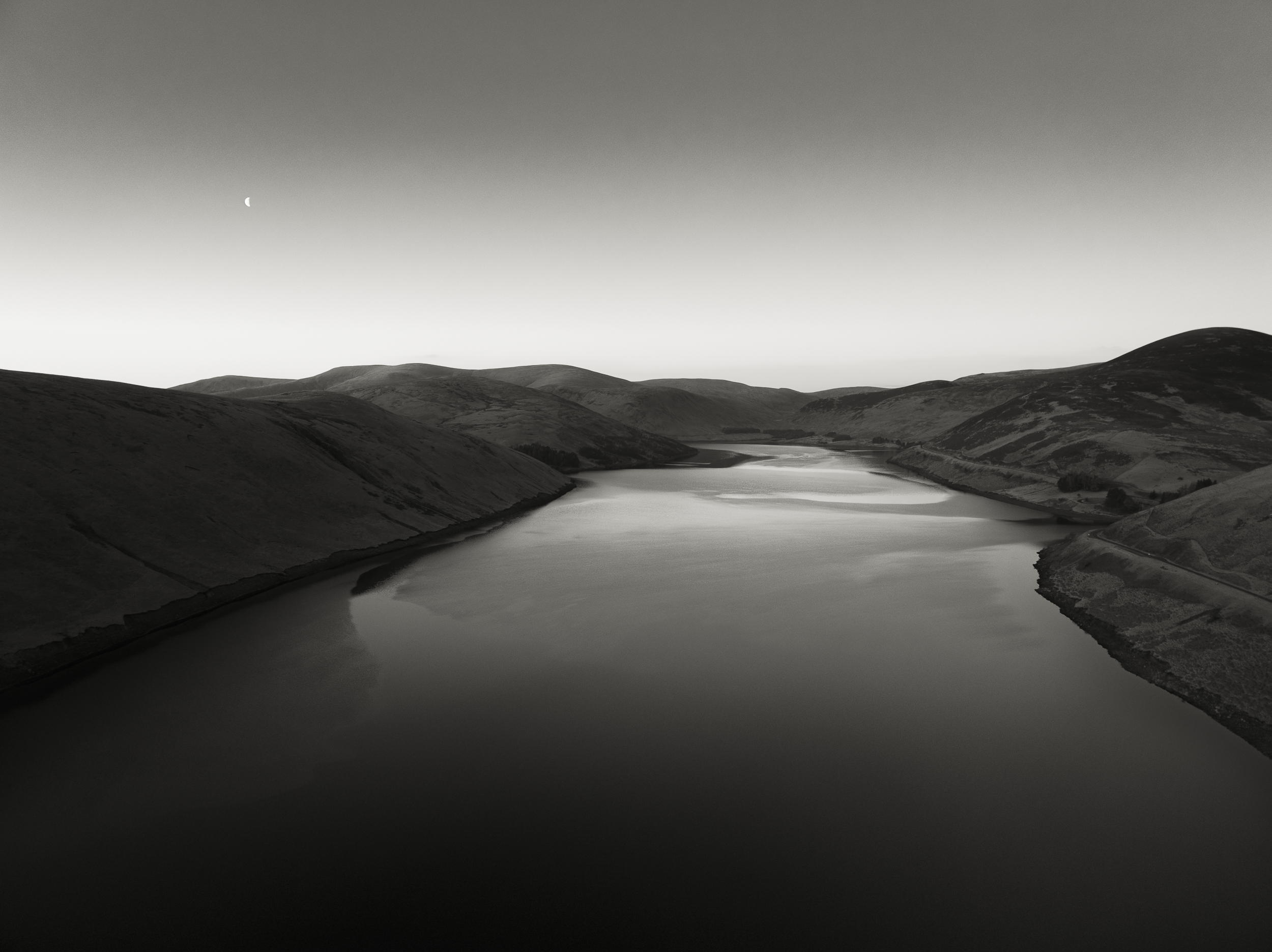
With the fog sitting down on the loch below, I had a new idea: if I couldn’t get down there quickly, I could at least get above it. So I pulled out the DJI Mavic and sent it up.
I’ve had a complicated relationship with drones over the years. I used to feel quite disconnected from the process — like I was operating a device rather than making a photograph. But over time, I’ve started to enjoy them more, and more importantly, I’ve started to appreciate them as simply another tool. Not a replacement for the tripod-and-camera experience… just a different way of seeing.
This morning I tried something I’d never done before: a stitched aerial panorama using the drone’s zoom. It felt experimental, and I had no real idea whether it would work — lots of overlap, careful framing, and fingers crossed back on the ground.
Even if it didn’t come out perfectly, I love that drones allow you to attempt images that would otherwise be impossible. They give you perspectives you simply can’t access on foot, especially when you’re dealing with fog sitting in the landscape like a soft blanket.
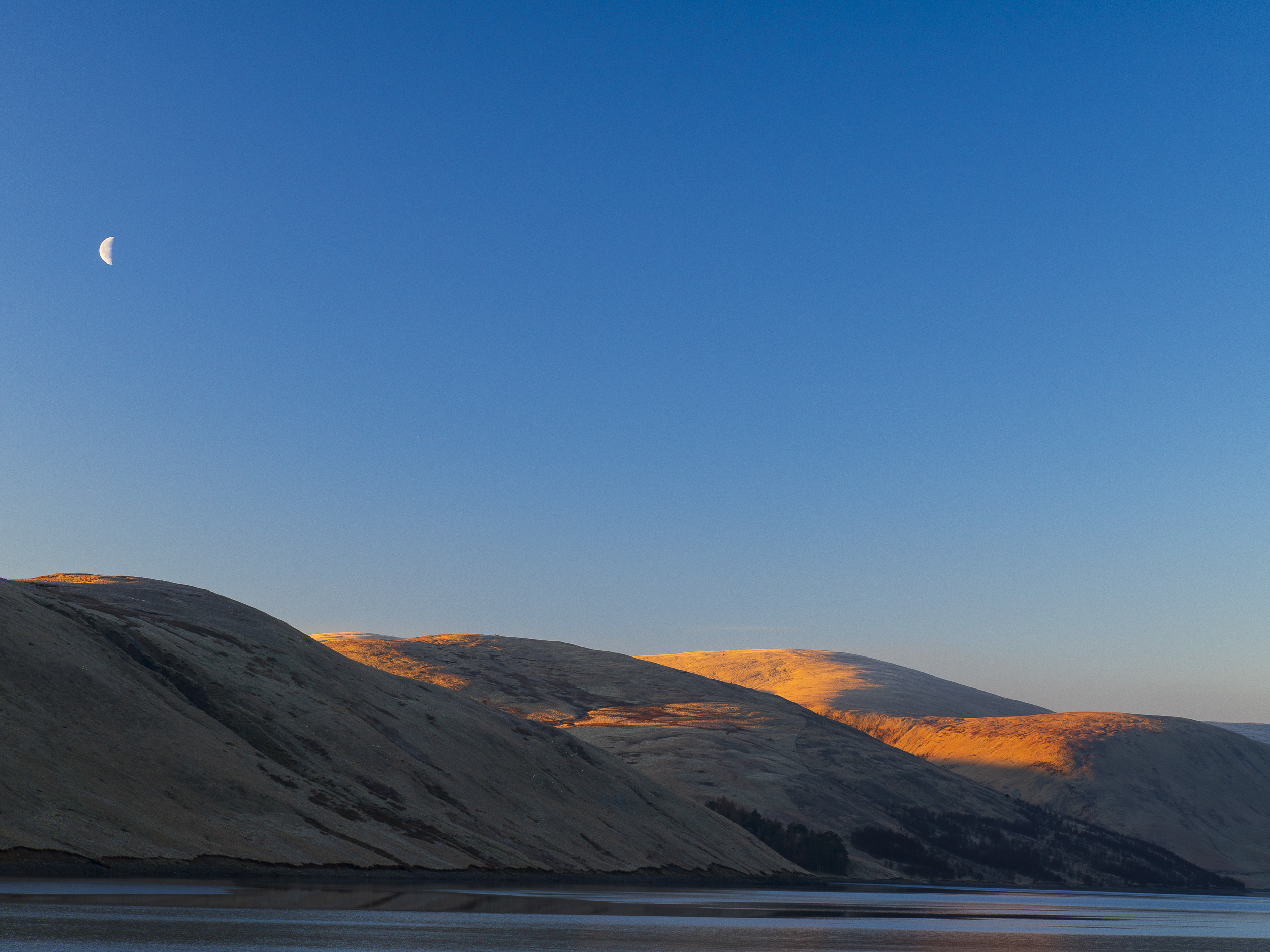
To finish the morning, I switched back to the camera and focused on first light hitting the hills. For this I used a longer lens to isolate shapes and layers within the landscape — picking out small sections rather than trying to photograph everything at once.
I also began thinking about cropping. Modern sensors give you so much flexibility, and even with a 20MP micro four thirds file, you can crop aggressively if the final image benefits from it. A 65:24 panoramic crop can be a brilliant way to simplify a scene, and if you ever need to go larger, Lightroom’s super resolution can help (not always perfectly, but often surprisingly well).
The first attempt didn’t quite land. So I tried a polariser, shot roughly 90 degrees from the sun to avoid uneven effects, and then moved a few metres to tweak the angle.
That small move made all the difference.
Suddenly the scene became about colour: blues and oranges working together in a simple, graphic way. Some shots don’t need colour at all — they become stronger in black and white. But occasionally you find the opposite: a photograph that only works because of colour. This was one of those.
It felt like a clean, satisfying way to end the shoot.
A good reminder: the best locations aren’t always planned
By the end of the morning, my hands were still freezing and I was very ready for a hot drink — but it felt like a proper start to the trip. Two micro four thirds cameras, a drone experiment, and a set of images that came from reacting to what was in front of me rather than chasing a checklist.
And that’s really the point.
Some of the best mornings happen when you don’t fully know what you’re doing, where you’re going, or what you’re supposed to come back with. You just show up, stay curious, and let the place reveal itself.


Leave a Reply