
In this video, I want to talk about something that will genuinely make you a better landscape photographer — and the good news is, it doesn’t require any new gear, it’s completely free, and you can start doing it straight away.
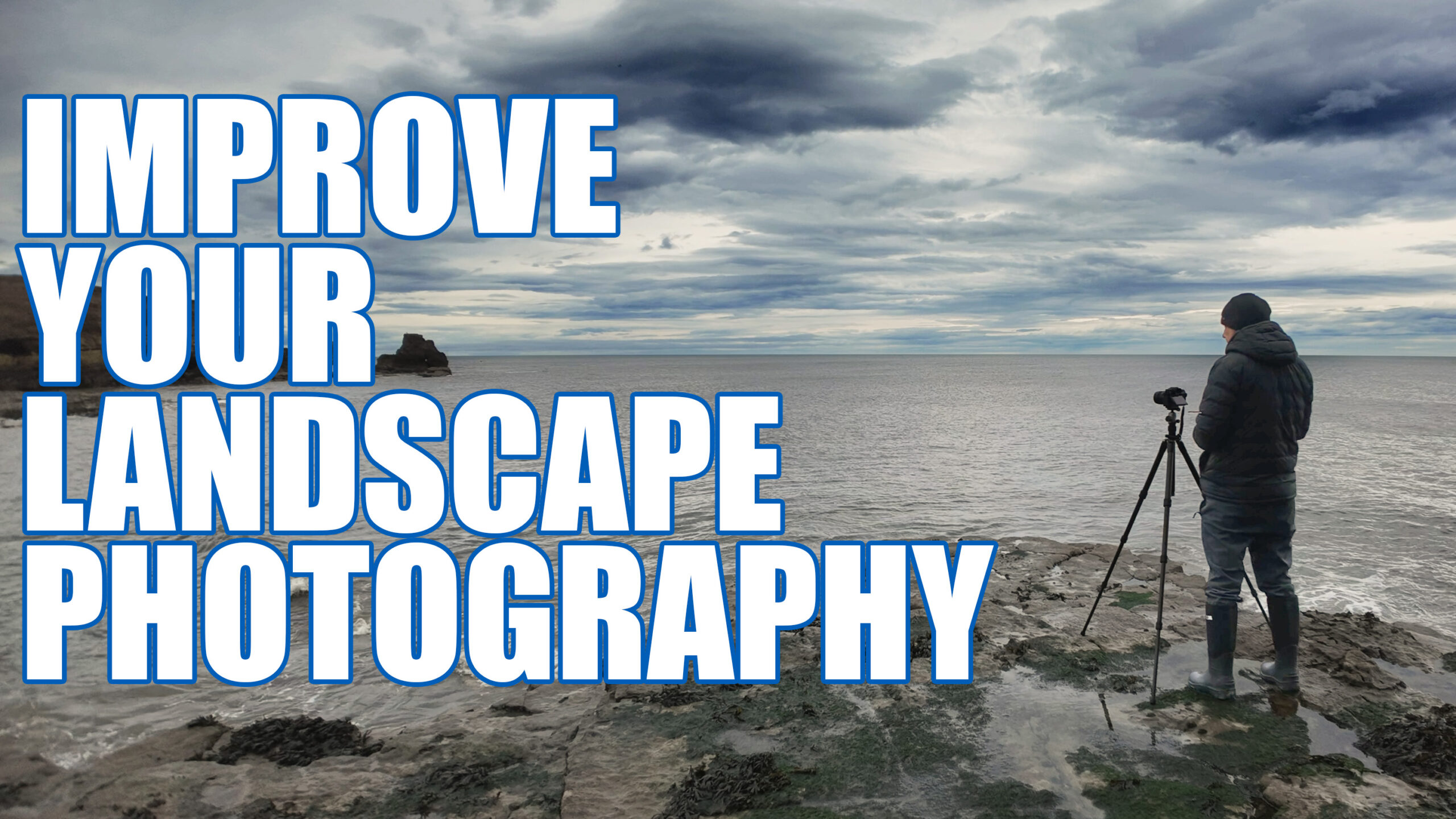
I filmed this on a rather grey, uninspiring day on the coast near Marsden, not far from South Shields. It wasn’t the kind of morning that screams “perfect photography conditions”. No sunrise, no dramatic colour in the sky, no golden light hitting the rocks.
But that was kind of the point.
Working with what you have
I’d actually been here the week before and taken a panoramic image in much more dramatic conditions. That day, though, the weather made filming impossible. Strong winds, rough conditions — standing up was hard enough, never mind setting up a tripod and talking to a camera.
When I returned, I expected better light. Instead, I got flat skies, drizzle, and dull tones.
Rather than walking away, I decided to work with what I had.
That meant simplifying compositions, avoiding big wide vistas, and focusing instead on smaller scenes — long exposures, textures, and details that suit overcast conditions far better than dramatic landscapes ever would.
Shooting in black and white
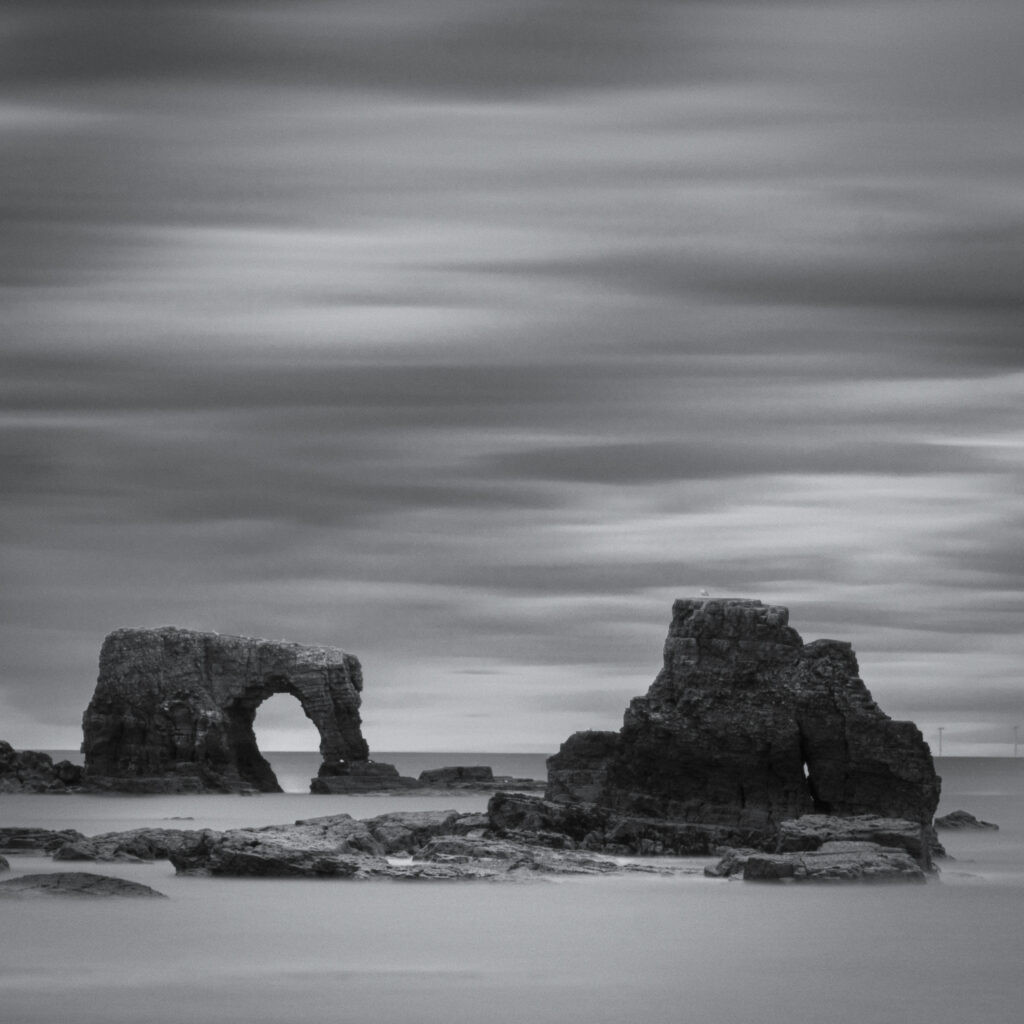
With very little colour in the scene, black and white made sense. Even though I was shooting RAW, setting the camera to monochrome helped me previsualise the final image in the viewfinder.
For the first shot, I focused on a distant sea arch and built a simple, square composition around it. Nothing complex — just shape, tone, and movement. A long exposure smoothed the water and softened the clouds, turning a grey day into something far more expressive.
It was a reminder that conditions we often write off as “bad” can actually be ideal — if you choose the right kind of subject.
Looking for smaller details
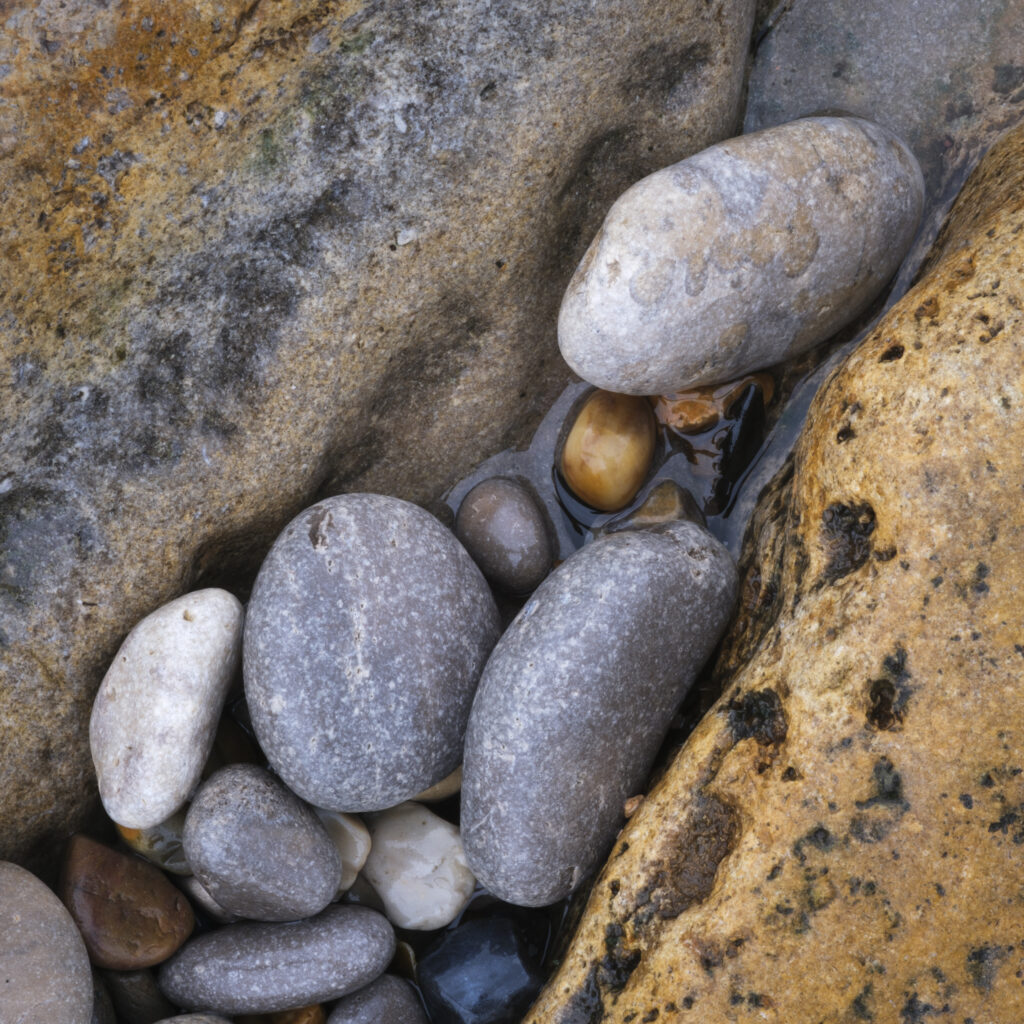
After that, I moved down onto the beach and started looking more closely at the rocks and textures around me. Overcast light is perfect for this kind of photography: no harsh shadows, subtle colours, and lots of tonal variation.
Eventually, I found a small rock channel that immediately caught my attention. It wasn’t a shot I’d normally look for, but because I was already out — already committed — I slowed down enough to see it.

And I really liked it.
The mindset shift that matters
This is where the real point of the video comes in.
I’m guilty — like many photographers — of not going out unless the conditions look perfect. If it’s grey, dull, or uninspiring, it’s easy to convince yourself to stay at home and “go tomorrow instead”.
But that mindset is incredibly limiting.
If you only ever photograph in ideal conditions, you never learn how to work in anything else. And worse, you miss countless opportunities to practise seeing, composing, and adapting.
Photography is a skill. Skills need practice.
The simple act of going out — even locally, even briefly, even when the weather isn’t exciting — builds experience. You start to understand which conditions suit which kinds of images. You learn how to adapt your approach instead of forcing a shot that doesn’t suit the scene.
One photo you like is enough
There is a balance to strike, though. Constantly going out and coming back with nothing you like can be discouraging. That’s why I think it’s important to work with the conditions, not against them.
On this day:
- Big colour landscapes didn’t make sense
- Black and white long exposures did
- Small details worked better than wide scenes
By narrowing my focus, I came away with images I was genuinely happy with — images I wouldn’t have made if I’d stayed at home waiting for perfect light.
Final thoughts
The takeaway from this video is simple:
Just go out with your camera.
Even if:
- the weather isn’t great
- the location is local
- you only have an hour
- the conditions aren’t what you hoped for
Every time you do, you’re practising. You’re learning. You’re building confidence in situations that don’t rely on dramatic skies or perfect light.
And over time, that’s what really makes you a better landscape photographer.


Leave a Reply