
One of the most overlooked features on modern digital cameras has nothing to do with megapixels, autofocus, or dynamic range. In fact, it’s something that almost every mirrorless camera already offers — the ability to choose your aspect ratio before you take the photograph.
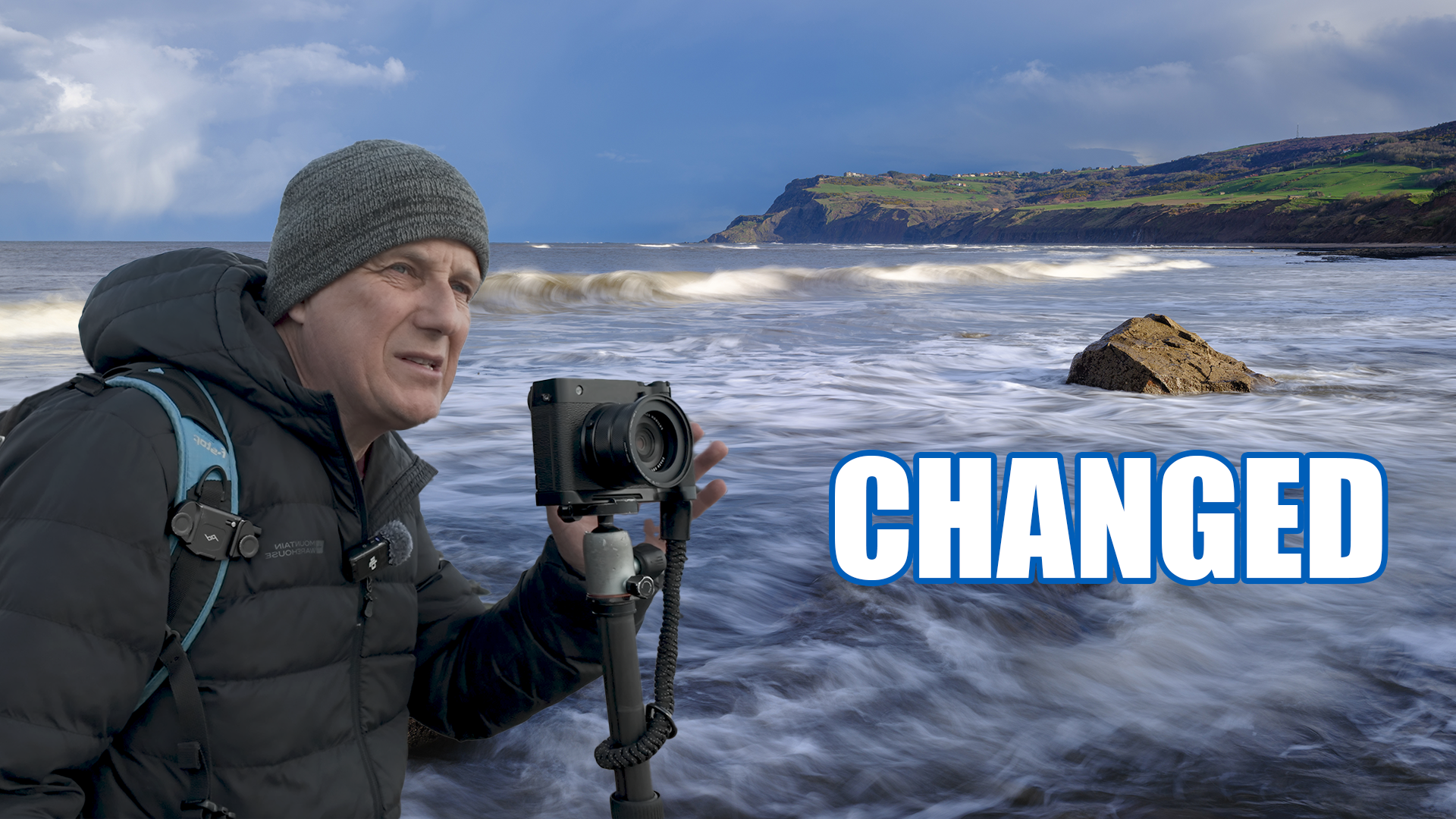
Recently, while photographing along the North Yorkshire coast with my Fujifilm GFX100RF, I found myself thinking about how much this simple feature has changed the way I compose images. Not afterwards in editing, but out in the field, while actually making the photograph.
And honestly, I think it’s made me a better photographer.
Traditionally, many of us shoot using the camera’s native sensor ratio and then crop later. A landscape might become a panoramic once you get home. A centered composition may suddenly become a square crop during editing. There’s nothing inherently wrong with that approach — but it can become a bit of a crutch.
The problem is that you’re not truly composing for the final image while you’re standing there behind the camera.
Instead, you’re leaving compositional decisions for later.
What I’ve found far more effective is choosing the aspect ratio before I even start composing. By doing that, the camera effectively transforms into a different format camera altogether. Suddenly you’re not “taking a photo and deciding later.” You’re actively composing within the constraints of that format from the beginning.
That’s a huge difference.
The reason I particularly love this on the Fujifilm GFX100RF is because Fujifilm gave the camera a dedicated aspect ratio dial. It sounds like a small thing, but it completely changes the shooting experience. I can arrive at a scene, look at the landscape in front of me, and immediately decide whether it feels like a square composition, a panoramic, or something more traditional like 4:3 or 3:2.
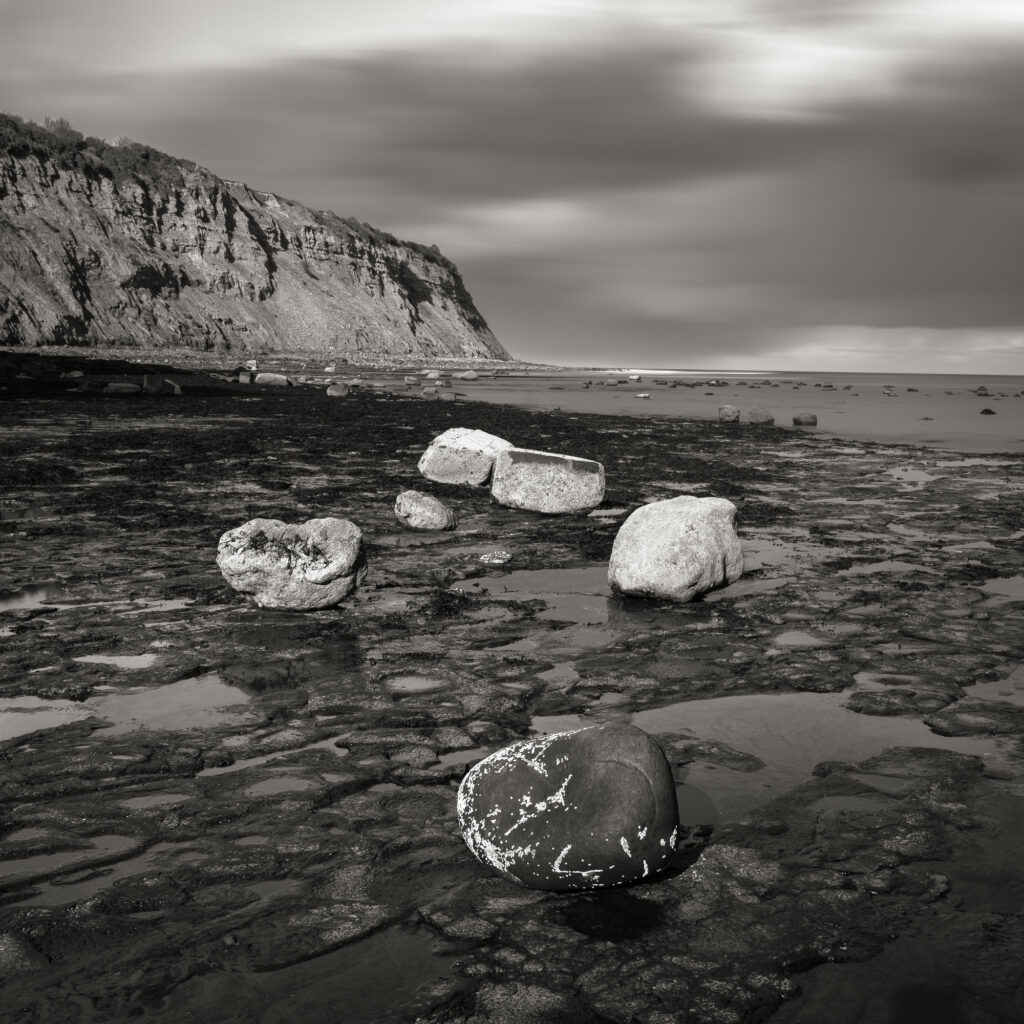
On this particular day at the coast, the first scene naturally lent itself to a square format. There were beautifully textured rocks in the foreground, cliffs catching soft light behind them, and dramatic cloud movement overhead. In my mind, I could already visualise the finished image as a black-and-white square crop before I’d even set the tripod up.
That’s important.
The square aspect ratio simplified everything. Instead of worrying about excess space around the frame, I could focus entirely on balancing the rocks, cliffs, and sky within that contained composition. The image became cleaner because the format itself guided the way I arranged the elements.
To enhance the mood, I added a polariser and ND filters from my KN&F magnetic filter kit and captured a long exposure to soften the clouds and water movement. The final image ended up being a 40-second exposure at f/16 and ISO 80 — and the square format suited it perfectly.
Later in the shoot, the weather turned wild.
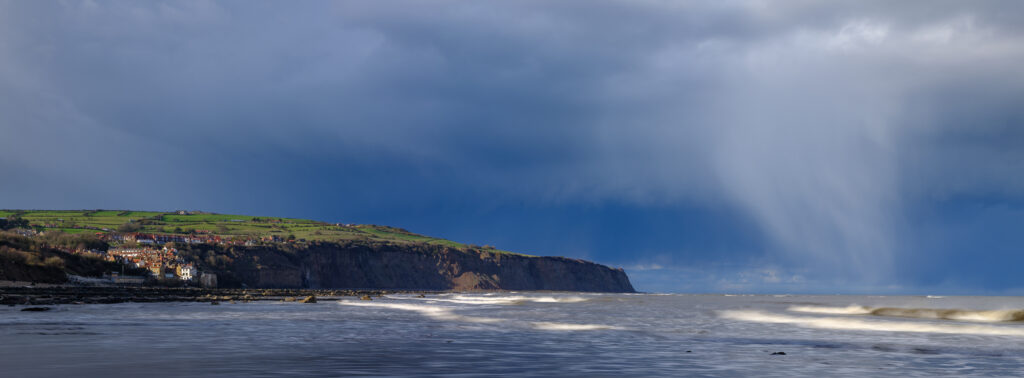
Heavy showers rolled in across Robin Hood’s Bay, waves started creeping around the tripod legs, and suddenly the scene transformed into something completely different. This time, the landscape cried out for a panoramic crop. The sweeping coastline, dramatic sky, and distant headland all worked naturally in a wide cinematic frame.
Again, choosing the aspect ratio beforehand made the process far easier.
Rather than guessing what might work later in Lightroom, I could see the panoramic composition directly in the EVF while adjusting my framing. The camera was effectively showing me the finished photograph before I pressed the shutter.
That’s one of the biggest advantages of modern mirrorless cameras compared to older DSLRs. Back then, you often had to imagine the crop and hope it worked later. Now, the EVF can display the exact format you’re composing for in real time.
It sounds simple, but creatively it’s incredibly powerful.
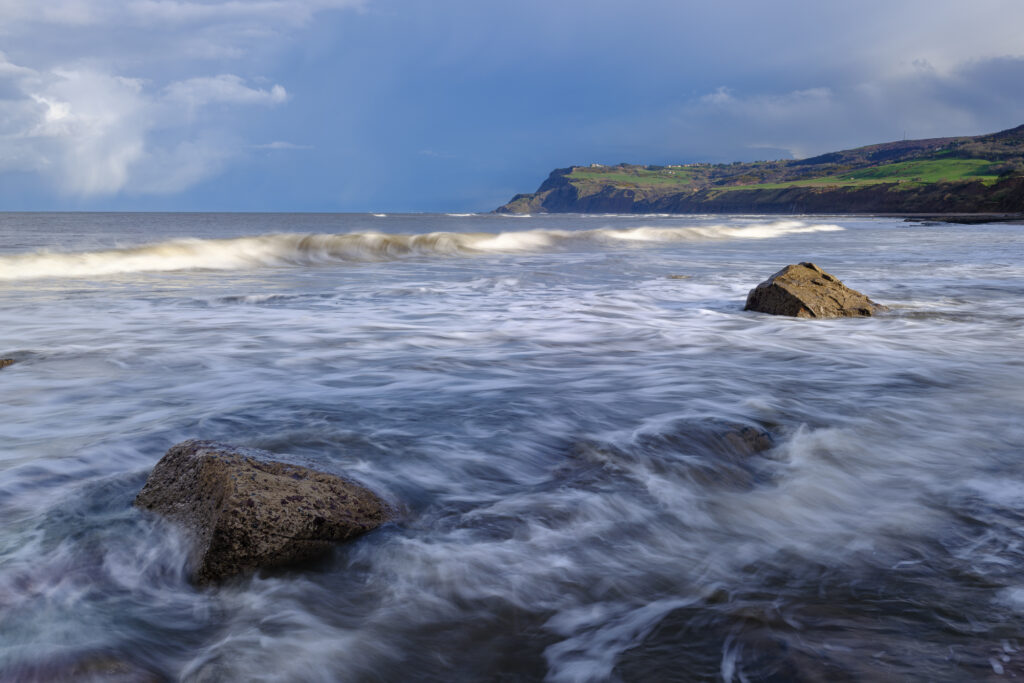
I also think aspect ratios influence the emotional feel of an image far more than many photographers realise. Square formats can feel calm, balanced, and timeless — especially in black and white. Panoramics often feel cinematic and expansive. Traditional 3:2 frames can feel more documentary and natural.
Different subjects suit different shapes.
And once you start thinking that way before pressing the shutter, composition becomes much more intentional.
Of course, technically speaking, you can still crop later — especially if you’re shooting RAW. Most cameras only apply the crop preview to the JPEG, meaning the full RAW file remains untouched. So there’s really very little downside to experimenting with aspect ratios in-camera.
But psychologically, it changes the way you see.
Instead of treating composition as something to “fix later,” you begin composing around the final image from the start. And in my experience, that leads to stronger photographs far more consistently.
Sometimes the smallest features on a camera end up having the biggest impact on how we shoot.
And for me, aspect ratios are definitely one of them.

Leave a Reply